

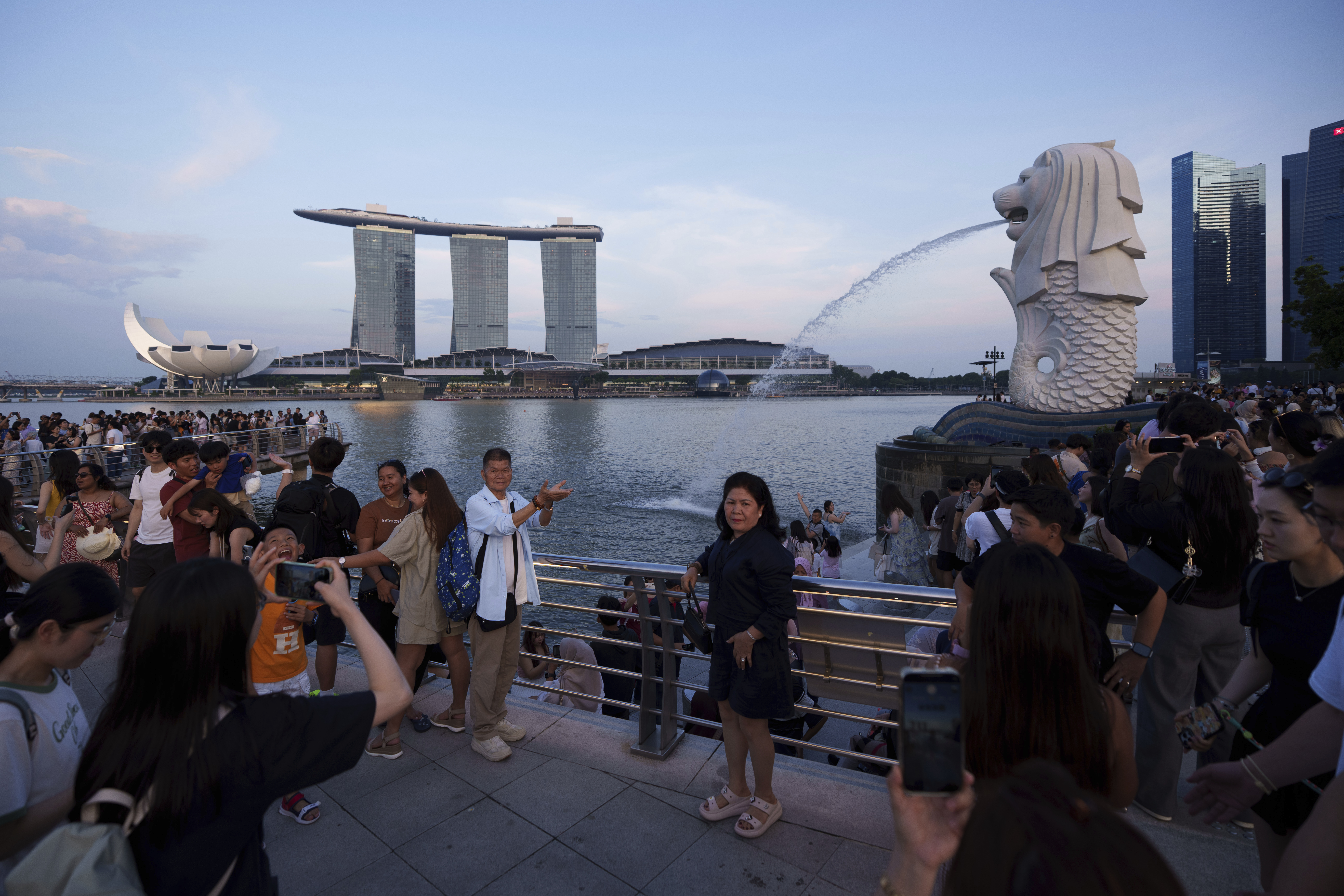
Singapore’s air quality hit an unhealthy level on Friday as haze from forest fires raging in neighboring Indonesia continued to spread across swathes of Southeast Asia.
The haze made the city-state one of the 10 most polluted major cities in the world, coming in at eight in IQAir’s ranking. Kuching, in the Malaysian part of the island of Borneo, was No 1.
“The hotspot and smoke haze situation is expected to stay elevated in fire-prone regions experiencing prolonged dry conditions, with a continued risk of severe transboundary haze occurrence,” Singapore’s National Environment Agency said on Thursday. It recommended that residents reduce prolonged or strenuous outdoor activity.
The fires and accompanying haze are a yearly occurrence, often attributed to traditional and commercial land-clearing practices. But this year’s ‘super El Niño’ weather pattern, which is expected to peak in September and October, threatens to intensify and prolong adverse impacts on public health and commercial activity across the region.
ALSO READ: Indonesian fires drive regional haze alerts and school closures
The number of fire hotspots was rising again on Borneo after a small decline earlier, according to Indonesian media that cited the forestry minister, highlighting the challenge authorities face in containing the blazes. The government has deployed at least 6,000 ground personnel and is conducting water-bombing and weather modification in a bid to douse the flames aerially.
The impact of the El Niño is rippling across Southeast Asia’s largest economy. Indonesia’s biggest nickel complex may have to slash output by as much as 40 percent due to drought disrupting its water supply, while drier waterways are snarling palm oil shipments.
Nearly 40 percent of Kalimantan’s roughly 417,000 tons of monthly palm oil output has had to be transported by truck instead of barge since the first week of August, adding to transportation costs, said M. Hadi Sugeng Wahyudiono, secretary general of the Indonesian Palm Oil Association, known as Gapki.
Air quality was also deteriorating in other parts of the region. Malaysia’s Sarawak recorded “hazardous” levels of air pollution, while Indonesian authorities urged residents in Kalimantan, where the hotspots are concentrated, to be on alert for worsening conditions.
