

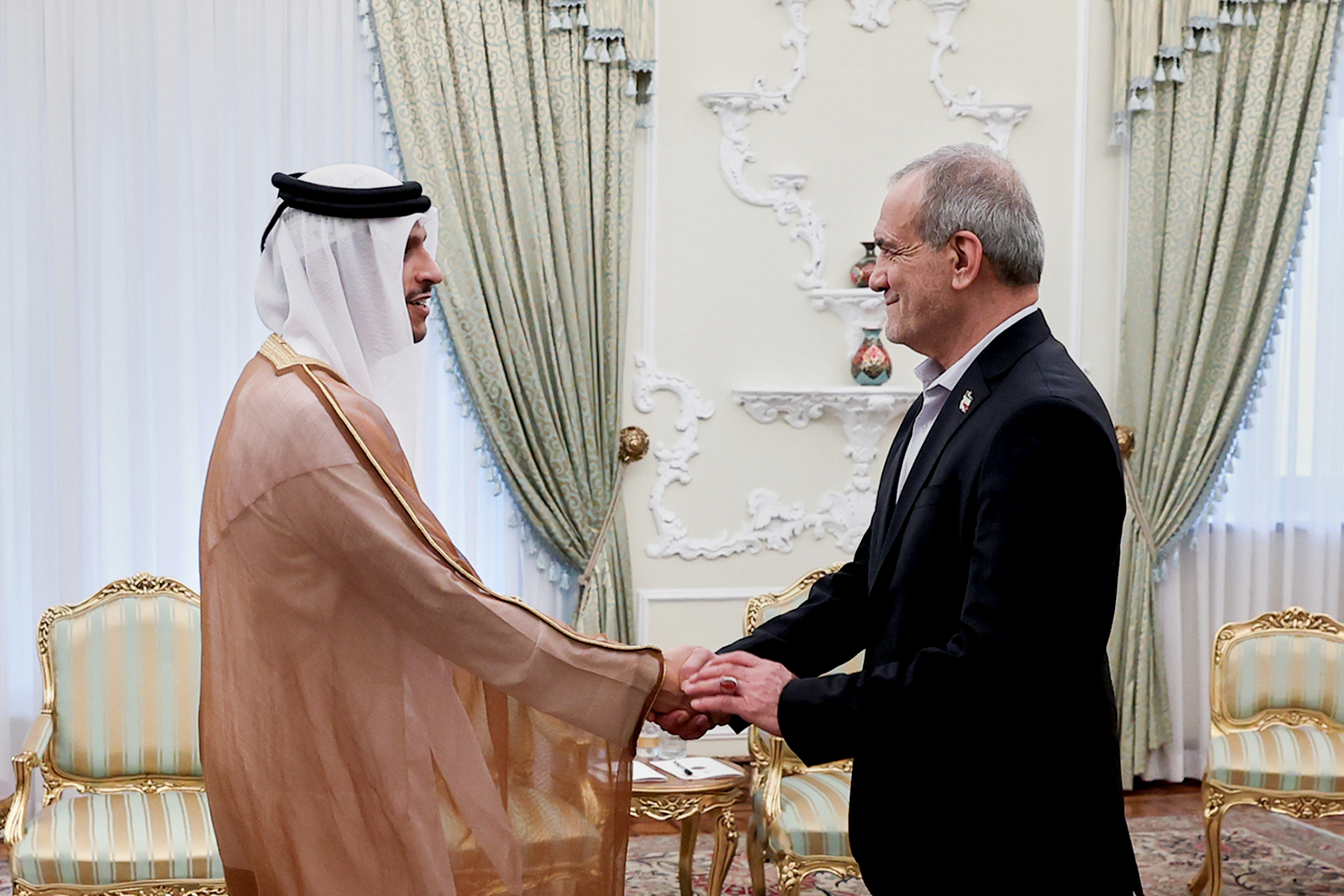
TEHRAN – Iran's President Masoud Pezeshkian said on Thursday that the country does not seek war, but will not submit to bullying.
Pezeshkian made the remarks in a meeting with Qatari Prime Minister and Minister of Foreign Affairs Sheikh Mohammed bin Abdulrahman bin Jassim Al Thani in the Iranian capital Tehran, according to a statement on the website of his office.
"Iran has not, does not, and will not seek war, but it will not submit to bullying either," he said. "The other parties must recognize the Iranian nation's rights in all areas and within the framework of international law."
Pezeshkian emphasized that Iran is not seeking to expand the conflict, noting that the war was imposed by the US and Israel, and its continuation is detrimental to Iran, the West Asia region, and the world.
He said it is logical to resume implementation of a peace memorandum of understanding (MoU) signed by Iran and the US in June and to resolve issues through dialogue.
Pezeshkian also slammed attempts by Israel and certain US groups to prevent the formation of any agreement, calling on US officials to ignore voices seeking to prevent the restoration of peace to the region.
"The interests of some are in continuing the war, but the Islamic Republic of Iran believes that peace and security will benefit Iran, the region, and the world," he noted.
ALSO READ: Iran urges UN to denounce US sanctions
Pezeshkian also pointed to the recent "bitter" incidents between Iran and Qatar, saying the two remain "friendly and brotherly countries" and that the issues can be resolved through understanding.
The Qatari prime minister, for his part, said "deep and sincere" respect remains between the two countries, adding that "Qatar seeks to restore stability to the region and sees well Iran's open arms toward the regional countries as well as its efforts to ensure security and peace."
He added that the war "was imposed on the region from outside," but its costs are paid by all countries in the region.
"The language of force and threat is not the solution, and stability, security, and economic tranquility must be restored to the region through diplomacy, rationality and logic," the Qatari prime minister said, adding that "the coming days will be busy and stressful, and a Qatari team will begin its activities as of tomorrow."
Also on Thursday, the Qatari official met Iran's Foreign Minister, Seyed Abbas Araghchi, to discuss establishing a temporary shipping corridor through the Strait of Hormuz and implementing a joint project to demine the waterway, according to Qatar's Foreign Ministry.
He also met with Iranian Parliament Speaker Mohammad Baqer Qalibaf, who stressed that the US economic siege against Iran will fail and Washington must implement the MoU provisions, according to the official news agency IRNA.
Qatar's prime minister welcomed a recent understanding between Iran and Oman on safe maritime traffic in the Strait of Hormuz, noting that ongoing diplomatic developments can help restore stability to the region.
His visit to Tehran came amid ongoing Iran-Oman talks over the strait. Iran's Islamic Revolutionary Guard Corps said on Wednesday that Tehran and Muscat had reached agreements on their respective shares of the strait's waters and revenues, according to Iranian media reports.
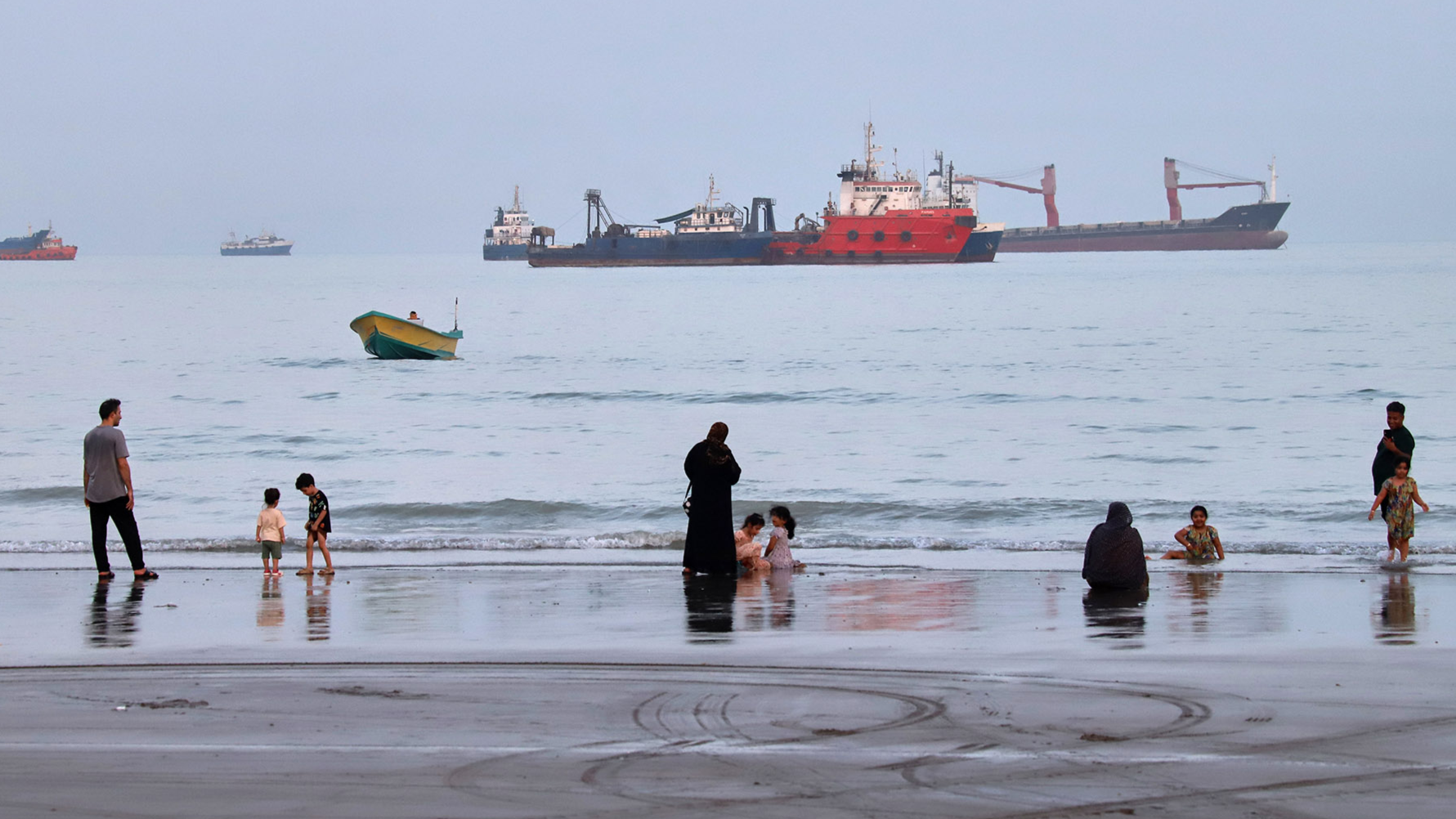
Oil delivery
Iran's Petroleum Minister Mohsen Paknejad has said the country's oil deliveries to customers outside its territorial waters are continuing despite the US naval blockade, Iran's Jamaran news website reported on Thursday.
The minister refrained from providing the exports' details for fear that they could be used by the "enemy," according to the report.
Paknejad said, "At some points, it became possible for us to transport oil to the point of delivery to the customer, which was a significant amount. Up to this point, the process of oil sales, in the sense of delivery to customers, outside our territorial waters, in distant waters, is continuing."
He added that during the period between the two US naval blockades, Iran managed to deliver oil to its customers, stressing that following the second blockade, the country's oil exports have continued, although they have declined.
The US imposed its naval blockade on Iran after post-ceasefire talks between the two countries in Pakistan's capital Islamabad in April failed to lead to an agreement. It lifted the blockade after the two countries signed a memorandum of understanding on June 18 on ending the war in the region on all fronts, but reinstated it on in July.
