

TEHRAN/NEW YORK/JERUSALEM – Iranian President Masoud Pezeshkian said Monday the United States must change its tone and approach toward Iran.
"The US reliance on coercion and bullying will only complicate executive processes," Pezeshkian said at a meeting with Pakistan's Chief of Army Staff Field Marshal Syed Asim Munir in Tehran, according to a statement published on the website of the presidential office.
Pezeshkian stressed the need for the United States to remain committed to its obligations toward Iran "based on the (country's) legitimate rights and international regulations."
He appreciated Pakistan's mediation efforts to ensure peace and stability in the region, expressing hope that the objectives stipulated in the US-Iran peace memorandum of understanding (MoU) would be achieved "with the continuation of the wills and joint cooperation."
ALSO READ: President: Iran in ‘all-out’ economic, military, security war
Munir, for his part, said Pakistan will continue its role as a facilitator and expressed satisfaction with his country's expanding cooperation with Iran.
Heading an official delegation, Munir arrived in Tehran on Monday. Prior to his meeting with Pezeshkian, he met with Iranian Parliament Speaker Mohammad Baqer Qalibaf and Secretary of Iran's Supreme National Security Council Mohsen Rezaei.
Qalibaf told Munir that Iran is pursuing the implementation of the provisions of the US-Iran peace memorandum of understanding (MoU) signed in June, under which the two countries were scheduled to hold negotiations within a period of 60 days, which ended on Aug 17, to reach a final agreement. However, the talks' fate remains unclear following renewed escalation between the two countries.
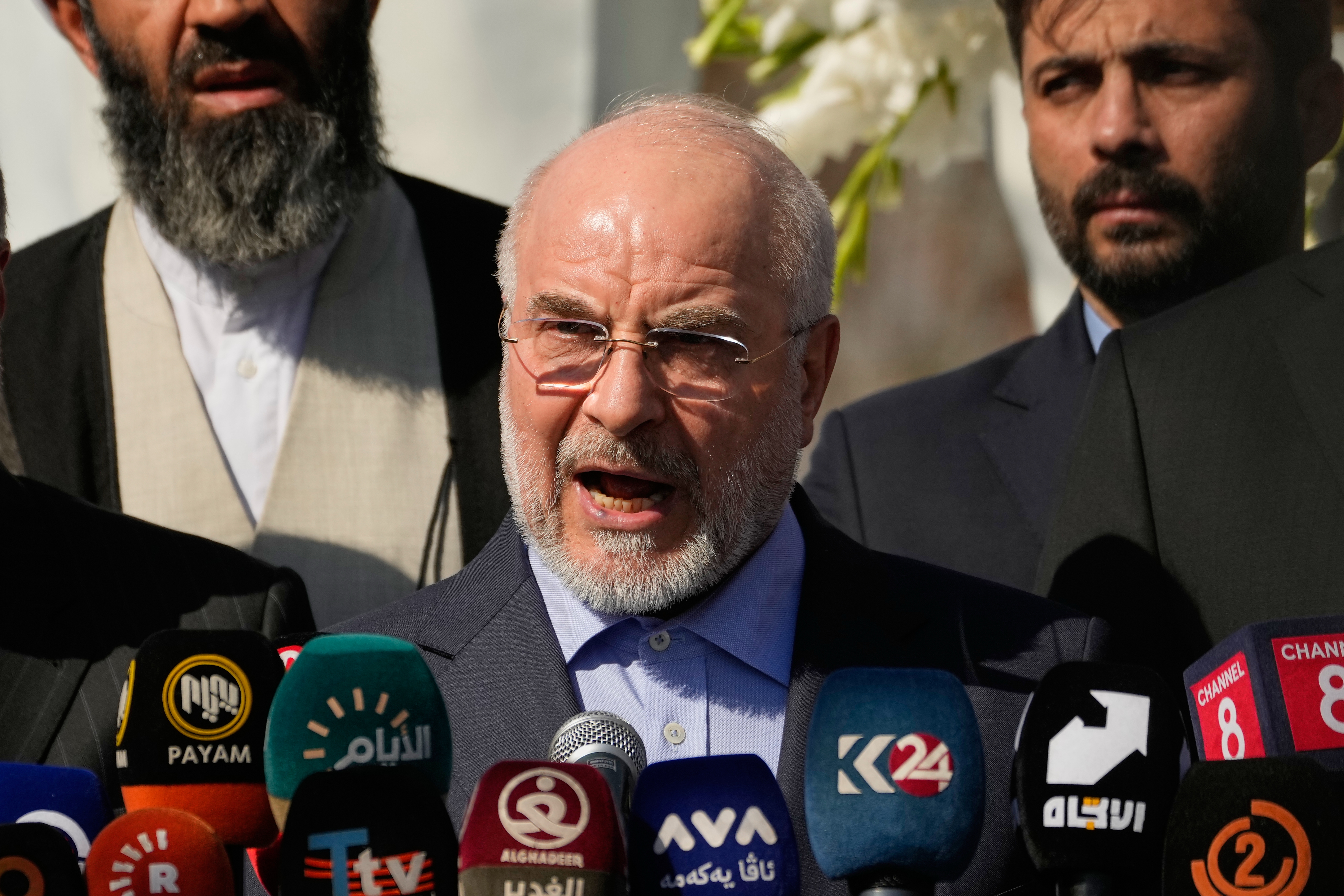
Qalibaf said US violations of its commitments under the MoU have undermined regional stability and deepened distrust, according to the official news agency IRNA.
Separately, in a post on X in the day, Qalibaf responded US economic threats against Tehran by saying that, "Iran's trading partners, both in the media and through messages sent to us, have made it clear that they don't take these statements into account anywhere."
'Economic D-Day’ sanctions on Iran
US Treasury Secretary Scott Bessent on Monday threatened Iran with "an economic D-Day," announcing a wave of new sanctions aimed at further isolating the country.
"We are launching an economic onslaught against Iran's financial connections around the globe," said Bessent at a press conference. "Our objective is to sever every economic lifeline" that sustains the country, he said.
The US Treasury Department said in a press release that the new sectoral sanctions determinations target five critical sectors -- digital assets, technology, gold, aviation and shipping -- that the US says Iran has relied on to prop up its economy.
ALSO READ: Iran warns countries against joining US 'economic pressure campaign'
The measures marked the beginning of "a sustained and systematic campaign to close every financial resource" that supports Iran, the department said. It added that "any entity that facilitates money laundering or sanctions evasion on behalf of Iran risks being cut off from the US financial system."
The department is expanding the categories of "Iran-related conduct" that the United States might sanction in the future, and said "every country will be given a defined timeline to shut down the Iran-related activity" the United States has identified.
Bessent disclosed that US President Donald Trump has been calling world leaders with specific requests to cease their interactions with Iran.
Simultaneously, the department's Office of Foreign Assets Control (OFAC) sanctioned nearly 60 entities, individuals, and vessels in multiple jurisdictions that enable Iran's activities, including illicit nuclear and missile technology procurement, cyber operations, and oil-revenue generation networks.
OFAC also suspended several general licenses that previously authorized certain remittance payments to Iran and Iranian access to the US cultural and academic system.
Additionally, the Treasury Department released additional guidance on the sanctions risks associated with complying with Iranian demands regarding shipping in the Strait of Hormuz.
'No end to war based on aggressive parties' conditions'
Iran's Foreign Ministry spokesman Esmaeil Baghaei said that his country will not let the war end based on conditions set by the "aggressive" parties.
"We have definitely not been the party to start the war, but we will not let the war's end be based on the aggressive parties' conditions," Baghaei told a weekly press conference in Tehran.
He said that Iran remained determined to defend its territory and would not "compromise with the aggressive parties" or surrender to their "excessive demands."
Baghaei dismissed US claims that the Strait of Hormuz was open and that millions of barrels of oil were passing through it each day, describing them as part of "psychological and media warfare."
ALSO READ: President: Better to end conflict now as Iran in position of power
He also slammed Washington's newly announced anti-Iran economic operation, saying Tehran would use all its "multilateral capacities" to counter US sanctions, which he described as a blow to free trade and national sovereignty.
The spokesman also warned that countries assisting US anti-Iran operations could face consequences, and called the US naval blockade an "act of aggression."
Asked about Western media reports that Iran could target US bases in Europe if war resumed, Baghaei said Iran reserved the right to target the origin and source of any "act of aggression" if another country allowed its bases, facilities and equipment to be used for such actions.
Israel and the United States launched joint attacks on Tehran and other Iranian cities on Feb 28, killing then-Supreme Leader Ali Khamenei, military commanders and civilians. Iran responded with waves of missile and drone attacks targeting Israel and US bases and assets in the region, and tightened its grip on the Strait of Hormuz, barring passage of vessels belonging to or affiliated with Israel and the United States.
US oil sale proceeds to compensate sanctions-hit patients
Also on Monday, an Iranian court said that it has ruled that part of the proceeds from the sale of a seized US oil cargo will be distributed as compensation to Iranian patients suffering from epidermolysis bullosa (EB), a rare skin condition, for damages caused by US sanctions.
Majid Hosseinzadeh, head of the 55th branch of the Tehran Court of Justice, announced the ruling, according to the Mizan news agency of the Iranian judiciary.
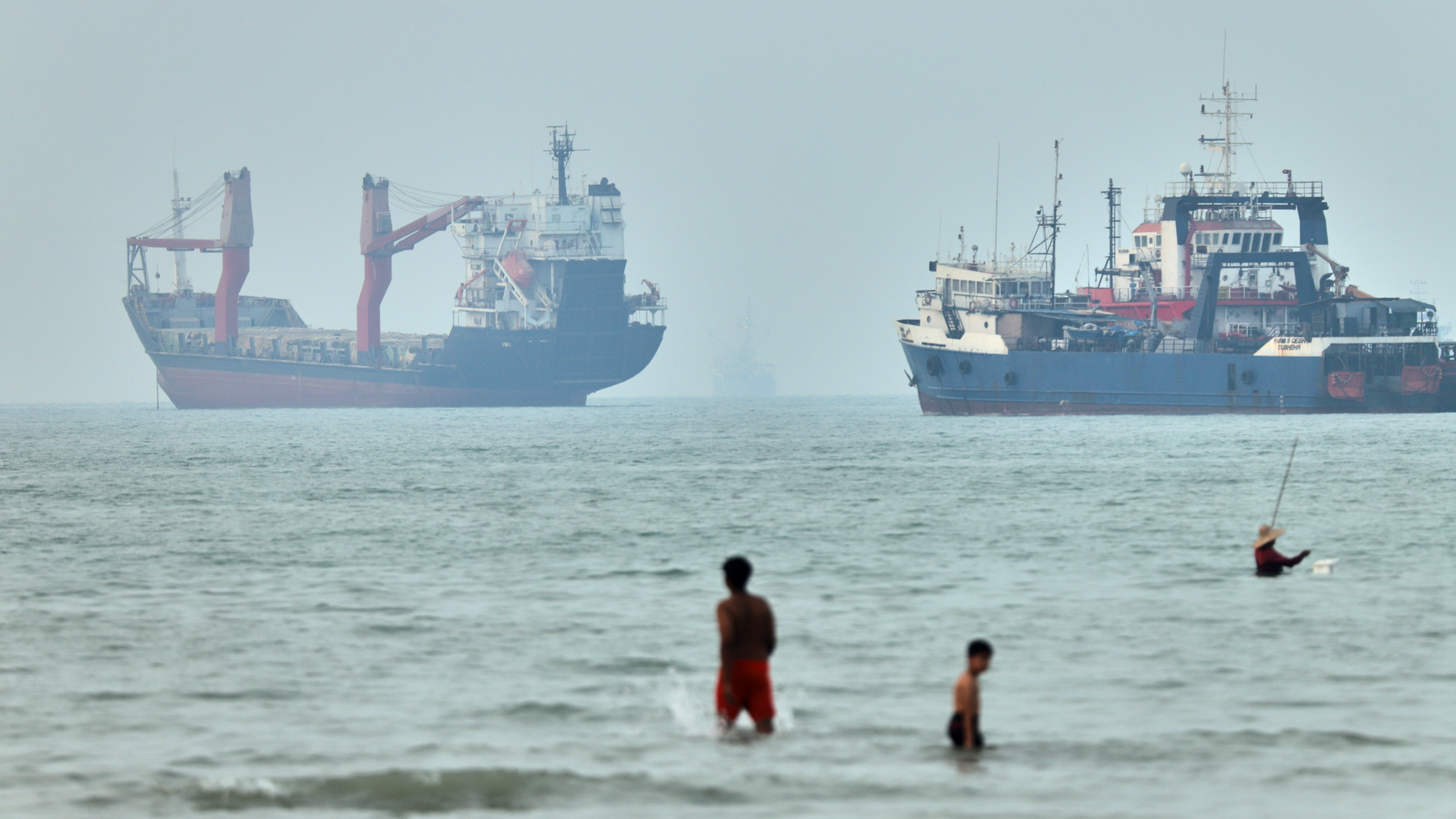
Hosseinzadeh said the Marshall Islands-flagged tanker Advantage Sweet was seized in the Gulf in April 2023 while transporting oil from Kuwait to the US state of Texas. After its cargo was confiscated and sold under judicial orders, the vessel was released.
He noted that the proceeds of nearly $37 million were deposited in an account belonging to the Iranian judiciary.
Under the ruling, $10,000 will be paid through EB Home, an Iranian non-governmental organization, to each of 771 EB patients who filed complaints against the US government over their inability to access essential medicines due to sanctions.
EB patients, often called "butterfly children," have skin as fragile as butterfly wings. Official data show that about 800 such patients have been registered in Iran.
Projectile strikes tanker off Yanbu
Meanwhile, a tanker was struck by an unknown projectile 63 nautical miles west of the Red Sea port of Yanbu, Saudi Arabia, the United Kingdom Maritime Trade Operations (UKMTO) said.
All crew are safe and accounted for, and no environmental impact has been reported, said UKMTO.
Vessels are advised to transit with caution and report any suspicious activity to UKMTO.
