

Shared gardens help turn idle land into green spaces and deliver fresh produce, while offering respite from urban stress
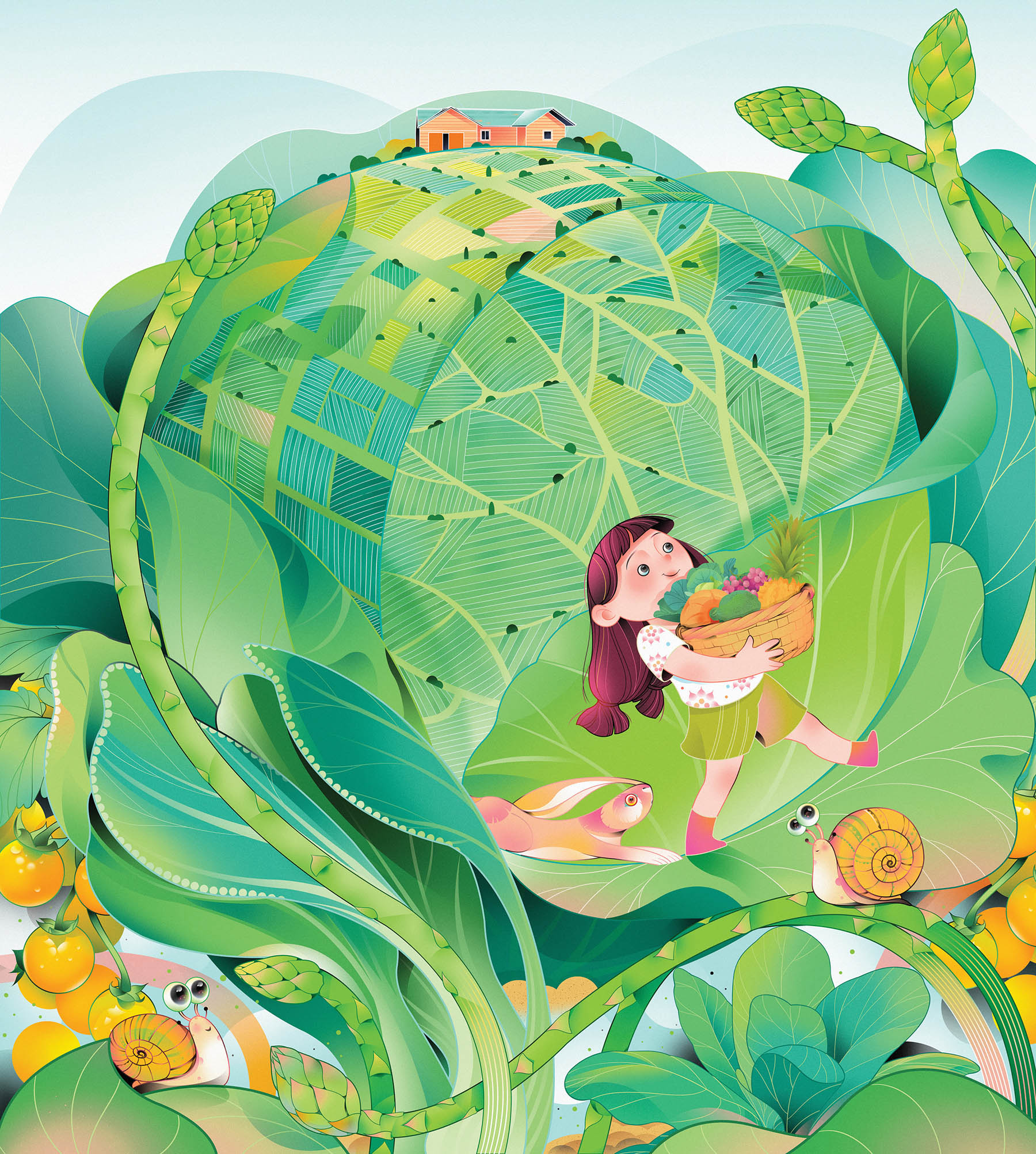
On a sloping patch of land once choked with weeds and left abandoned for nearly a decade, a visible transformation has literally taken root.
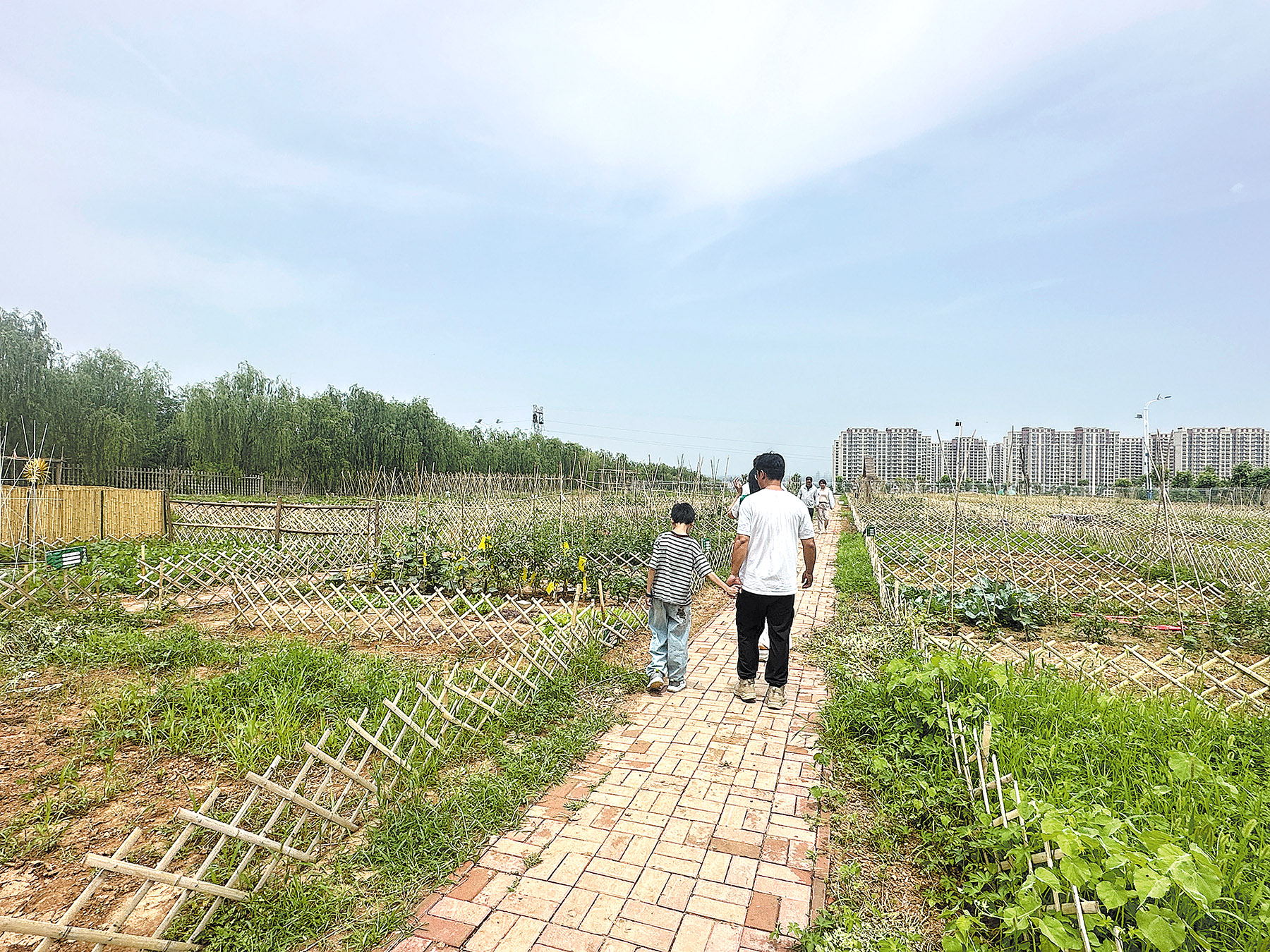
In Licheng district, Jinan, Shandong province, the hillside is now a checkerboard of lush greenery, divided by white picket fences and crisscrossed with bamboo trellises heavy with cucumbers, tomatoes and eggplants.
On a Saturday morning in late May, after a sudden storm swept through the city, a group of urban gardeners rushed to their plots in Tangye subdistrict to check on their vegetables.
“I had no idea how my vegetables were holding up after that wind and rain,” Xu Ling, a local resident, said in a post on her Douyin account.
“Having a vegetable garden gives you one more thing to care about,” she said.
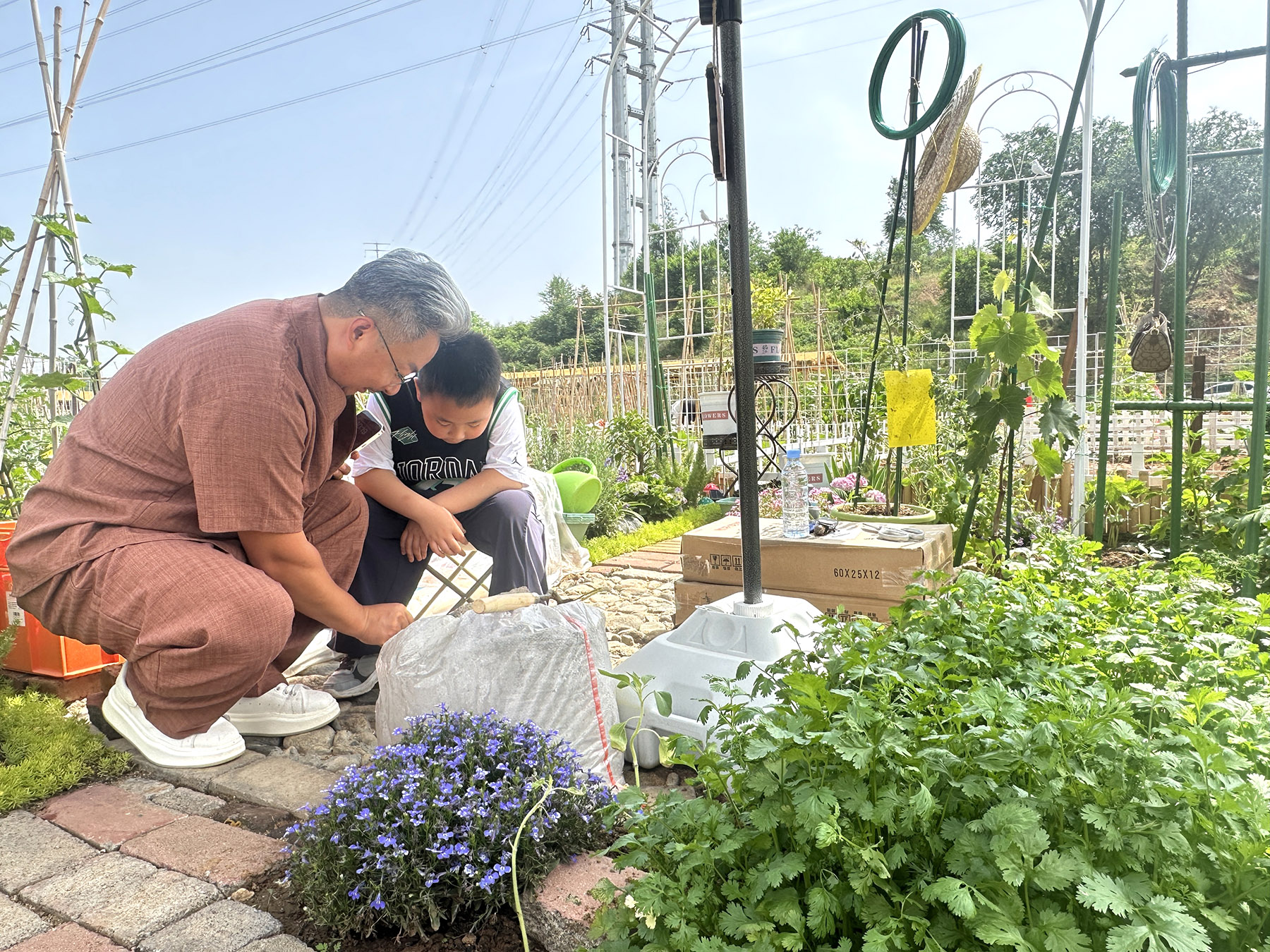
Xu and her husband Tian Xiangqin tend a 20-square-meter plot they call Lele’s Garden, named after their 7-year-old son. Inside, they grow not only vegetables and herbs like cabbage and cilantro, but also flowers including lotuses and hydrangeas.
The couple visit their garden at least once, and sometimes twice, a day. On weekends they bring their son to the garden.
“Once we are here, we are reluctant to leave,” said Xu, standing in the sunshine beside her plot.
This hidden pocket of green at the foot of Longgushan Hill is more than just a gardening project. It is part of a growing urban phenomenon in China where shared vegetable gardens turn idle land into productive, community-driven spaces, often with therapeutic benefits for the participants.
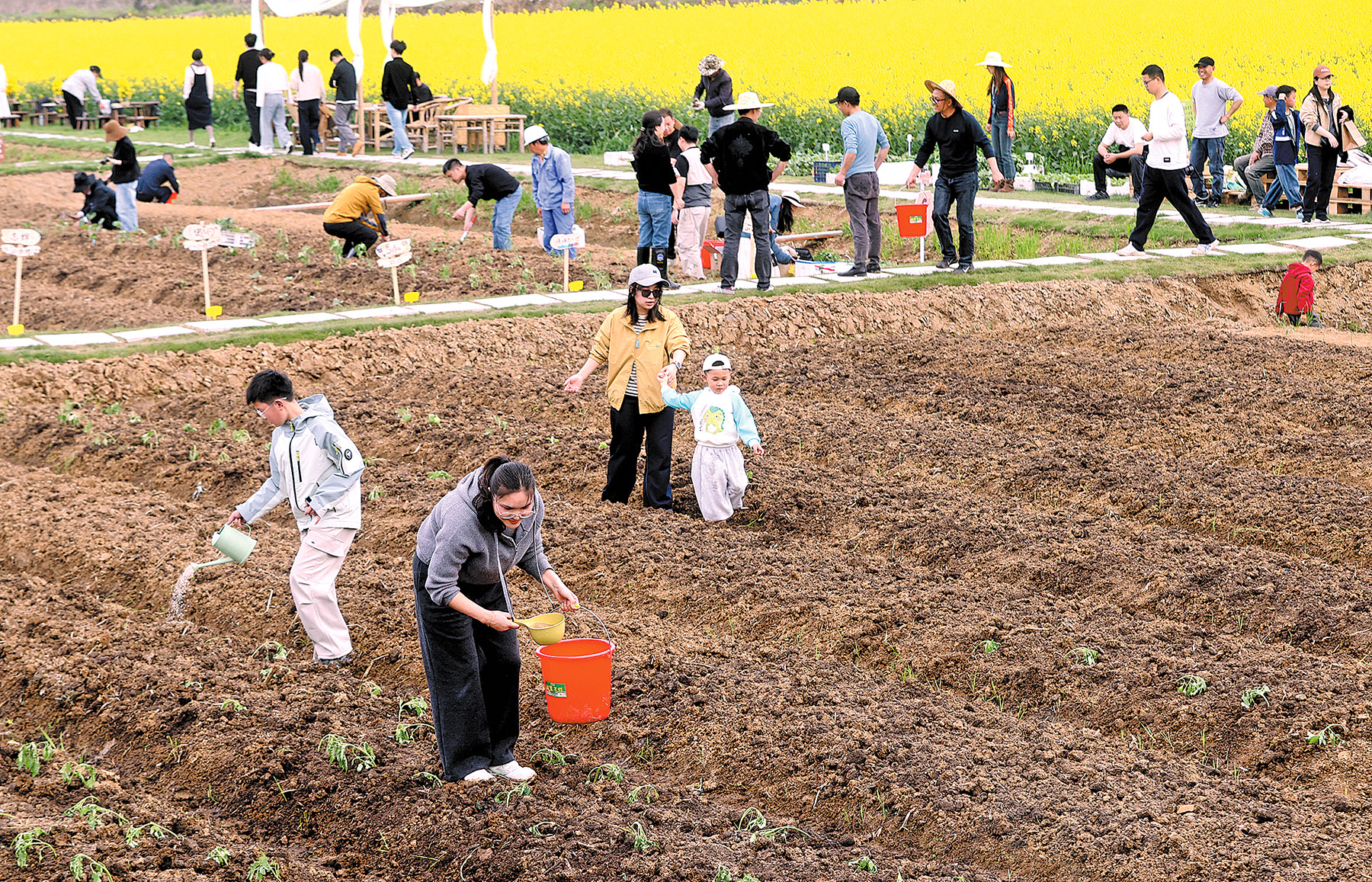
For many city residents, these small plots have become a place to slow down, connect with nature, and discover the simple joy of watching things grow.
“Shared vegetable gardens are rooted in land resources, people’s needs and the renewal of urban and rural spaces,” said Liu Dejun, chief economist at the Shandong Academy of Macroeconomic Research.
“As older neighborhoods are renovated and idle rural resources are revived, the industry will move from rough, spontaneous growth to standardized operations and branded services. The market space will continue to expand,” said Liu.
“This used to be nothing but wild slopes, overgrown weeds and trash,” said Han Kunjie, 30, who manages the Longgushan shared vegetable garden.
The land had sat unused for nearly 10 years after the surrounding area was developed. That changed in 2024, when the Tangye subdistrict office began planning the Longgushan cultural and creative park project. The shared garden was included in the park.
Han, a Zhanglingqiu Ercun villager, secured the land through a rural land transfer agreement, a practice where villages lease land-use rights to individuals.
“I had thought about planting Chinese medicinal herbs, but finally gave up the idea because I did not think the land was suitable,” Han said.
He had noticed parents struggling with their children’s screen addiction, stressed workers seeking outlets, and seniors wanting to stay active and healthy. So, he decided to create a shared vegetable garden.
He installed taps and irrigation pipes, leveled the paths, provided free hoes and shovels, and hired a veteran farmer as a consultant.
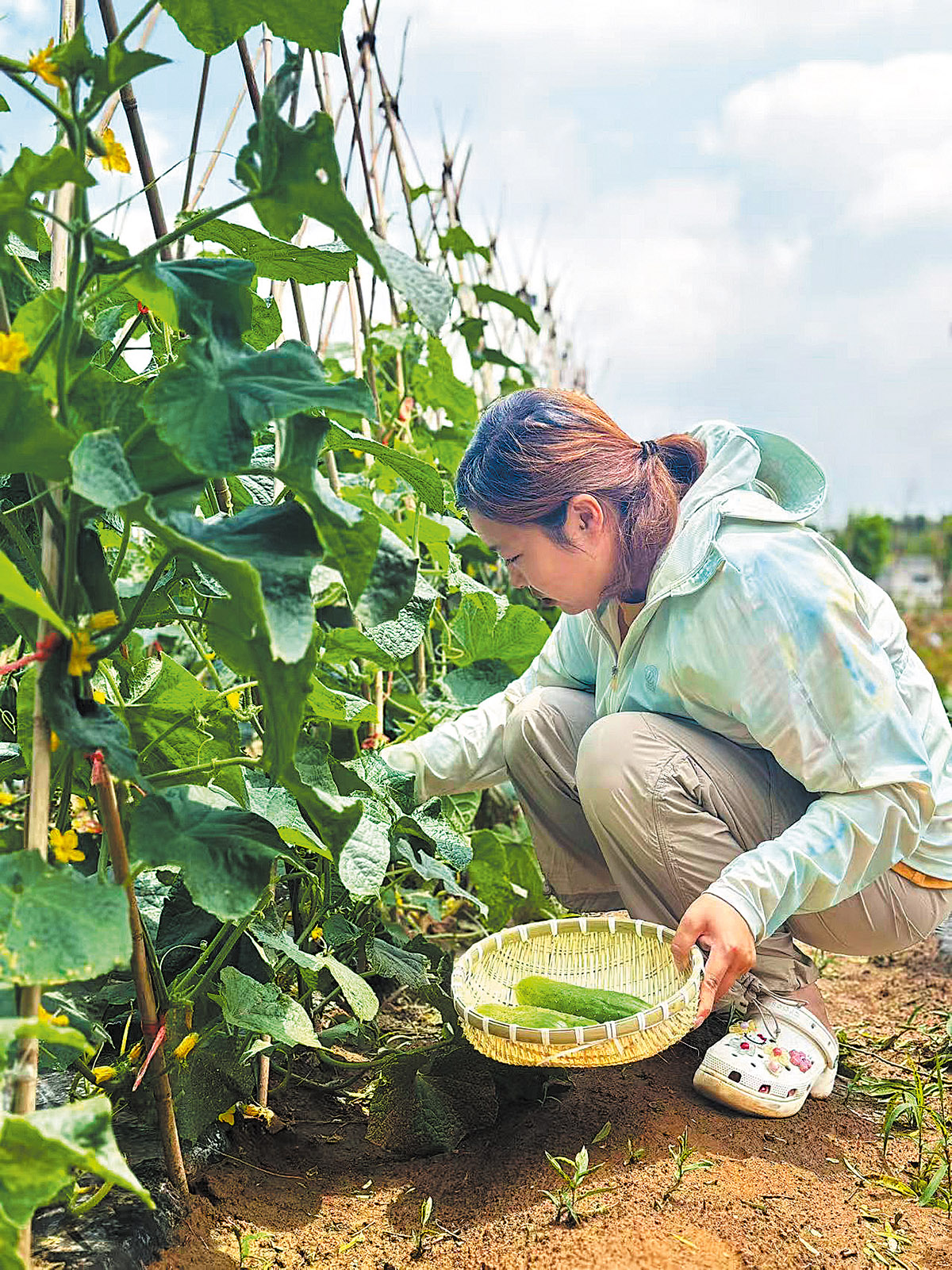
The results exceeded expectations. Covering just over nine mu, or 6,000 square meters, the garden was divided into 204 plots, with 200 of them measuring 20 or 30 sq m each, and four slightly larger ones.
The plots went on offer on March 1.
Within 10 days, all of them were rented.
“When we first planned this, we were not sure if anyone would want to rent a plot,” Han said. “But it turned out to be incredibly popular,” he added.
Walking through the garden, the care and individuality of each plot are immediately visible. Some have just been seeded, with tender green shoots poking through the soil. Others are bursting with produce; small watermelons dangling from vines, their weight tugging at the trellises.
Many plots have been personalized with creative nameplates.
At the entrance, staff posted a seasonal planting and harvesting calendar to guide novice gardeners.
The garden offers three rental prices. For those who want to do everything themselves, including sowing, watering, weeding and harvesting, the cost is 1,299 yuan ($190) per year. A semi-managed option, at 1,599 yuan, includes watering, fertilizing and weeding by staff. The full-service package for 1,899 yuan requires renters only to provide seeds and fertilizer, while professional gardeners handle the rest.
Interestingly, only about 10 percent of renters choose the semi-managed or fully managed options.
“Most people really want to grow vegetables on their own,” Han said.
He said the project is predicted to start turning a profit in its third year.
This enthusiasm is not unique to Longgushan. At the recently opened Yugeng natural farm in Licheng district, 70 of its 150 plots — each
20 sq m — have already been claimed.
Self-planting at Yugeng farm costs 988 yuan a year, with free access to water, electricity, tools, and even seeds and fertilizer for the first year. Technical personnel are on hand to offer advice.
“Our garden is not just about growing vegetables. Instead, it is about leisure,” said Jiang Rongjian, the farm’s manager.
“We want to create a kind of relaxed, farming lifestyle that young people and seniors will love.”
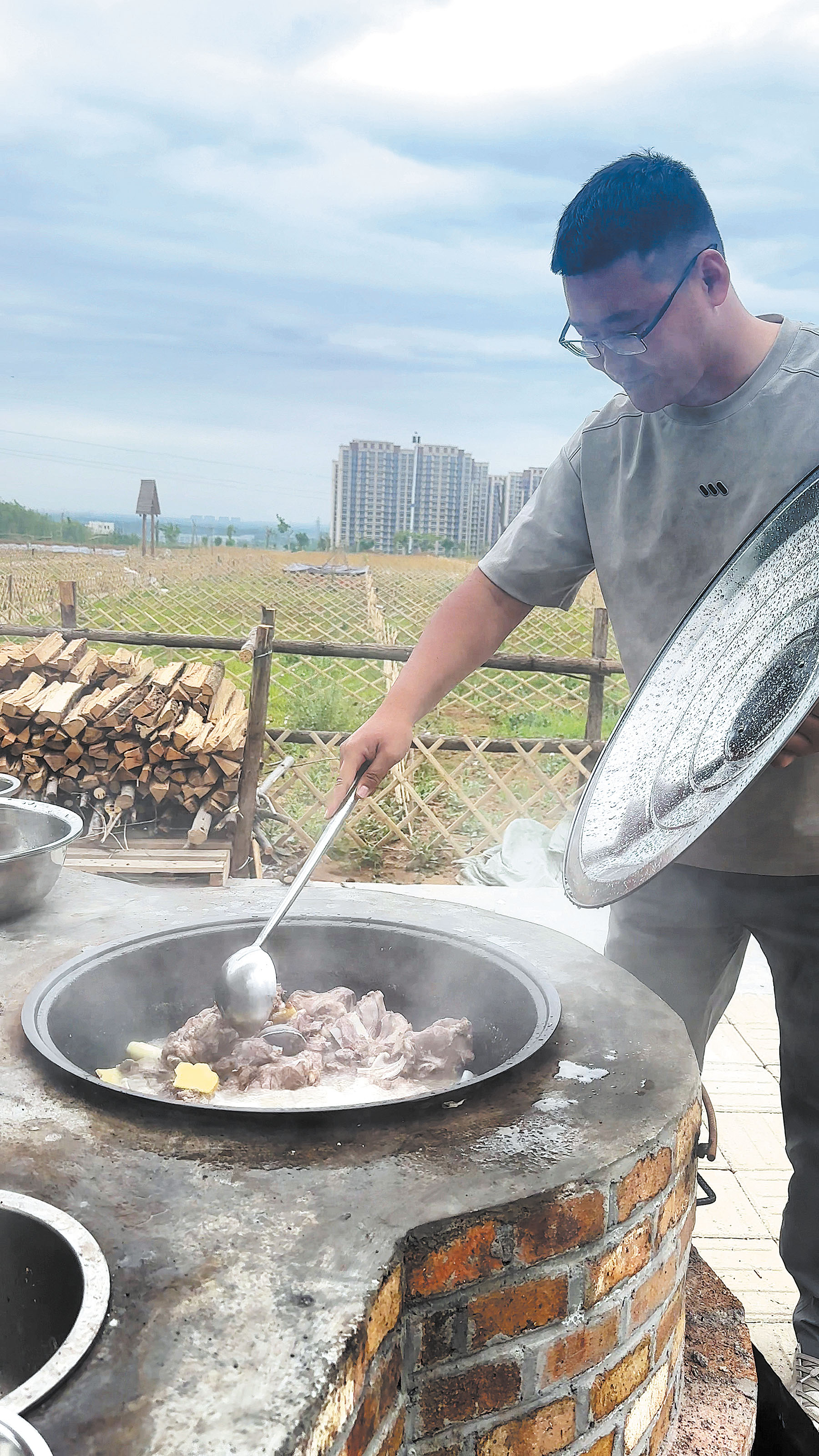
The farm also features a bamboo forest park, a children’s karting track, and open-air kitchens where farm renters can cook what they have just picked.
On a Saturday at Longgushan, retirees, young parents and children trickle in.
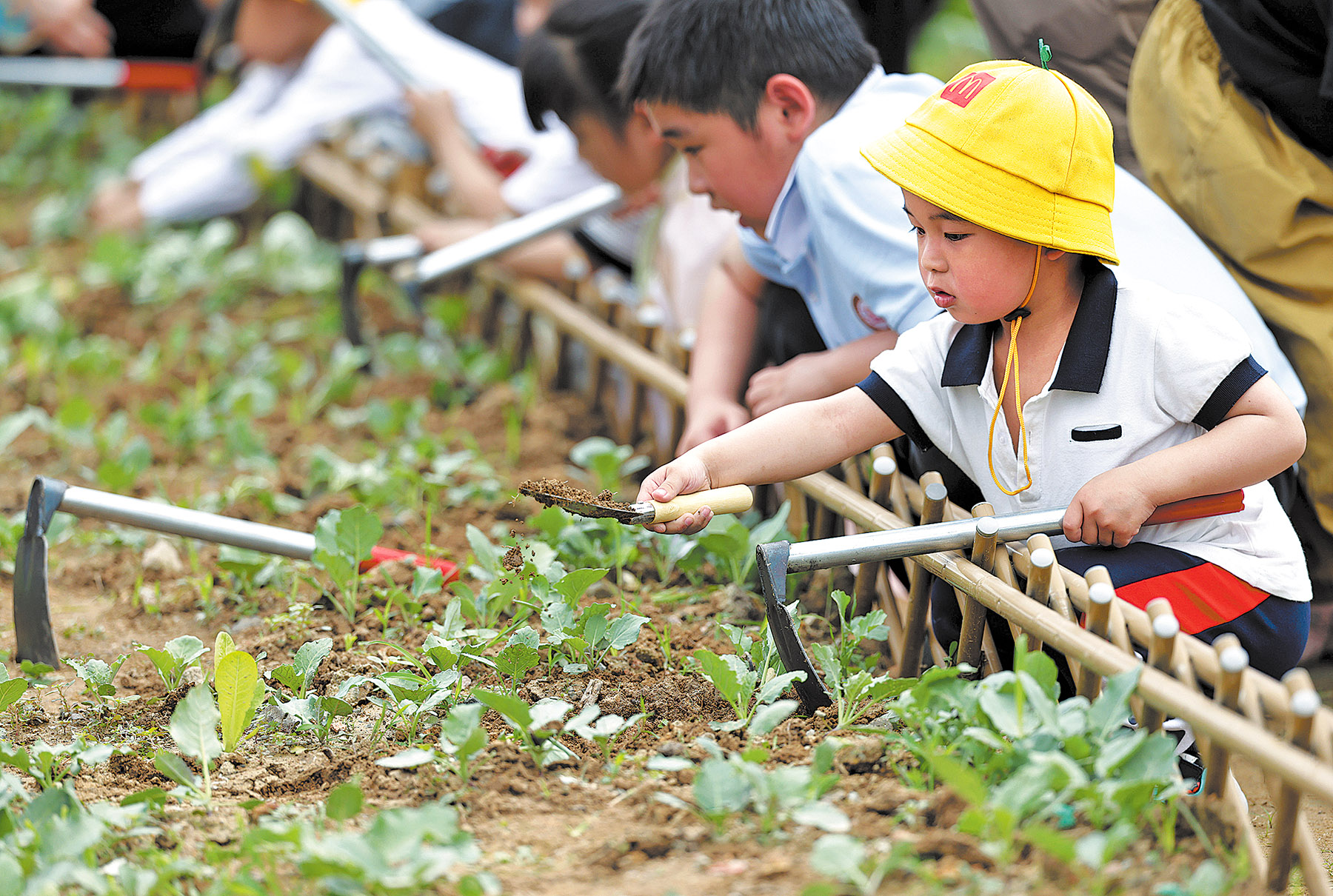
Eighty-six-year-old Han Yuanren, who lives in a home ten minutes’ walk from the garden, visits his plot every day with his small dog. In his 30-sq-m plot, he grows more than a dozen vegetables, including cilantro, cucumbers, beans and lettuce.
“I am happy when I see these vegetables growing very well,” he said, smiling.
According to Han Kunjie, most renters were born between 1985 and 1995. “They rent the plot for their parents,” he said.
“People live in apartment buildings. Neighbors hardly know each other. Grandparents are stuck at home watching television or scrolling on their phones which is not good for their health,” said Han Kunjie.
Tian said the plot gives him something to do, and helps his son Lele learn where food really comes from.
“My father farmed for more than 30 years. But we live far from our hometown, and our son knows very little about vegetables. We would like him to experience the whole process, from sprouting to harvest,” he said.
For many urban dwellers, the appeal of a shared garden goes far beyond fresh produce. It offers daily rhythm, rewards, and a sense of connection to the earth and to oneself.
“Working in the garden lets you put down your phone and slow down,” said Xu.
“The smell of soil, the simple repetition of digging, sowing, watering and weeding brings focus and relaxation. You find peace in the sweat and the harvest.”
But not everyone has access to a real plot of land. For those who do not, “cyber farming” has become a popular alternative.
Cui, a senior at Shandong University who declined to give her full name, turns to farming simulation games to cope with the pressures of graduate school examinations, internships and job hunting.
“In a farm, although it’s cyber, as long as you sow, water and weed, you are guaranteed a harvest. That certainty is deeply satisfying and helps ease anxiety,” said Cui.
Beyond personal relief, shared gardens are also proving to have a profound social impact. In Tongji town, Pengzhou, Sichuan province, 42-year-old Fan Xiuyun has transformed a shared vegetable garden into an important provider for her community.
She runs 20 mu of shared plots, where donors pay 365 yuan a year to adopt a small section and receive monthly organic vegetable boxes in return.
Local seniors work the land to earn meal credits for a canteen. Surplus vegetables are sold, with the proceeds going into a community fund that supports the canteen. People with disabilities have also been hired to take care of the vegetables.
Despite their growing popularity, shared gardens face a major problem: low renewal rates.
“The biggest issue is that most people do not renew their contracts,” said Han Kunjie, the manager. “Many renters are just trying it out for fun. Once the novelty wears off, they do not come back.”
That is why the Longgushan garden deliberately kept the number of plots manageable. “We want to keep them fully rented year-round while giving as many people as possible a chance to try it,” said Han Kunjie.
Liu from the Shandong Academy of Macroeconomic Research noted that many small-scale shared farming projects still rely too heavily on land rental income, which has little added value. “Revenue gaps between peak and off-seasons are huge. The payback period is long, and risk resistance is weak,” he said.
He suggested building a diversified revenue system that includes leasing, managed services, produce sales, and educational tourism.
Longgushan is already adapting. The cultural and creative center, which the garden is part of, is being developed into a full-fledged lifestyle destination. Plans include a parking lot, a convenience market, a coffee shop, a creative bazaar, and even charging stations for electric vehicles.
“When parents bring their children here, they need a place to park, somewhere to buy groceries, a nice view, and then they can tend the garden and have fun,” Han Kunjie said.
Yugeng natural farm is taking a different path.
“We do not want to become just a photo opportunity spot,” said Jiang, the farm manager. “We want to keep the commercial feel low and let people truly connect with nature.”
The farm plans to introduce more education courses for seniors as well as more parent-child activities.
Liu said that shared gardens deserve flexible policy support. He suggested that local governments streamline approval mechanisms, lower entry barriers for idle urban land, encourage social capital to participate in compliant operations, and adopt differentiated regulation.
“For projects that are purely about growing vegetables, give the operators as much freedom as possible to run things on their own,” the economist said.
“For projects that have a few simple leisure facilities, local authorities can set clear construction standards to guide the development. For projects that extend into tourism, strictly control how much land they use and how big they build to protect the land.”
The social benefits are considerable, said Liu.
“For seniors, farming brings back rural memories, supports health and leisure, and enriches their later years. For younger people, it is a way to spend time with family and return to a slower pace of life. For children, it is an outdoor classroom to have labor education, nature education and cultural education all rolled into one.”
Sun Qi contributed to this story.
Contact the writers at zhaoruixue@chinadaily.com.cn
