

Hong Kong forum hears Chinese firms venturing into Mideast markets must develop long-term ties, adapt to culture
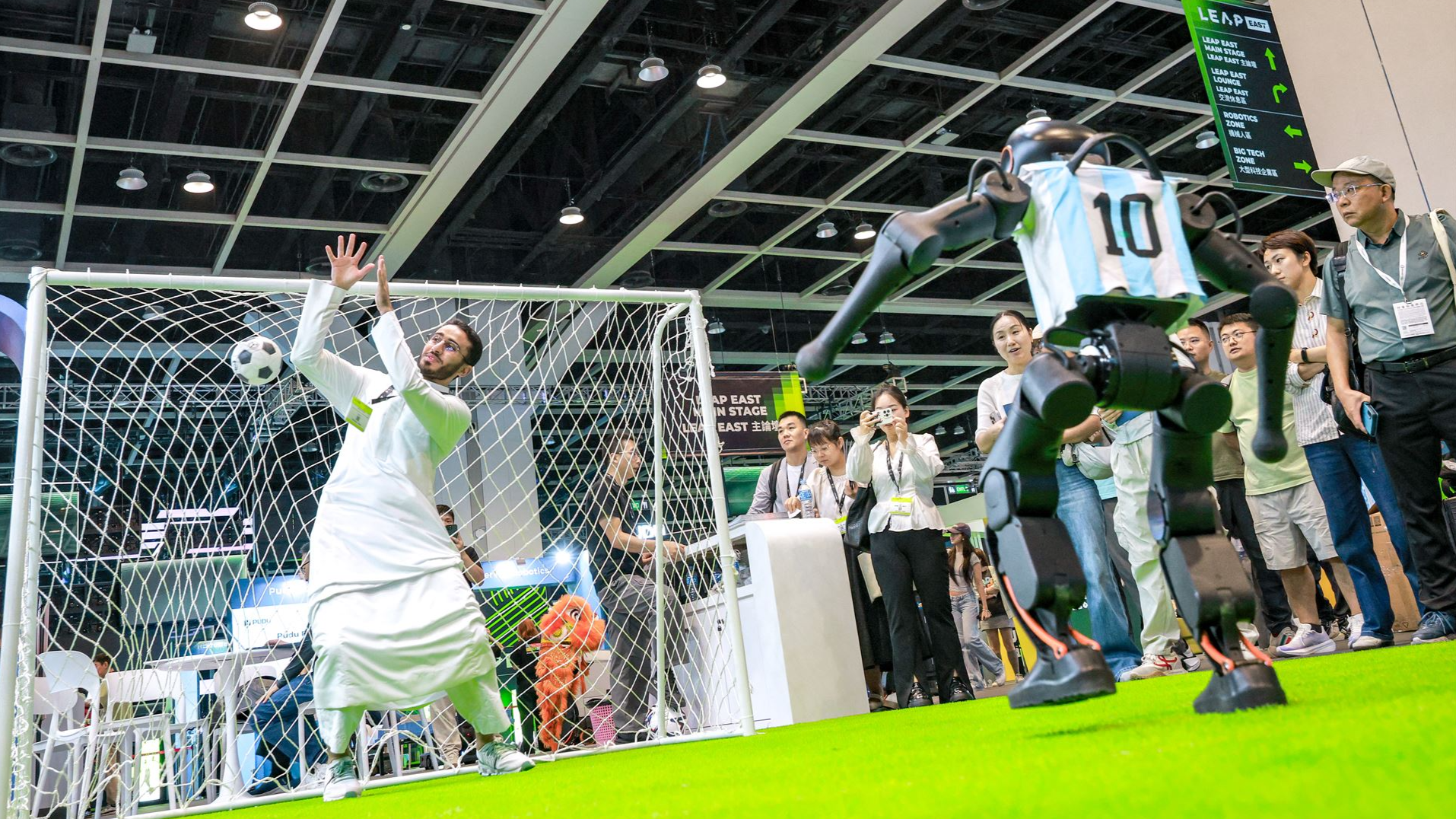
Companies looking to globalize should pursue localization and consider Hong Kong’s unique position to help them scale up their businesses, senior executives from technology enterprises said during the recently concluded LEAP East event in Hong Kong.
The experts were part of a July 8 panel discussion, titled “Forging New Frontiers: Expanding from Hong Kong to the Middle East and Beyond”, during which they shared first-hand stories and insights from their ventures in the Middle East and Belt and Road countries.
“I think today, most of the Chinese technology companies will do some globalization, but I think localization is more important,” said Kay Yang, CEO of Westwell Holdings Hong Kong Ltd, which specializes in artificial intelligence (AI) and new energy technology.
Yang said that when her firm — a subsidiary of Shanghai-based Westwell Technology — entered the Middle East market to launch smart solutions, it had to learn about local rules and culture as part of building trust.
ALSO READ: HK, Saudi Arabia partner for big AI leap
She noted that the relationship is not a challenge for Chinese technologies abroad if approached the right way, and could become an opportunity for mutual understanding and common goals.
With the Hong Kong unit serving as a vehicle for global expansion, Westwell is now present in the United Arab Emirates, Oman and the United Kingdom, providing smart technologies in logistics, container yard and supply chain activities. The Middle East and North Africa region is a key focus.
Yang noted that Hong Kong is the place “where trade is shaping Asian financing and technology intersect”.
She also noted that everyone “is going through a major green transition and digital upgrade” and that Chinese companies are always in a strong position to offer their expertise and knowledge, helping create logistics operations that are more flexible and safer, whether in China, the Middle East or anywhere else worldwide.
Tony Qiu, vice president of Meituan and CEO of Keeta, observed that consumers vary across the globe.
Qiu noted that in Hong Kong, for example, many people live alone, so there is a huge demand for single-person set menus. Hence, Keeta — the international subsidiary of Chinese food delivery platform Meituan — launched a “meal for one” program in Hong Kong, offering value-for-money set menus for individuals.
“But when we went to Saudi Arabia and other Middle East markets, people live with big families. So when they (have big orders) of food, sometimes it has to be delivered by different motorcycles, and the experience is not very good,” said Qiu, while noting that more than 90 percent of their employees are from the Middle East.
Large orders in the Middle East prompted the firm to launch services using cars rather than motorcycles to deliver food, so that all the food can arrive at the same time.
READ MORE: Lee: HK-Saudi Arabia partnership holds great potential
In Saudi Arabia, where around 60 percent of consumers are under age 30, consumers are open to new applications, services and products.
“When it comes to Brazil, people don’t order food delivery that often (for) lunch because people love to gather outside the offices. So consumer behavior is different, so we have to adapt,” said Qiu.
Stephen Wang, head of ASEAN Markets at WeBank Technology, said scaling up localization of businesses “is not an easy thing to do”. He said companies must have a long-term commitment to investing in local relationship-building and a strong local team.
“So for the Chinese companies, the advice is not to chase a short performance target, but to just take a very long-term commitment to the community,” said Wang.
READ MORE: HK commerce chief plans Türkiye, Egypt visits to tap new markets
Bryan Peng, executive director at the Hong Kong government’s Office for Attracting Strategic Enterprises, or OASES, said the office has already supported 124 companies to land in Hong Kong and that officials have met over 1,000 companies that want to set up operations in Hong Kong and use the city as a springboard to go global.
He advised businesses to also connect with the local community, noting that chairpersons of business groups and associations can play an important role as connectors to stakeholders. He said OASES has launched new policies related to fintech and digital assets over the years.
“I think one of the most important (things) is how to catch up with the government policy. And how to make good use of these policies to support you to develop,” said Peng.
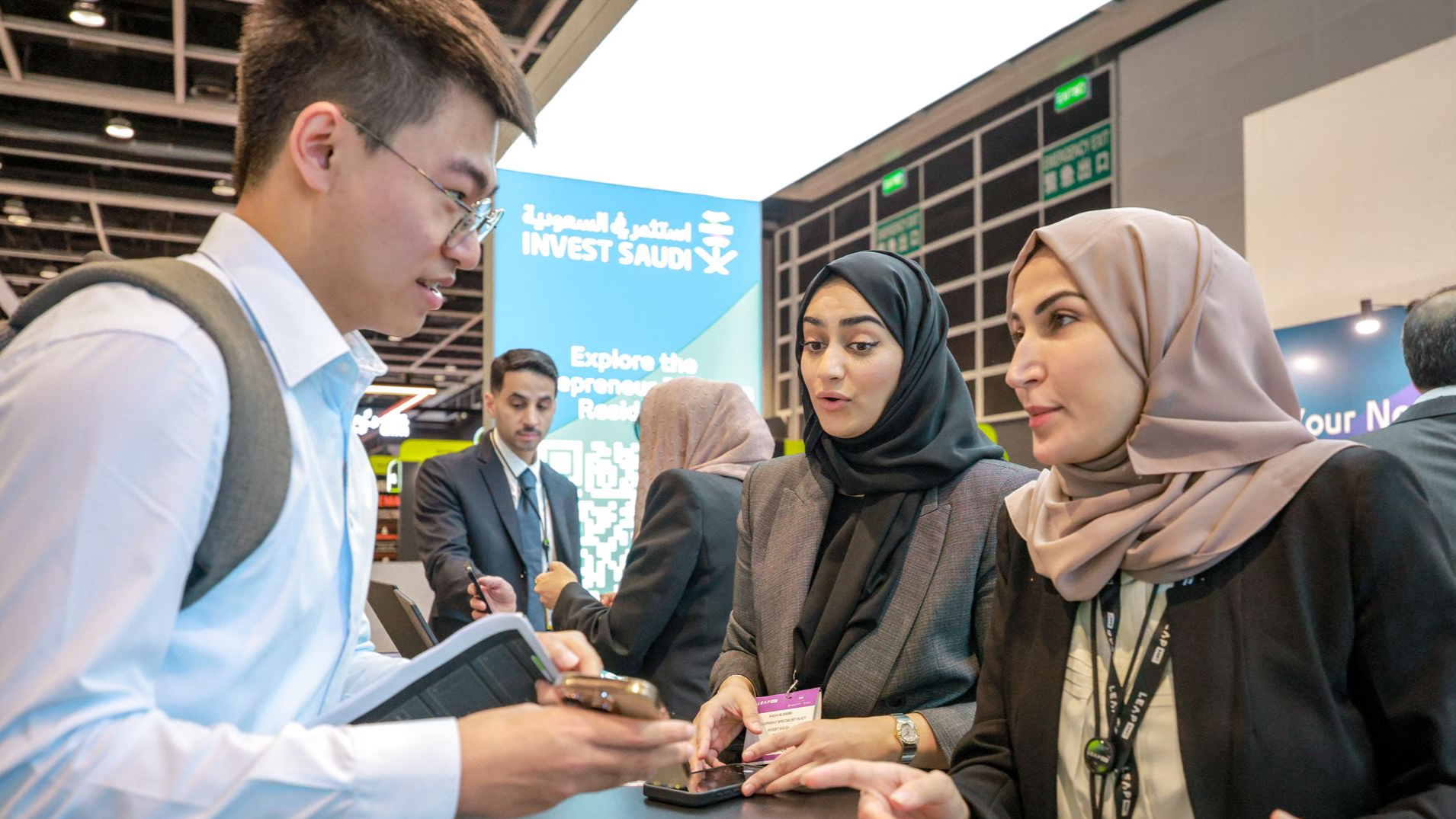
Faisal Bin Saud Al Khamisi, co-chairman of the Board of Tahaluf, told China Daily that the response to the inaugural LEAP East in Hong Kong — held from July 8 to 10 — “has been phenomenal”, with 25,000 attendees, 340 speakers, 450 exhibitors, 300 startups, and 600 investors representing more than $6.5 trillion in assets under management.
“This is more than five times the scale typically seen for a new event launch in Hong Kong, and it points to strong demand for deeper connections between Asia and Saudi Arabia,” said Al Khamisi, adding that the quality of the conversations “has also been notable”.
“We are seeing Asian companies explore regional headquarters, R&D partnerships and market expansion into Saudi Arabia, while Saudi investors are actively engaging with founders and technology leaders across Asia in areas such as digital inclusion, biotechnology and fintech,” said Al Khamisi.
Contact the writer at jan@chinadailyapac.com
