

Hong Kong’s first astronaut Lai Ka-ying and her crewmates on the Shenzhou XXIII manned space mission have successfully installed the world’s first lightweight, high-precision carbon dioxide and methane point-source detector on the nation’s space station, according to a video released by the China Manned Space Agency (CMSA) on Sunday.
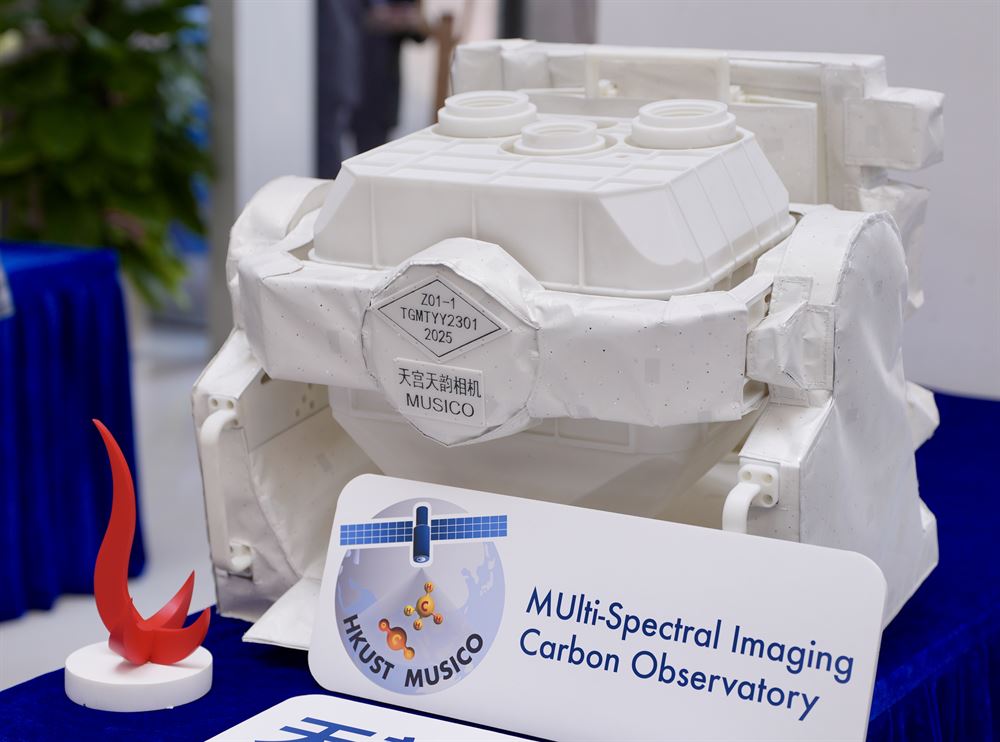
Lai and her fellow astronauts Colonel Zhu Yangzhu, mission commander and spaceflight engineer, and spacecraft pilot Colonel Zhang Zhiyuan, collaborated last week with ground researchers to complete the testing and external installation of the Multi-Spectral Imaging Carbon Observatory (MUSICO) module, developed by Hong Kong scientists, on the Tiangong space station, the video showed.
MUSICO, nicknamed “eye in space”, is the HKSAR’s first scientific payload aboard the national space station and aims to monitor carbon dioxide and methane concentrations in key low- and mid-latitude regions of the world.
Spearheaded by the Hong Kong University of Science and Technology, the MUSICO project holds great potential in contributing valuable space-based observational data for global greenhouse gas tracing and ecological environment research, according to the video, which is part of the CMSA's Tiangong TV series that records Chinese astronauts' lives and work on the space station.
The astronauts also made progress in several microgravity physics experiments, the video showed, including maintenance and reconfiguration of liquid-based soft supermaterials within an experimental control cabinet and cleaning of sample holders in the containerless experiment module.
The video also recorded their health monitoring activities to track physiological changes in microgravity, such as blood sample collection, cardiovascular function assessments and bone density measurements.
The crew members actively engaged in regular exercise programs with various fitness devices to maintain physical and mental well-being, according to the video.
Another CMSA's video released on June 28 showed the astronauts placed sweet pumpkin chunks into a space oven, unlocking a new culinary experience in orbit.
ALSO READ: HK’s Lai, astronauts mark one month in orbit with baked pumpkin
The Shenzhou XXIII mission, which lifted off into space on May 24, is tasked with operating and maintaining the Tiangong space station, conducting scientific and technological experiments, carrying out spacewalks to install and retrieve equipment, and taking part in educational activities.
