

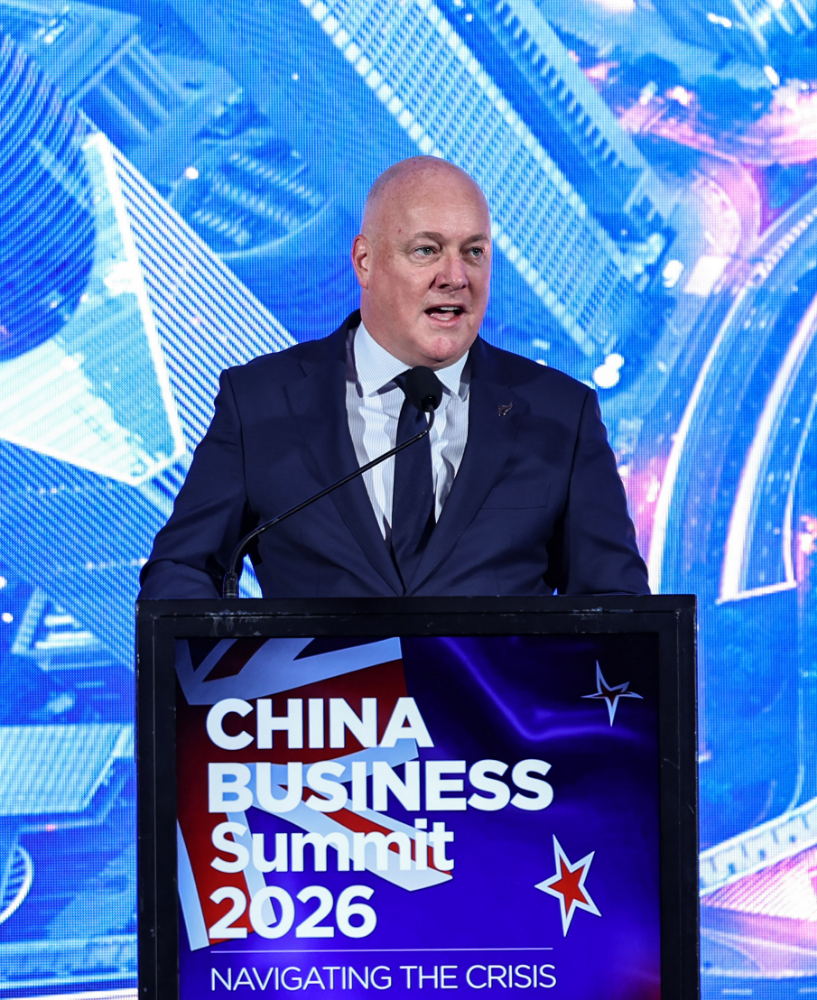
AUCKLAND – New Zealand Prime Minister Christopher Luxon on Thursday stressed the importance of stronger trade ties with China, which "remains one of the biggest opportunities", as the world enters "an era of ongoing disruption".
"China drives thirty percent of global growth," Luxon said at the China Business Summit 2026 in Auckland. "There is a way and need to grow with China. For business, I think the message is really simple. China remains one of the biggest opportunities."
He pledged to cooperate with China and "maximize cooperation wherever we can".
The prime minister also noted that China is going through a "very important shift".
"The next phase of the China story, without doubt, is premiumization, it's branding and innovation, and those consumer preferences are changing through the rising middle classes," he explained.
On the occasion, business leaders and government ministers shared their ideas and thoughts about navigating the fuel crisis emerging from the Middle East conflict, with a view to engaging China and leveraging the trading partner's technological and infrastructure developments in their efforts.
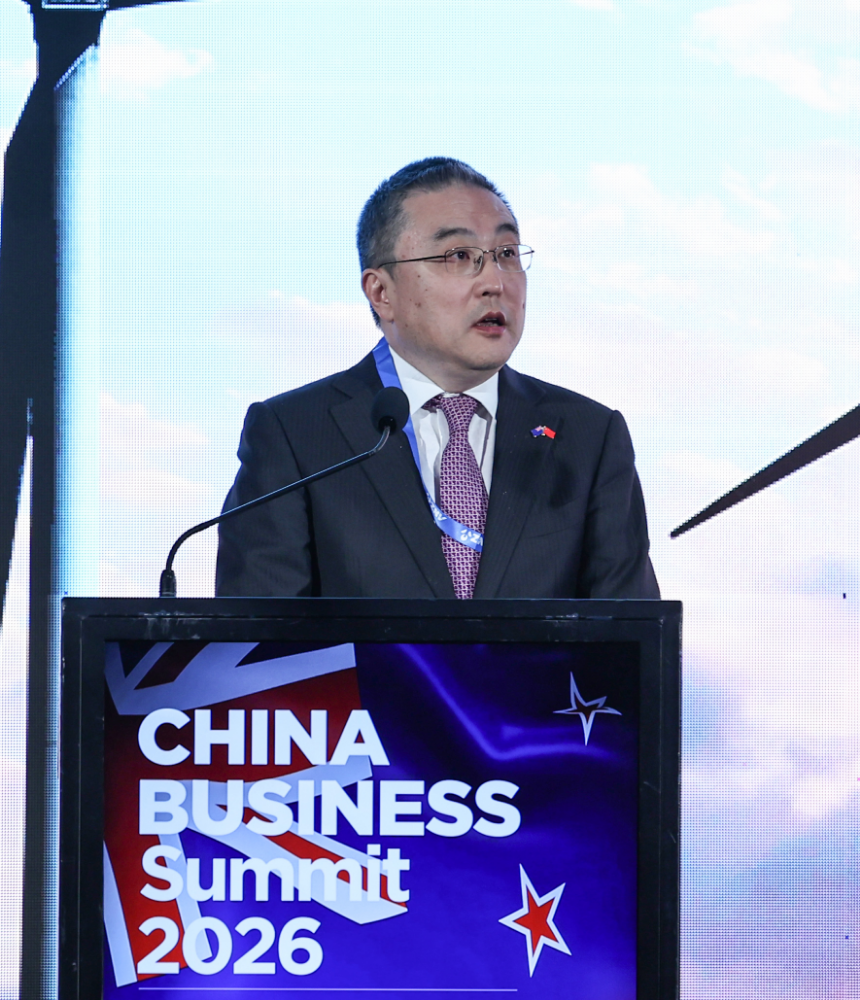
Chinese Ambassador to New Zealand Wang Xiaolong stressed that China will continue to build a comprehensive strategic partnership with New Zealand grounded in mutual respect and shared benefit.
"There are no historical grievances nor fundamental conflicts of interest between China and New Zealand," Wang said. "In the more than five decades since the establishment of diplomatic relations, the two sides, in the spirit of 'striving to be the first,' have explored friendly cooperation in ways that have kept our relationship at the forefront of China's ties with Western developed countries, delivering tangible benefits to both our peoples."
Wang stated that under the current circumstances, the shared interests and common ground between the two countries have only increased.
ALSO READ: China, New Zealand enhance partnership in education
"China's development represents an opportunity for New Zealand, not a threat," he added. "Our economies are highly complementary, and there is every reason for us to play a greater role in supporting each other's efforts to achieve our respective development goals."
