

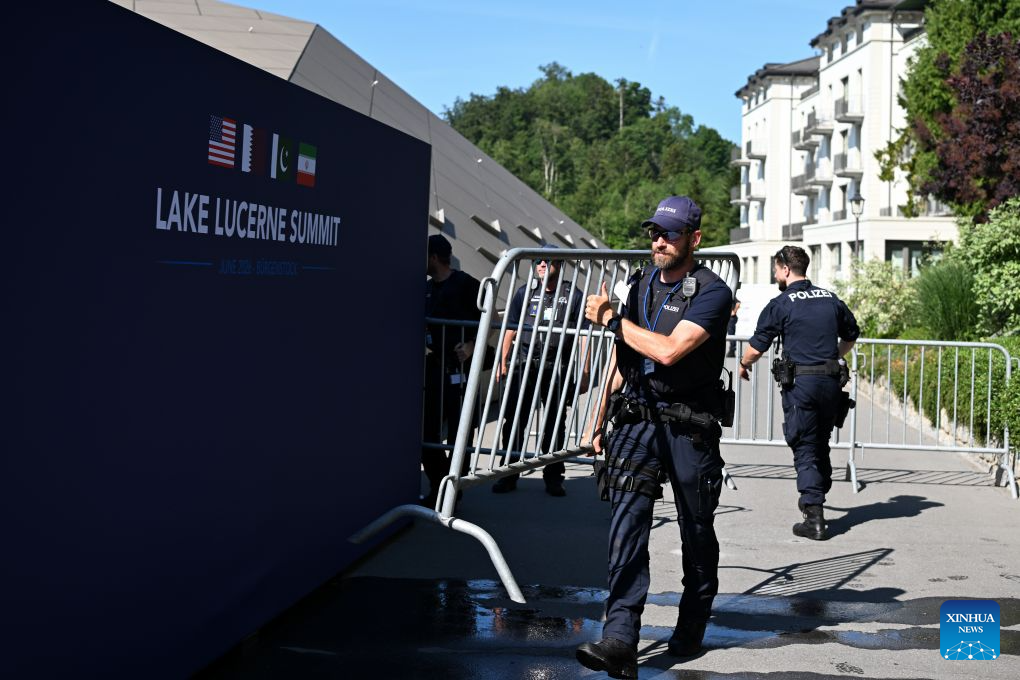
ISLAMABAD/BURGENSTOCK, Switzerland/WASHINGTON/TEHRAN/GENEVA – Pakistan and Qatar on Monday announced that the first session of high-level talks under the Islamabad Memorandum of Understanding (MoU) has concluded in Burgenstock, Switzerland, with participation from representatives of Iran, the United States, and the two mediating countries.
According to a joint statement issued by Pakistan's Foreign Ministry, the talks were held in a "positive and constructive atmosphere," with the participants making progress, including the establishment of a mechanism for further US-Iran technical negotiations.
The statement said the parties agreed to establish a high-level committee to provide political oversight of the mediation process, with working groups focusing on nuclear issues, sanctions, monitoring, and dispute resolution.
US and Iranian negotiators held talks Sunday at Buergenstock mountain resort in central Switzerland on implementing the MoU signed by the two sides to reach a final deal.
ALSO READ: Iranian, US delegations in Switzerland for talks to end ME conflict
The talks mark the first round between the two sides after the signing of the MoU aimed at ending conflict on all fronts, including Lebanon.
During the Sunday talks, the two sides discussed mechanisms to help ensure the Strait of Hormuz remains open, enforce the fragile ceasefire in southern Lebanon and address "all elements of the nuclear deal" in an effort to establish a starting point for technical negotiations, according to the CNN, citing a senior US diplomat involved in the negotiations.
US Vice-President JD Vance said before the talks that the opening of the Strait of Hormuz and the ending of the Iranian nuclear program have already been accomplished.
"The question before us now is, how much more can we accomplish together? Can we turn over a new leaf? Can we change relations in the Middle East permanently? Or do we go back to doing things the old way, which is not our preference," Vance said.
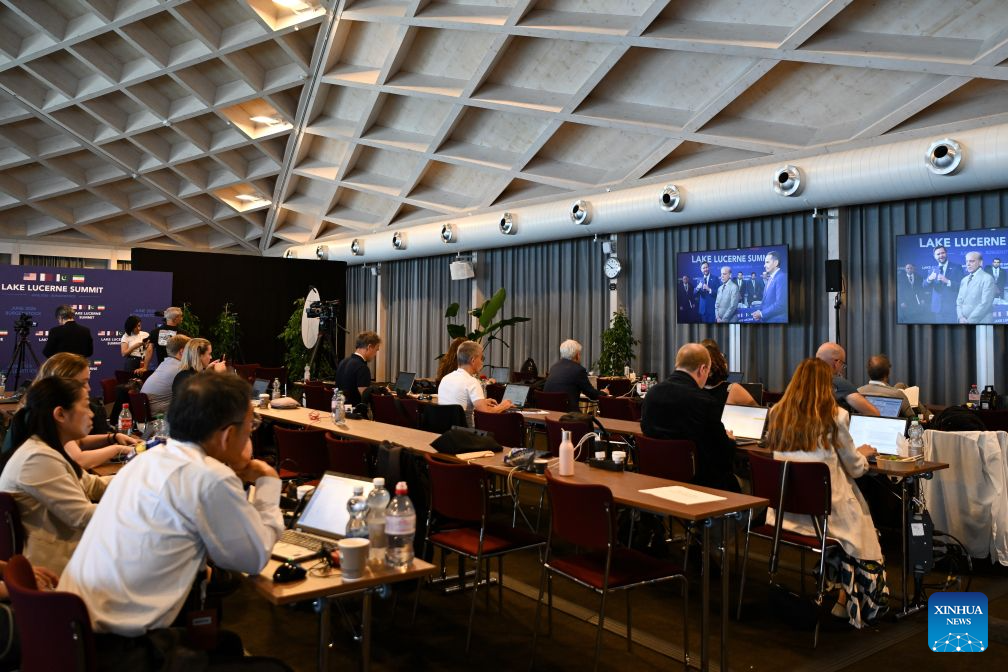
Meanwhile, the Iranian side said the US side must fulfill its commitments under the MoU, Iran's semi-official Fars news agency quoted Iranian Foreign Ministry spokesman Esmaeil Baghaei as saying.
If some of the US commitments are not implemented, the entire MoU will be at risk, Baghaei added.
At the start of the talks, the Iranian delegation opposed a handshake and joint photo ceremony planned by the US delegation and the organizers of the meeting, Iran's semi-official Tasnim news agency reported, citing a source close to the negotiating team.
Just as the talks were taking place in Switzerland, US President Donald Trump threatened on his Truth Social platform to "hit Iran very hard again" if the country does not stop Hezbollah from "causing trouble."
ALSO READ: Iran says talks with US bound by Tehran's 'red lines'
The talks were originally scheduled for Friday but were later postponed and rescheduled for Sunday after Israel launched deadly strikes in Lebanon.
Iran announced Saturday the closure of the Strait of Hormuz, citing US, Israeli "violations" of the MoU. However, Washington has denied seeing any evidence of the closure.
The US negotiating team also includes US presidential envoy Steve Witkoff and President Donald Trump's son-in-law Jared Kushner, while the Iranian delegation includes Parliament Speaker Mohammad Bagher Ghalibaf and Foreign Minister Seyed Abbas Araghchi, as well as senior security, central bank and oil officials.
Pakistani and Qatari mediators are participating in the talks.
International Atomic Energy Agency (IAEA) Director General Rafael Grossi was also at the site, as he said on social platform X that he met with Swiss Foreign Minister Ignazio Cassis there to discuss "recent developments regarding Iran" and other issues.
"At this critical moment, it's important to give diplomacy every opportunity to succeed," Grossi said.
According to a report by the Tasnim news agency, the US side wanted Grossi to be present in the talks, but Iran rejected the idea.
The war with Iran, jointly launched by the United States and Israel on Feb 28, has cost the Pentagon about $40 billion, according to preliminary estimates in an upcoming analysis from the Center for Strategic and International Studies, a Washington, DC-based think tank, CNN reported.
Pezeshkian says MoU largely serves Iranians' interests
Iranian President Masoud Pezeshkian said on Sunday that the recently signed peace memorandum of understanding (MoU) with the United States largely serves the interests of the Iranian people, according to the official news agency IRNA.
Speaking at a national conference on monetary and banking policies in the Iranian capital Tehran, Pezeshkian said that the US positions toward Iran had undergone a significant change, with Washington now accepting that it cannot turn a blind eye to the Iranian people's rights.
He added that upcoming negotiations between Iran and the United States had laid favorable groundwork for economic recovery, market reopening, and problem resolution.
Pezeshkian pointed to tangible economic indicators, noting that Iran exported more than 16 million barrels of oil in recent days.
He also expressed hope that with the initiation of negotiations, $6 billion of Iranian frozen assets in Qatar would be released, adding that the central bank governor was attending the talks specifically for that purpose.
The president accused Israeli Prime Minister Benjamin Netanyahu of opposing regional peace and seeking to "prolong the war, block Iran's access to its resources and power."
Iran says ready to respond to US threat
Also on Sunday, Ghalibaf warned the US to "be careful with their statement" in response to Trump's threat to strike Iran again over their support for Hezbollah.
Ghalibaf, who leads the Iranian negotiating team for Sunday's talks with the US in central Switzerland's Buergenstock resort, wrote on X that if the US threat had any effect, they wouldn't have reached the point of despair today.
"They had better be careful with their statements. Our armed forces are ready to respond in another way," said Ghalibaf.
Trump on Sunday threatened on his Truth Social platform to "hit Iran very hard again" if the country does not stop Hezbollah from "causing trouble."
