

China warned on Thursday that anyone who crosses the line on the Taiwan question will "pay the price", after it denied entry to a small number of New Zealand members of Parliament who had recently visited the Taiwan region.
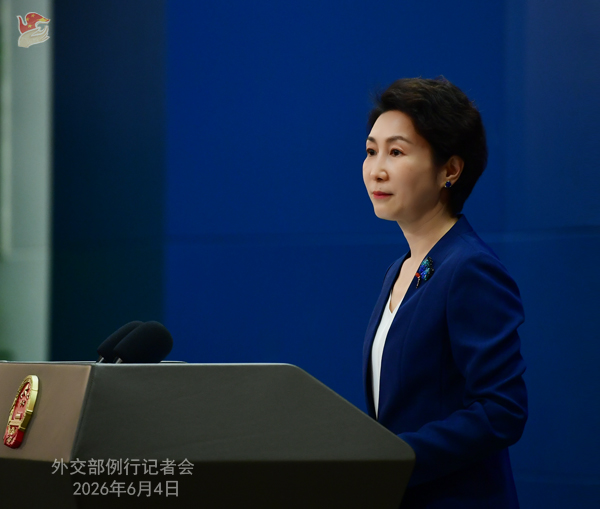
"We urge the relevant individuals to truly respect China's sovereignty and territorial integrity, strictly abide by the one-China principle, and bear in mind that anyone who crosses the line on the Taiwan question will pay the price," Foreign Ministry spokeswoman Mao Ning said at a regular news briefing in Beijing.
Mao made the remarks in response to a question about China's decision to bar several New Zealand lawmakers from entering the country.
In a statement made earlier on Thursday, the Chinese Embassy in New Zealand said a small number of New Zealand lawmakers had visited the Taiwan region in their capacity as MPs despite China's serious concerns, firm opposition and repeated prior warnings.
The embassy said China had decided, in accordance with relevant laws, to take measures against the individuals concerned, including denial of entry into China, including the Hong Kong and Macao special administrative regions.
ALSO READ: China tells NZ to avoid sowing discord
"The one-China principle is a prevailing consensus of the international community and a basic norm governing international relations, as well as the political foundation of China-New Zealand relations," Mao said.
Responding to accusations by Five Eyes alliance's intelligence agencies that China has used online job platforms to recruit intelligence personnel, Mao said the Five Eyes is the world's largest intelligence alliance and has long carried out large-scale and systematic espionage activities around the world.
"It is ironic for such an organization to accuse China of posing as a so-called 'espionage threat'," she said.
