

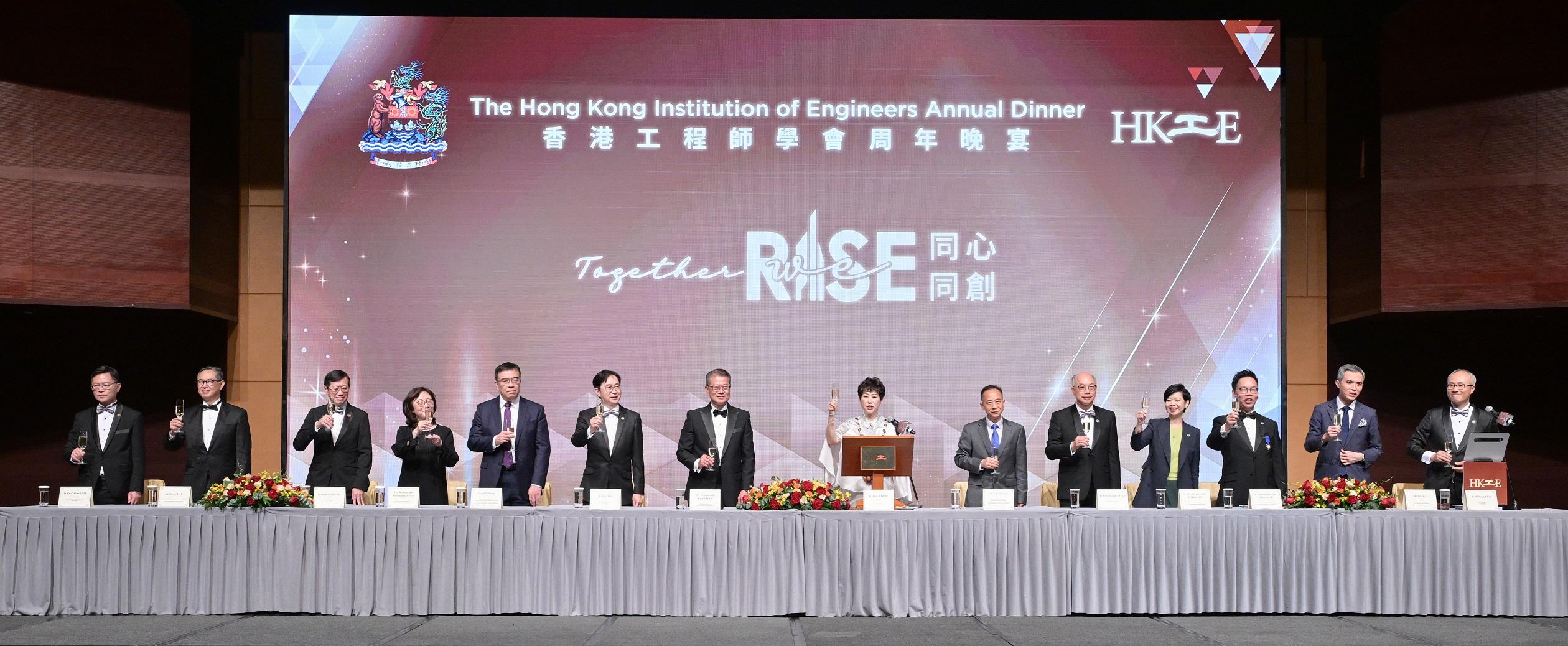
HONG KONG – Financial Secretary Paul Chan Mo-po has urged Hong Kong’s engineers to play a more proactive role in driving green transition, as the global drive towards carbon neutrality is reshaping the way cities are designed, built and operated.
Identifying green transition as a growth strategy for the construction and engineering sector, he said at the Hong Kong Institution of Engineers (HKIE) annual dinner on Friday that as green requirements advance globally and consumer demands similarly evolve, it will increasingly be a competitive advantage of the engineering profession to embrace green practices.
The city’s engineers are already at the forefront of this transformation and have delivered many outstanding examples of technological excellence in recent years, he said, referring to their application of energy-efficient designs and modular construction to reduce emissions, cut material waste, and improve build quality.
Underscoring that the special administrative region government is committed to nurturing a strong pipeline of engineering talent, he said, “We are stepping up investment in research and development, promoting innovation and advanced technologies' adoption in public works, so that our projects become platforms for Hong Kong's engineering excellence.”
RELATED ARTICLES
- Hong Kong’s strengths to aid global green transition, says Chan
- Milestone e-methanol bunkering bolsters HK’s green shipping ambitions
- Chan: Country, HK's progress towards carbon neutrality goal steady
- Tse: HK can help channel capital to support low-carbon green transition
- HK forum calls for greater global cooperation to drive green energy transition
According to Chan, major infrastructure projects, particularly the Northern Metropolis development, will create new opportunities for engineers across many sectors.
“This strategic region, as Hong Kong's innovation and technology hub, the platform for collaboration with Greater Bay Area cities, and the powerhouse for Hong Kong's next phase of economic growth, will serve as a ‘living laboratory’ for frontier technology applications, integrating AI, green design, advanced construction technologies and smart urban systems,” he added.
Talking about huge possibilities and efficiency artificial intelligence brings, he said digital twins and sensing technologies can help monitor project progress and detect structural or safety vulnerabilities far more efficiently. While predictive analytics are helping to optimize project timelines, resource allocation and maintenance cycles, robotics are improving safety and precision on site, said Chan.
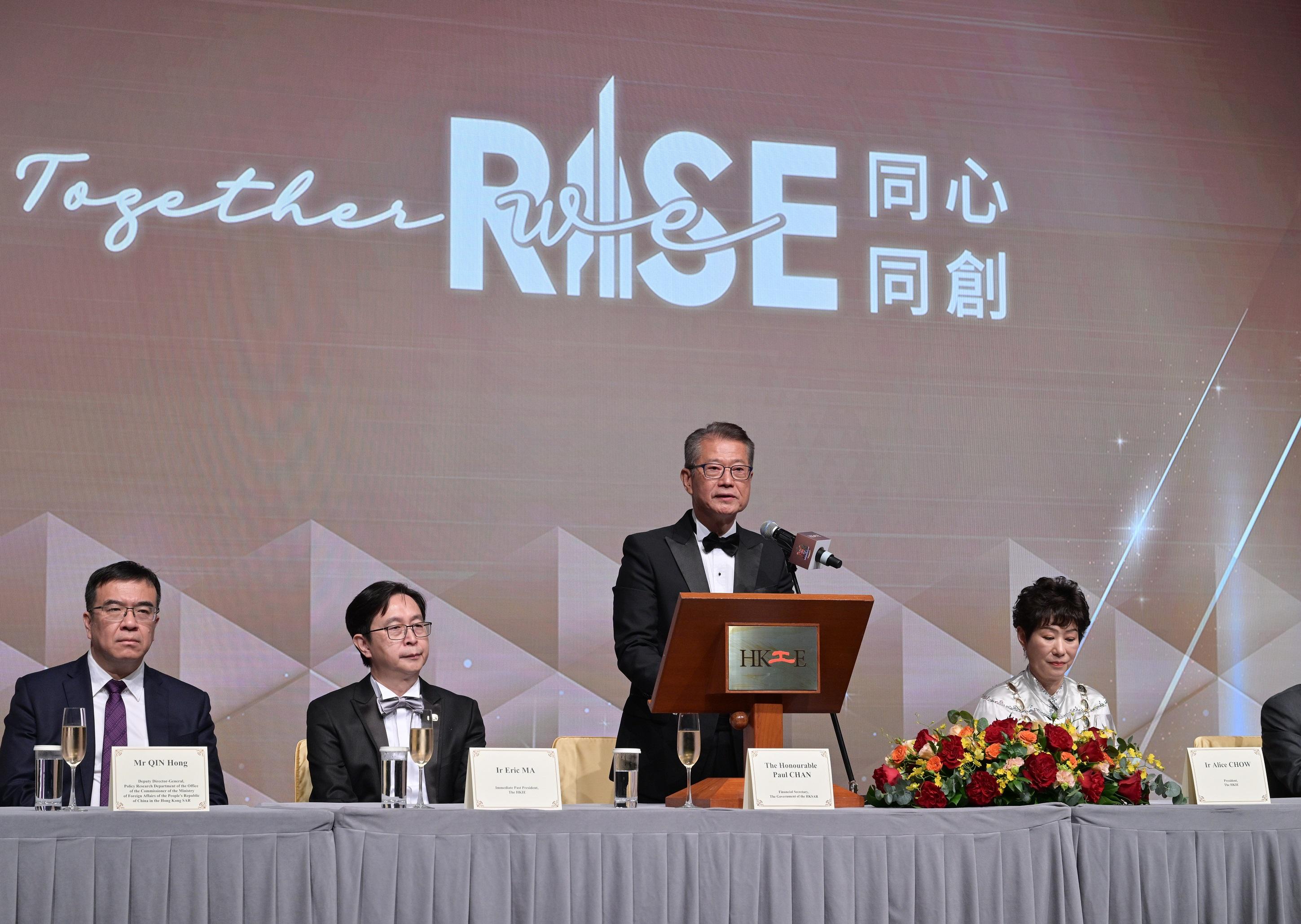
Referring to the HKSAR government’s AI+ Strategy, he said the government proposed in this year’s Budget to establish the Committee on AI+ and Industry Development Strategy to coordinate efforts across sectors. “We very much welcome the insights and participation of the engineering community as we take this work forward.”
As set out in the outline of the national 15th Five-Year Plan, the country is advancing technological self-reliance and high-level two-way opening up and accelerating the development of a modern infrastructure system, new energy networks, and the modernization of rural and agricultural areas, he said.
“For engineers in Hong Kong, this opens up a wide horizon of opportunities. Under the ‘one country, two systems’ framework, Hong Kong is the gateway that bridges national and international standards, and brings together global capital, talent and ideas,” he added.
Being the connector and transformer between the two systems, Hong Kong’s engineers can play a truly unique role, the finance chief said.
“Wider international recognition of our national standards will support the international use of Chinese technologies and products, creating new business opportunities. To this end, the development of the Greater Bay Area Standards is an important step forward,” he said, expressing his confidence that Hong Kong engineers can play an instrumental role in helping national standards and products go global.
Among the dignitaries, President of the HKIE Alice Chow, immediate past HKIE president Eric Ma, and Deputy Director-General of the Department of Educational, Scientific and Technological Affairs of the Liaison Office of the Central People's Government in the HKSAR Ye Shuiqiu attended the event.
