

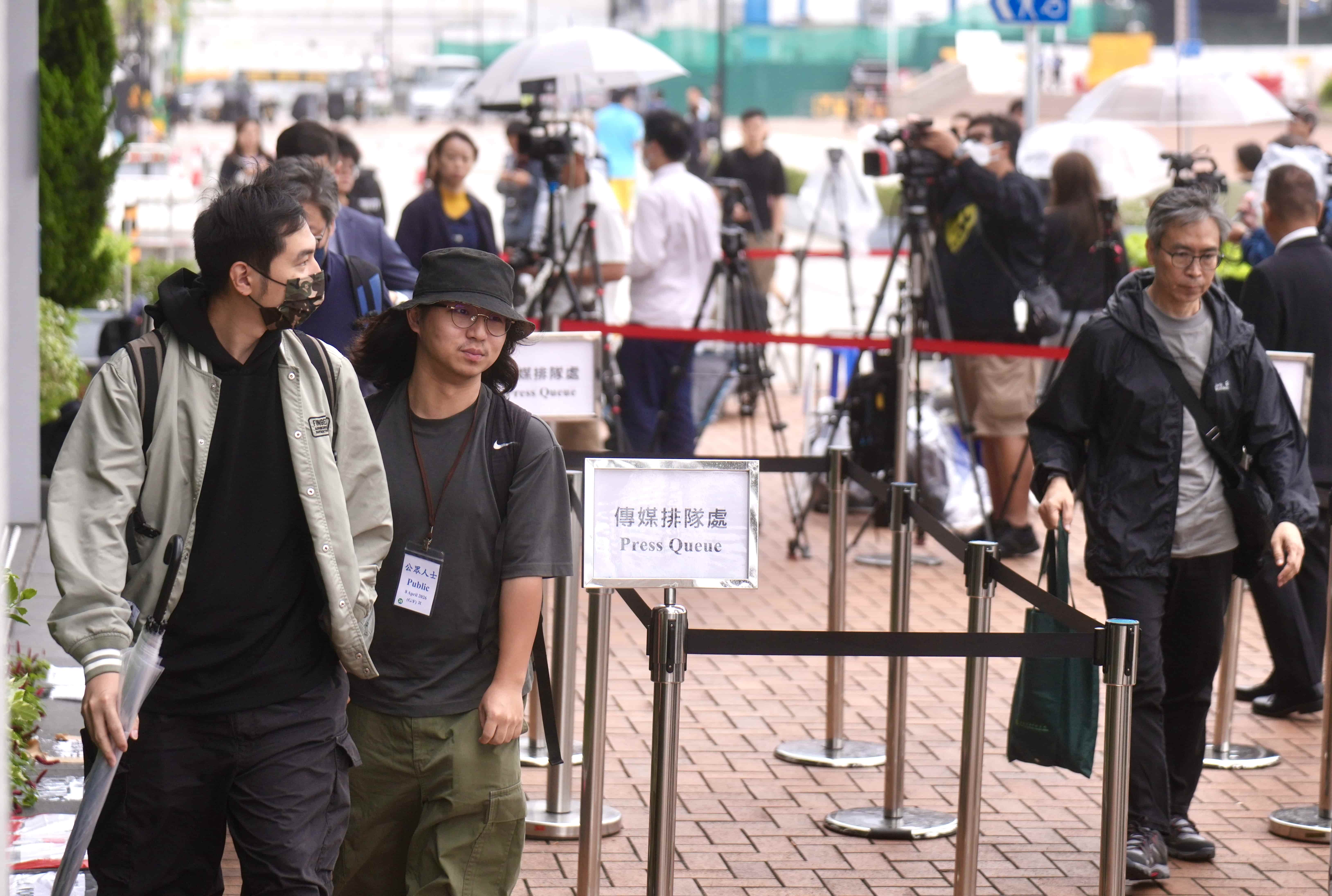
The head of Wang Fuk Court’s owners’ corporation during the deadly Nov 26 fire at the residential estate told an independent committee on Friday that the estate management’s lack of engineering expertise and legal, institutional ambiguities in some construction standards left the management committee unable to make the project contractor fix fire hazards.
At the 14th evidential hearing into the 168-death inferno, Tony Tsui Moon-come — who took over as the management committee chairman of the estate’s owners’ corporation in September 2024, after the renovation project had started — expressed his hope that authorities could provide professional support for major projects currently managed and executed by such resident-run statutory bodies like his committee.
SPECIAL PAGE: Tai Po fire inquiry hearings
Most management committee members lack the expertise to do tasks like tender drafting and substantial repairs, and “cannot effectively complete some of the managing work”, Tsui told the inquiry.
In 2021, Wang Fuk Court’s residents selected Will Power Architects as the consultant for the estate’s renovation project at a bargain rate. And in 2024, Will Power selected its “first choice” contractor, Prestige Construction and Engineering — the costliest of all submitted, citing the company’s clean criminal record over the previous eight years. The residents awarded Prestige a contract of about HK$330 million ($42.14 million), but its clean record would later be exposed as false.
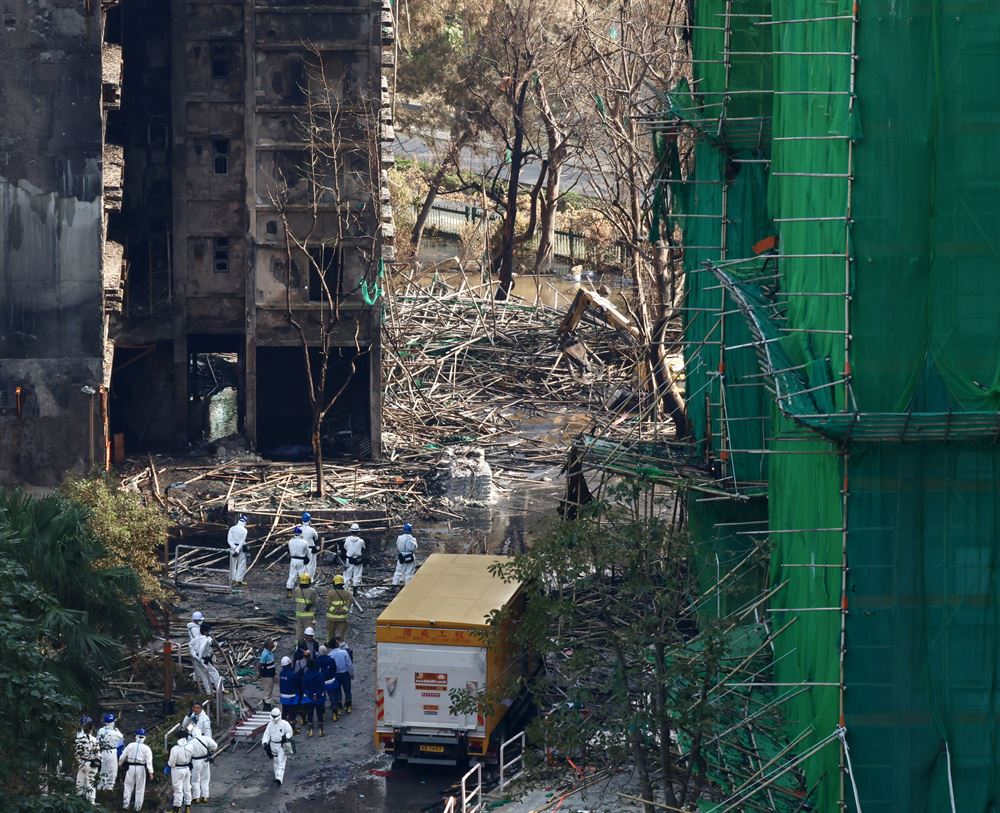
Speaking of the combustible plastic foam boards used to seal windows during the renovation — a cited factor in the death toll — Tsui said his owners’ corporation tried but failed to stop the contractor, as “institutionally and legally, there was no way”.
Tsui testified that the owner’s group had asked Prestige why it did not use more fireproof materials, and said Prestige claimed project consultant Will Power had previously tested the plastic foam with a lit cigarette butt and found it would not ignite, and that the renovation involved no open flames.
Prestige cited the local fire services as “not saying it couldn’t be used”, Tsui added. And the consultant and contractor had previously told him on multiple occasions that no certificates existed to verify the plastic foam’s fire resistance performance.
On the witness stand, Tsui also said the owners’ group’s lack of engineering expertise had largely left it unable to assess if certain works were “reasonable, necessary, or posed fire risks”.
RELATED ARTICLES:
- Owners' Corp, contract violations among reasons for Tai Po blaze
- Fire commanders admit to evacuation gaps with inactive alarms
- Time gap revealed in Wang Fuk Court fire safety system oversight
- Booking opens Thursday for public hearings into Tai Po fire
- HK's first public hearing on Tai Po fire scheduled for March
These included water tank repair work — with Prestige repurposing a fire service tank for drinking water — and the removal of fireproof windows at emergency staircases to allow workers to reach external scaffolding more easily.
Tsui said his owners’ group relied heavily on the consultant and contractor, who would describe certain practices as “industry norms”.
“We had no choice but to accept,” he said.
As for the use of nonfire-retardant scaffolding mesh brought in after last year’s typhoons damaged the original mesh, Tsui said the substitute was “visibly lighter in color with sparser gaps”. He said he asked the contractor to replace all such mesh, but saw no progress after three months.
Similarly, as for complaints about workers’ smoking, Tsui agreed that residents had repeatedly raised the issue. WhatsApp messages displayed as evidence showed him pressing the contractor several times for a solution, but smoking continued to be seen around the estate, he said.
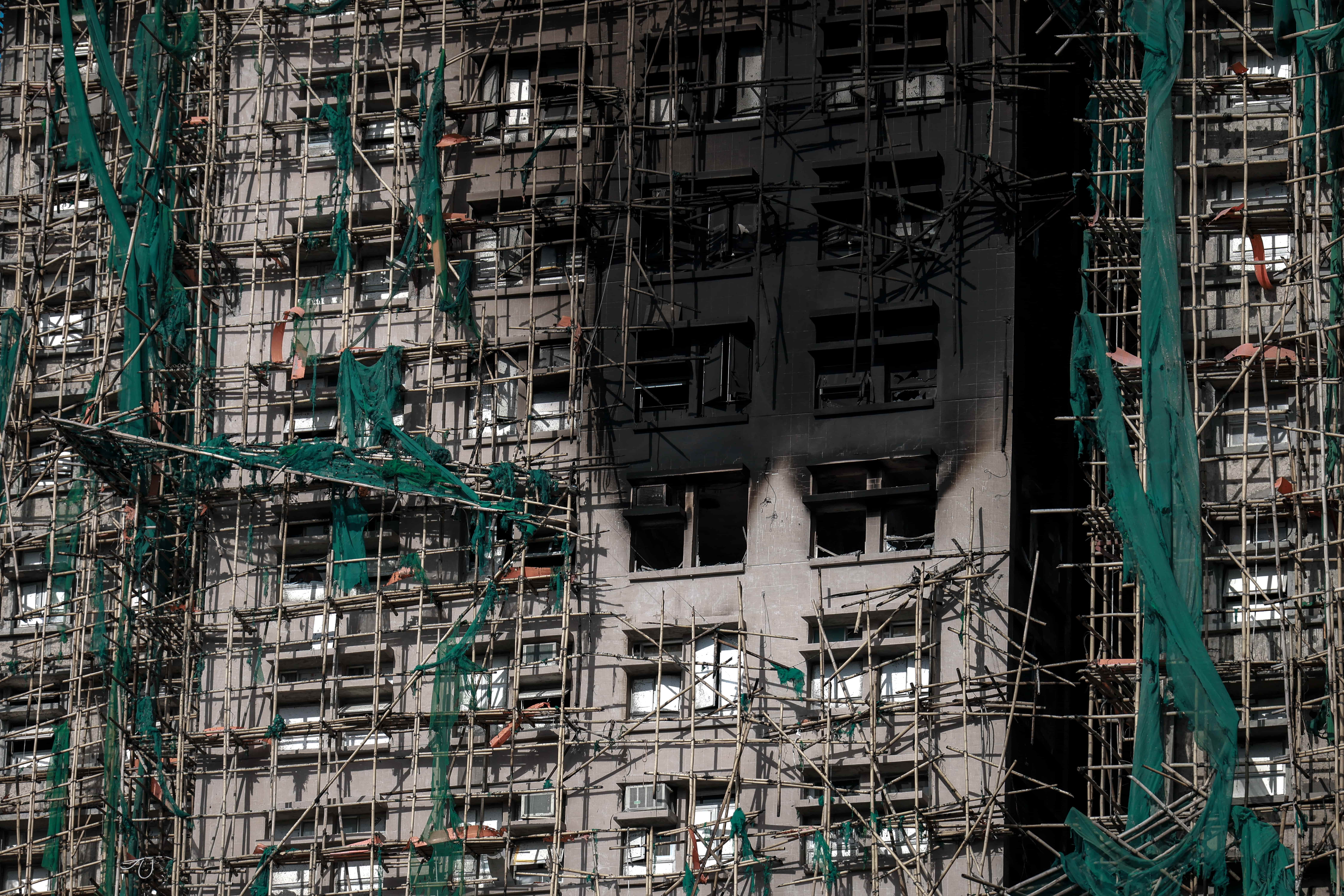
Also testifying on Friday was Chung Yun-sun, a construction worker who, according to the independent committee, may have been one of the individuals positioned closest to the fire’s source when it first broke out.
On Nov 26 — the day the blaze broke out — Chung was working on the fourth floor of Wang Cheong House, the first block to catch fire.
Chung testified that no safety training was provided before he started the work at the estate, but the contractor’s supervisors carried out site patrols and warned against smoking on the scaffolding.
Chung, a smoker, claimed at the hearing that he never lit up on the scaffolding. With no designated smoking area on-site, he smoked only during lunch breaks in nearby open spaces, he said.
Played at the hearing, surveillance footage dated Nov 26 from Wang Cheong House, captured conversations as the fire was first spotted. Voices were heard asking: “Who lit anything?” “You smoking?” “Who’s smoking?” followed by “Grab water, hurry!”
Friday’s session marked the conclusion of the Independent Committee’s second round of evidence hearings. The third round will begin on Monday, with seven further hearings scheduled through April 30.
Contact the writer at wanqing@chinadailyhk.com
