


In the decade since winning the Hugo Award — the highest honor in world science fiction literature — Hao Jingfang has begun many new chapters in her life. Driven by an innate curiosity, she was naturally attracted to the vast possibilities available within the artificial intelligence ecosystem, continually venturing into unknown fields to reinvent herself.
On her latest visit to Shenzhen — a city that is “most open to changes” — she has become part of a community, gathering solo innovators to bring her surging sci-fi imaginings to life in more tangible ways.
Hao registered two One Person Companies (OPC) in Shenzhen — which took just two days in early April — to promote an AI-driven screen adaptation of her sci-fi universe.
On her first visit to Longgang district’s Ultra-High-Definition Park in the Greater Bay Area on April 14, she established her presence within the OPC community at the 1,6000-square-meter park, which is spearheading AI-powered film and television production.
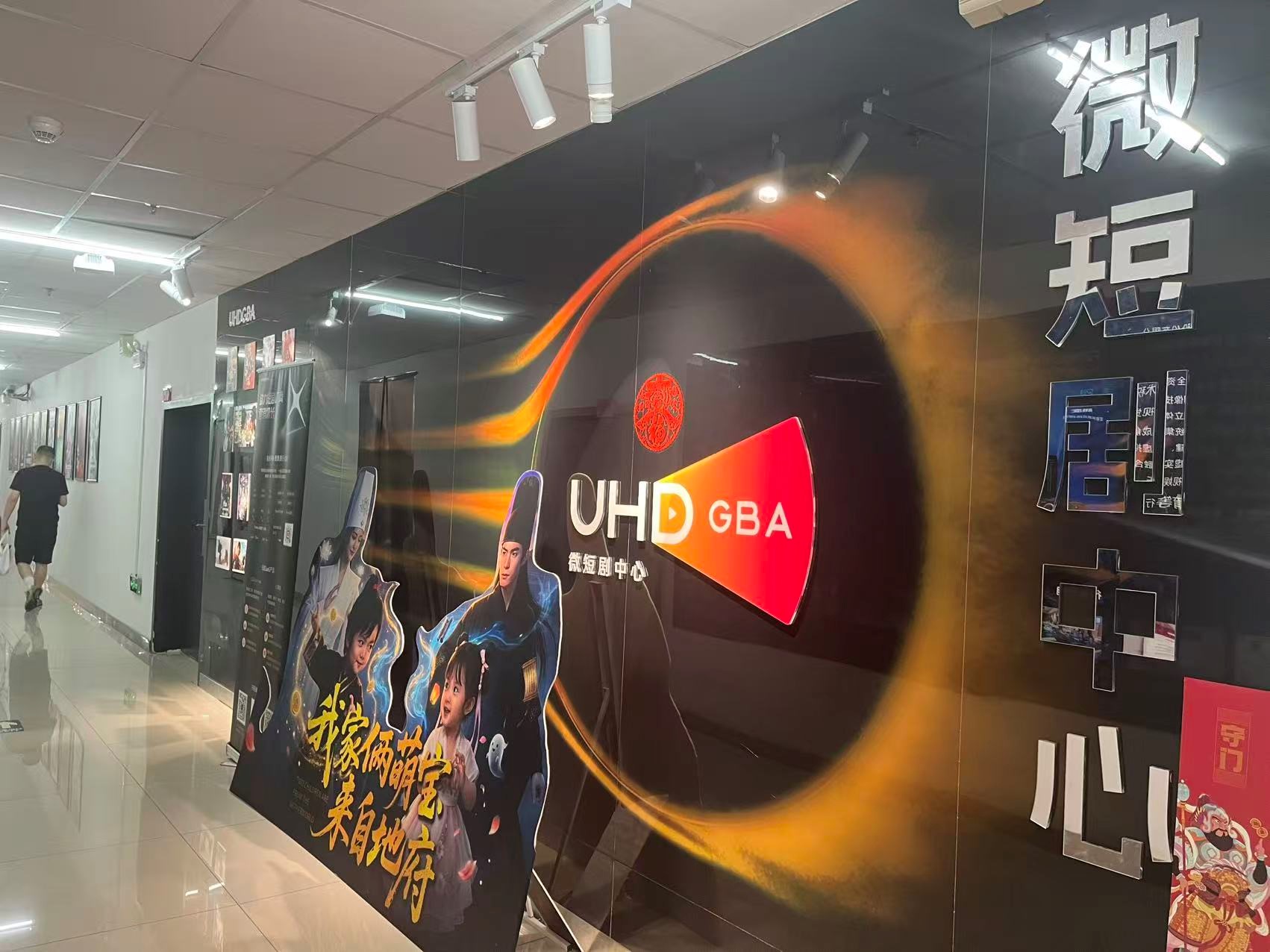
Accustomed to working online, she brings her laptop everywhere for work, loaded with a range of AI tools. During the short on-site visit, she quickly envisioned how the companies she saw could be leveraged for her future business.
This is also her usual work rhythm. Based in Beijing, she often travels for business around China and abroad. Three days after the Shenzhen trip, she is set to kick off a promotional tour of about six cities in two weeks to promote her new book. After that, she will visit Shanghai, Singapore, and the United States for work.
Despite spending only a short amount of time in Shenzhen, she chose the innovation hub as the launchpad for her new entrepreneurship venture, thanks to the local authorities’ openness to new developments.
“Even as the world remains uncertain about the prospects of new technologies and organizational models such as OPC and OpenClaw, the local government has taken the lead in rolling out policies to promote their development. Such a proactive approach is the foundation of everything,” Hao said.
This year marks exactly 10 years since she won the 74th Hugo Award for her novella Folding Beijing. So far, only three sci-fi writers in China have received this top prize, including Liu Cixin, author of The Three-Body Problem.
In search of new challenges, she continues to pursue entrepreneurial ventures alongside her writing. She initially focused on online education, later integrated AI into the business, and is now planning to enter the field of AI hardware to develop educational desktop robots.
ALSO READ: Advancing opening-up in Shenzhen
Harnessing the unprecedented opportunities to bring sci-fi stories to the screen, Hao hopes to drive the adaptation of her children-oriented sci-fi series Galaxy Academy, and to develop a sci-fi IP with enduring appeal for today’s young audiences in China. For realizing these visions, she believes Shenzhen is the ideal choice, she said.
“Among all categories of film and television creation, AI may offer the greatest support to the sci-fi genre,” Hao told China Daily during her Shenzhen visit.
Unlike period and urban dramas, sci-fi adaptations require the establishment of wardrobes, scenes, figures, and the creation of the sci-fi world from scratch — costly to produce and technically demanding.
Creating a high-quality sci-fi blockbuster film or TV series often requires investments of well over 100 million yuan ($14.66 million). Coordinating visual effects with live-action filming is also a major challenge, which even led to the cancelation of the initial The Three-Body Problem movie project, according to Hao.

Now, AI can significantly lower the barriers to entry for this kind of creative work. “Previously, I never even considered doing such adaptation projects myself, I simply licensed them to other production companies. But with AIGC technology, the investment can be lowered to several million yuan, which makes it possible for my studio to seek funding and complete the projects,” she said.
All of this has made things that were previously impossible now achievable. She is eagerly anticipating the emergence of a wealth of AI-driven sci-fi films and TV shows in this new landscape, offering audiences a visual and auditory feast.
Hao added that there is a vast number of excellent science literature works that have never been adapted for the screen, including Liu’s works and many classic masterpieces by American author Isaac Asimov, one of the greatest sci-fi writers in history.
Although the quality of AI-generated content may not be quite there yet, she has faith in the pace of technological advancement and is willing to be open-minded and actively give it a try.
As for her business, she describes her own development as being pushed forward by technology. She used to hesitate when it came to new opportunities if she lacked familiarity within certain fields. But her experience with AI agents in programming and product work last year gave her the confidence to move ahead.
Thanks to the efficiency gains brought by AI, the team across her four companies has shrunk to about three people, and many tasks can now be handled through external partnerships.
In this OPC community in Shenzhen, beyond content production, there may also be companies specializing in marketing and distribution, cultural and creative industries, and global expansion. She hopes these small companies will collaborate to complete the entire industrial chain.
In the AI era, she said she believes all industries will continue to exist, but with entirely new work models — where everyone must be able to operate independently rather than just carry out tasks.
“We’re in an era where any creative idea can become real. I hope more creators won’t limit themselves and will have the courage to try something new,” she said.
Contact the writer at bingcun@chinadailyhk.com
