

Mideast crisis amplifies tensions, brings differences to fore as US threatens to quit NATO
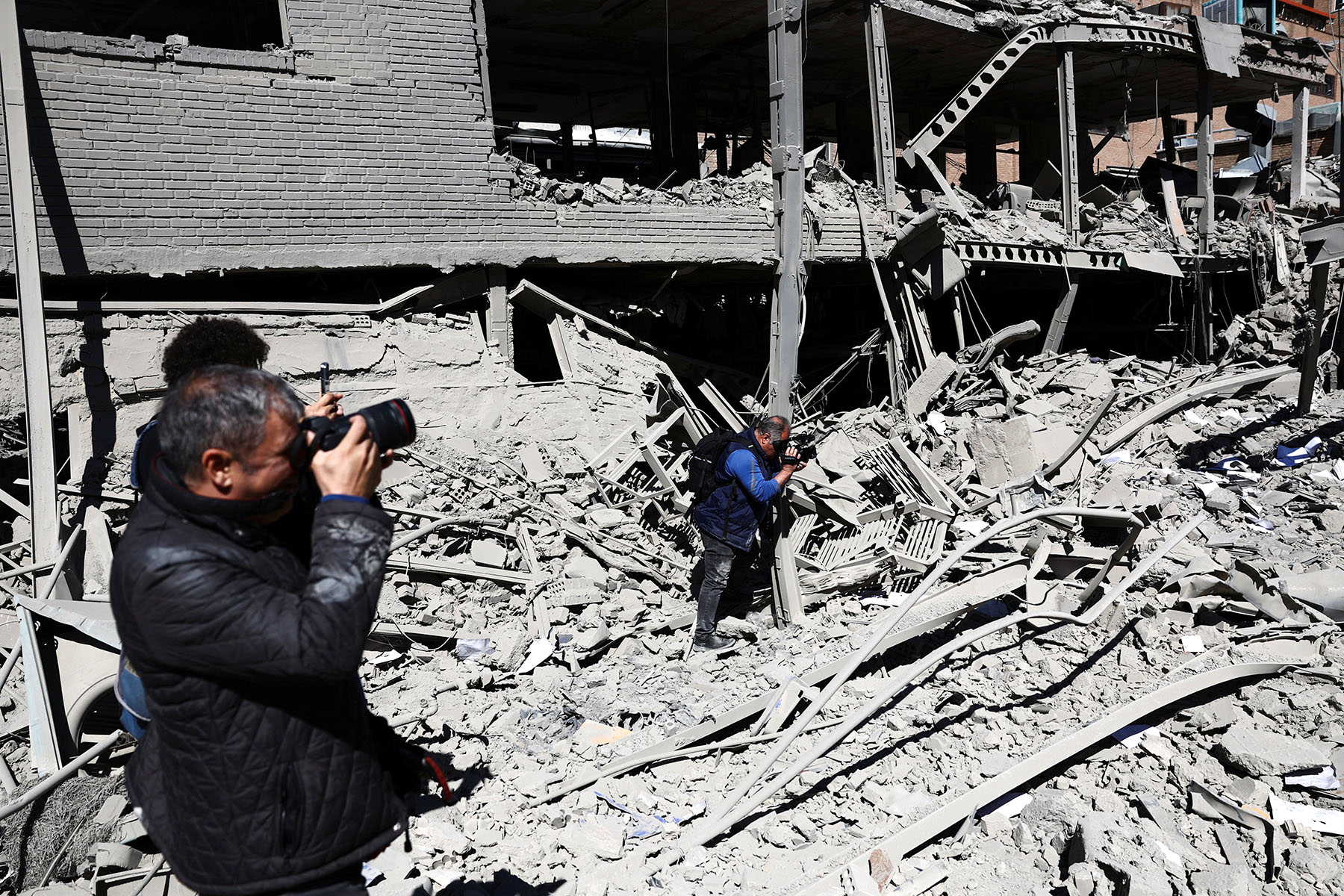
The conflict in the Middle East has amplified longstanding structural tensions between the United States and Europe, becoming another inflection point as Washington again threatens to quit NATO, experts say.
On April 6, US President Donald Trump again criticized NATO allies for lack of support in the conflict with Iran and reiterated his interest in annexing Greenland, a Danish territory. The remarks came ahead of NATO chief Mark Rutte’s visit to Washington starting April 8.
Trump called the defense alliance “a paper tiger”, complaining that its members had “actually gone out of their way not to help”.
“It all began with, if you want to know the truth, Greenland,” he said. “We want Greenland.”
On April 1, Trump said he would reconsider US membership of NATO after the Iran war in an interview with The Telegraph. He doubled down on the same day in an interview with Reuters, saying he was “absolutely” considering trying to withdraw from NATO.
He also threatened to stop supplying weapons that Europe has been buying for Ukraine, unless European allies join a “coalition of the willing” to reopen the Strait of Hormuz, the Financial Times reported last week. However, NATO members had been hesitant to deploy military assets to reopen the strait.
“It is a military alliance concerned with the security of territories in the Euro-Atlantic area,” said France’s junior army minister Alice Rufo.
“It is not intended to carry out an operation in the Strait of Hormuz, which is not in accordance with international law,” she said.
In a phone call with Trump on April 1, Finnish President Alexander Stubb said a “more European NATO” is taking shape, and that Europe is shouldering more responsibility.
Gao Jian, director of the Centre for British Studies at Shanghai International Studies University, said that the trans-Atlantic relationship now faces its most profound crisis and gravest challenge since the end of the Cold War. This is not a temporary rupture, but a structural result of the relative decline of US hegemony as the world moves toward a new global order, he said.
“The conflict in the Middle East is not merely a regional crisis, but a potent magnifier of rifts within trans-Atlantic ties, as the divergences between the US and Europe over Middle Eastern geopolitics have become increasingly pronounced,” he said.
The US has adopted a position of unwavering support for Israel, regarding it as the central pillar of security in the Middle East and showing a greater propensity to rely on the use of force in addressing regional challenges, Gao said.
“Europe, however, places a stronger emphasis on the constraints of international law and advocates resolving crises through the United Nations and broader multilateral frameworks,” he said.
Chen Hong, director of the Asia Pacific Studies Centre at East China Normal University in Shanghai, said the US approach to the Middle East crisis reflects the enduring imprint of its “America First” doctrine.
“The United States retains a dominant position within NATO, while its European allies shoulder a disproportionate share of the risks, including refugee flows and regional security,” Chen said. “This imbalance is increasingly undermining the foundation of trust underpinning the trans-Atlantic partnership.”
The recent US statements on NATO suggest a clear shift away from its traditional alliance policy toward a more transactional approach to partnerships, he said.
Although significant differences remain between the two sides, experts said the likelihood of the US withdrawing from NATO in the near term remains low.
Despite Trump’s assertions that he can withdraw the US from the alliance, a law enacted in 2023 stipulates that such a move would require the advice and consent of the Senate or an act of Congress.
Hence, the Trump administration is likely to seek a recalibration of the US-Europe security framework — potentially by reducing the scale of US military deployments in Europe, withdrawing key strategic assets, and, in the process, weakening the collective character of NATO, said Gao of Shanghai International Studies University.
He noted that Europe is rapidly advancing restructuring efforts in areas such as defense industry integration and energy independence, aiming to reduce its reliance on US-made weapons systems.
Faced with growing uncertainty from the US, Europe needs to strengthen its strategic autonomy in addressing international issues and pursue cooperation and balance on basis of equality, said Chen from East China Normal University.
Agencies contributed to this story.
Contact the writers at liujianqiao@chinadaily.com.cn
