

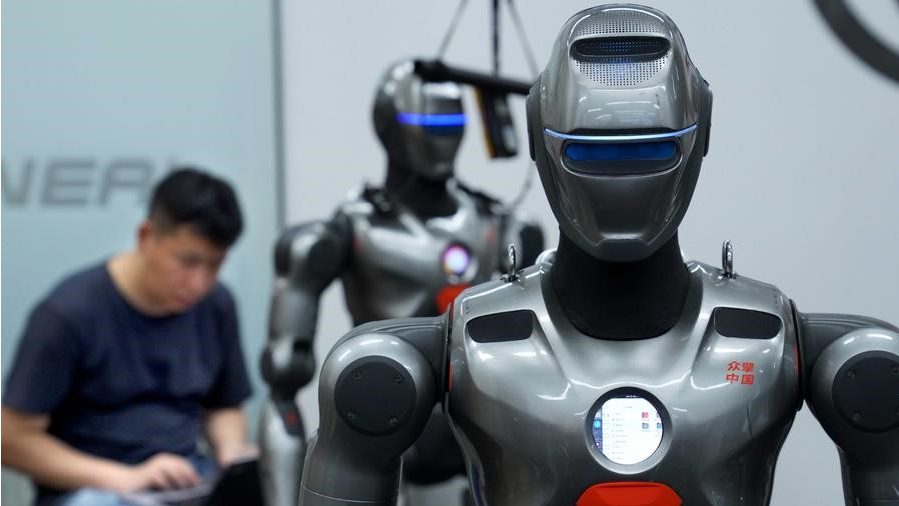
Shenzhen’s robot rental business is surging, as robotic services become more accessible to businesses and individuals, and prices continue to drop.
Among approximately 1,500 newly established robot rental firms across the nation last year, Shenzhen accounted for about 20 percent.
Robot leasing outlets are springing up across the tech hub. At the world’s first robot 6S store in Longgang district, visitors and buyers regularly crowd in to experience the latest models.
The expanding supply has pushed service prices lower. On the rental platform Qingtian Zu, customers can choose from robot models developed by firms including Unitree and EngineAI. Rental prices now range from just a few hundred to several thousand yuan, depending on scenario, duration and functions — a far cry from earlier pricey rates.
ALSO READ: Robotics, AI innovations put elderly care on fast track
As mass production and specialized rental platforms expand, the market has shifted from business-only uses to personal scenarios such as birthday parties and family gatherings, which now make up roughly 10 percent of orders, said Fan Congming, executive president of the Shenzhen Artificial Intelligence Industry Association.
In family gatherings, for example, robots can serve various functions, such as waiters, entertainers, gift delivery men, interactive playmates.
Although challenges such as inconsistent pricing, uneven service quality and unclear safety liability remain, Fan argued that robot rental business is “not a short-lived frenzy”.
The sector is expected to expand into industrial manufacturing, medical care, elderly care and education, which will further ignite the market, he said.
China’s robot rental market amounted to 1 billion yuan ($143.8 million) in 2025, with Shenzhen alone taking a 30 percent share. The market in the country is projected to hit 10 billion yuan this year.
Contact the writer at sally@chinadailyhk.com
