

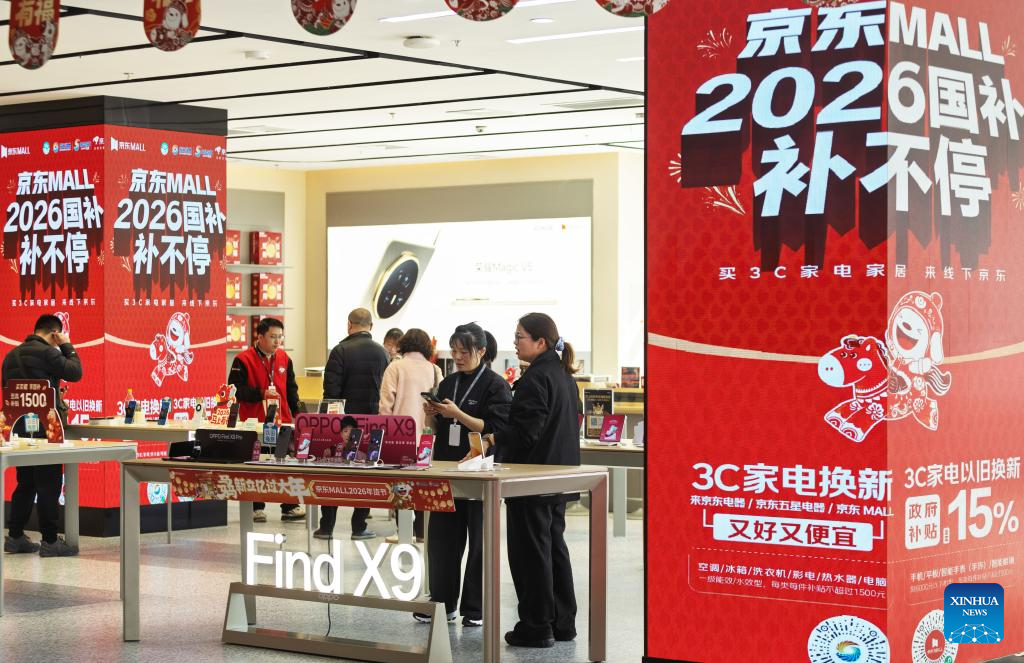
China's consumer inflation accelerated at its fastest pace in three years in February, while the decline in factory-gate prices narrowed, official data showed on Monday.
The country's consumer price index, the main gauge of inflation, rose by 1.3 percent year-on-year in February, following a 0.2 percent rise in January, to the highest level since January 2023, according to the National Bureau of Statistics (NBS).
Dong Lijuan, an NBS statistician, said the notable year-on-year CPI increase was mainly down to when this year's Spring Festival holiday fell. This year's holiday began in mid-February, more than fortnight later than 2025. A recovery in consumer demand also contributed to the CPI rise.
Notably, NBS data showed service prices rose 1.6 percent year-on-year in February, following a 0.1 percent rise in the previous month and contributing around 0.75 percentage points to the increase in CPI.
Within services, prices for airfares, car rentals, travel agency fees and hotel accommodation shifted from declines in the previous month to increases of 29.1, 19.8, 12.5 and 5.4 percent, respectively. Prices for pet services, vehicle repair and maintenance, housekeeping services, and takeaway food rose by 13, 12, 6.3 and 5.6 percent, respectively.
According to the NBS, food prices increased 1.7 percent year-on-year in February, following a 0.7 percent decline in the previous month, contributing around 0.3 percentage points to the rise in CPI.
Prices of fresh vegetables, beef, lamb and fresh fruits saw increases ranging from 5.9 to 10.9 percent in February, with all growth rates accelerating compared to the previous month, collectively contributing approximately 0.41 percentage points to the year-on-year CPI increase.
On a month-on-month basis, the CPI increased 1 percent in February, following a 0.2 percent rise in January, representing the highest level in nearly two years, the NBS data showed.
The core CPI, which excludes food and energy prices and is deemed a better gauge of supply-demand conditions, rose by 1.8 percent year-on-year in February versus a 0.8 percent rise in January.
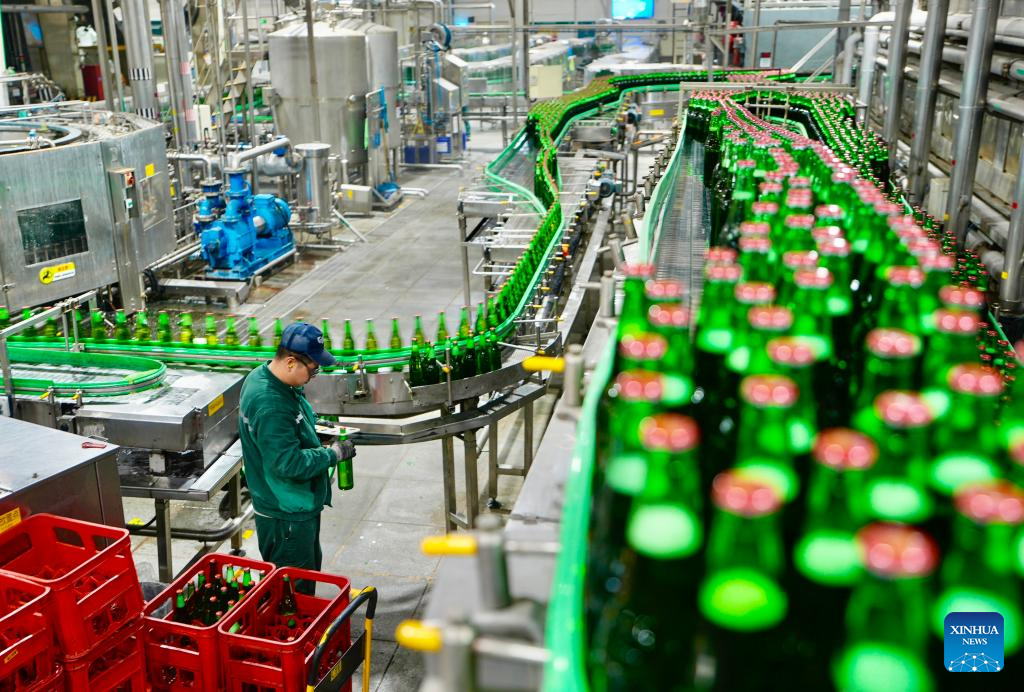
Meanwhile, China's producer price index – which measures factory-gate prices – fell by 0.9 percent year-on-year in February, narrowing from a 1.4 percent dip in January, according to the NBS.
Dong said the year-on-year decline in PPI narrowed in February amid effective macroeconomic policies, with some industries showing positive changes in prices.
"The accelerated construction of a modern industrial system led to year-on-year price increases in related sectors, especially fueled by the booming 'Artificial Intelligence Plus' initiatives," Dong said.
"Meanwhile, the market competition environment continued to improve, leading to stabilization and recovery of prices in some sectors."
On a month-on-month basis, the PPI rose by 0.4 percent in February, flat with the figure in January, NBS data showed.
