


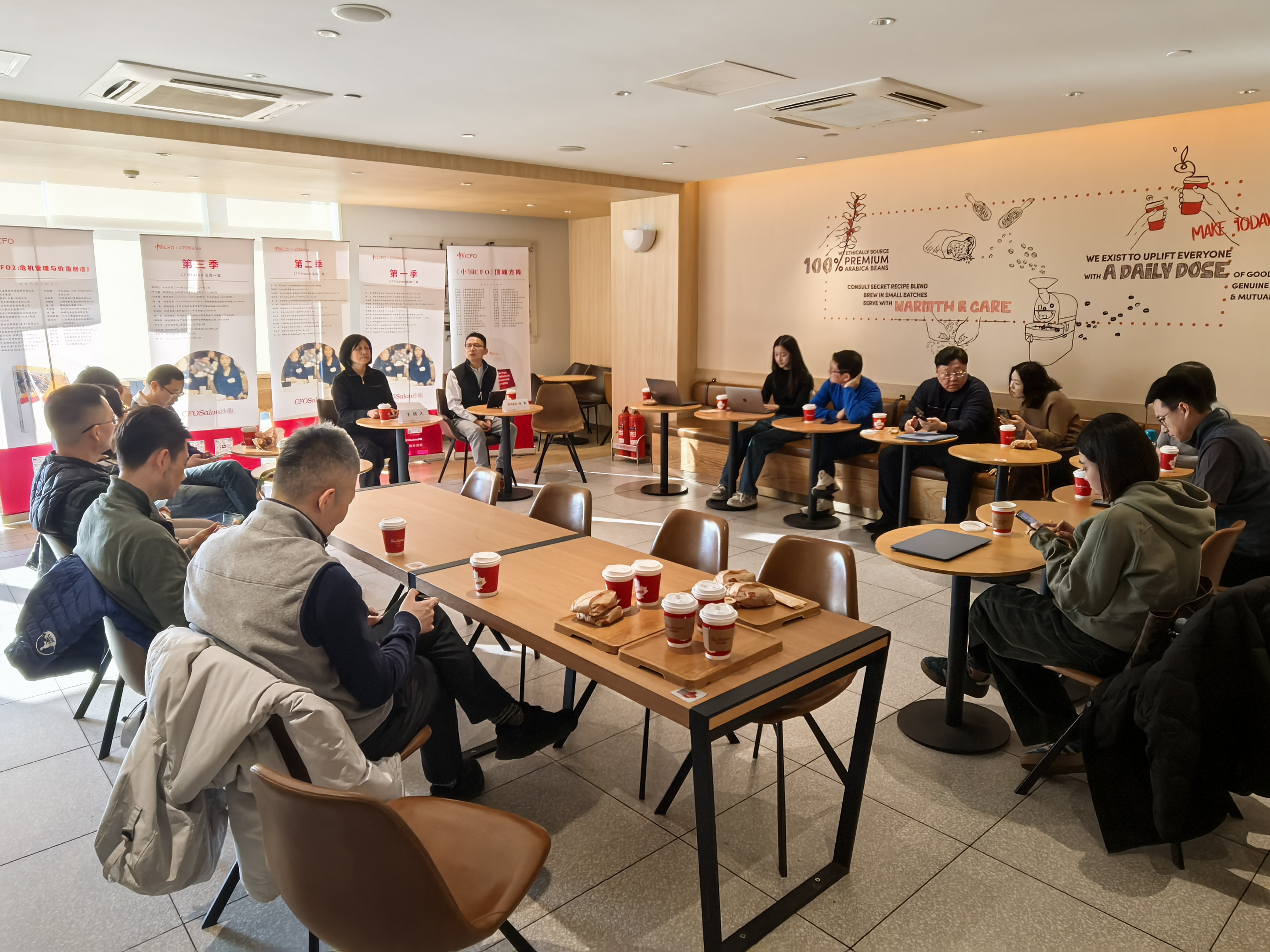
Evan Xu, chief financial officer of Keep, delved into the challenges, strategic pivots, and future vision that have shaped fitness platform’s decade-long journey as an industry leader, when he attended the fourth season of the CFO Salon in Beijing recently.
Presenting the keynote at the sharing session on Dec 27, he shared his cross-sector experience spanning investment banking, biotechnology, and consumer internet.
From investment banking to corporate leadership
A graduate from the National University of Singapore with a degree in Electronic and Computer Engineering, Evan worked briefly as an engineer at Singtel before shifting his career to finance by joining Citibank through its management trainee program.
Recognizing opportunities in the Hong Kong and Chinese mainland markets in 2008, he moved to Hong Kong, where he worked at Lehman Brothers and later Goldman Sachs. During his six years at Goldman Sachs, he was deeply involved in multiple H-share listings of Chinese financial institutions.
Around 2018, as large financial institution listings began to decline, Evan started exploring emerging sectors, which prompted him to consider a career transition. He subsequently joined the biotech company Genetron Health, where he led the entire process from corporate structuring and financing to its NASDAQ listing.
He also oversaw the company’s privatization and delisting in 2024. This end-to-end experience – from restructuring and going public to taking a company private – formed the practical foundation for his understanding of corporate life-cycle management. That same year, he officially joined Keep, embarking on a new journey in sports technology and consumer sector.
Reflecting on his career path, Evan admitted that he has never strictly followed a predetermined plan and has instead consistently pursued his interests, continuously broadened his perspective, enriched his experiences, and actively embraced change.
Expansion, challenges, and breakthroughs
Founded in 2015, Keep originated from a mission to address the shortage of professional fitness resources in China by offering workout services through an online platform. Following its launch, the product experienced rapid growth, with monthly active users surpassing 10 million in under a year. After a three-year free-access period, the firm introduced a paid membership model in late 2018. Currently, its monthly paying member penetration rate stands at approximately 13 percent, maintaining a leading position in the fitness industry.
As the business evolved, Keep gradually expanded its boundaries. Starting in 2019, it entered the sports consumer goods sector, aiming to provide well-designed, professional-grade products at accessible prices. Its offerings grew from large equipment such as treadmills and exercise bikes to include yoga mats, jump ropes, smart wearables, and athletic apparel. During the pandemic, its cordless jump rope – suited for home workouts – sold hundreds of thousands of units annually.
As challenges accompanied the company’s business expansion, Keep continuously adjusted its approach in the consumer goods segment through trial and learning. While early successes came from durable goods like fitness equipment, their long repurchase cycles prompted the company to shift toward faster-moving categories such as apparel and accessories.
Yet this transition brought its own set of hurdles in entering new markets. For instance, in apparel, Keep once prioritized seasonal men’s outdoor wear, overlooking the substantial female user base it had accumulated on its platform. This mismatch between supply and demand resulted in a muted response to new product launches.
“That taught us a profound lesson: building a consumer brand requires sustained effort. It must be grounded in a deep understanding of core users and a persistent pursuit of compound growth,” said Evan.
At the same time, Keep's user growth entered a plateau, and its content production model faced mounting pressure. Traditionally, the company invested heavily in creating structured courses by hiring professional coaches and producing studio-filmed content – a process that was costly and time-intensive but offered unique professionalism and scarcity. Now, platforms like Douyin and Xiaohongshu provide a vast array of timely, user-generated fitness content, creating significant competition for Keep's more traditional, catalog-style offerings. Also, user preferences are shifting from indoor workouts toward outdoor activities, which are less standardized in form and tend to elicit weaker willingness to pay.
In response, the company is pursuing breakthroughs on multiple fronts. On the digital content and service side, the company aims to deliver new value in evolving scenarios. It is developing an open data platform compatible with major third-party wearables and fitness equipment, enabling users to access consolidated workout data and in-depth analysis reports across devices and activity types.
On the offline experience front, Keep has launched the urban running event series KMARS in recent years. Having hosted over twenty editions in cities including Beijing, Shanghai, and Shenzhen, the events have attracted tens of thousands of participants.
The initiative is designed to create a distinctive offline experience and social scenario, which can synergize with online traffic, advertising, and consumer products – forming a crucial link in engaging users and strengthening the brand ecosystem, said Evan.
New phase of AI empowerment
With AI technology now regarded as a key driver of growth, the traditional content production model has become unsustainable. Leveraging LLMs for video generation holds the potential to significantly reduce content costs while enhancing variety and engagement. On the other hand, AI can elevate personalized and interactive experiences. The vast repository of content and data accumulated by Keep over its first decade will serve as invaluable fuel for the coming AI era.
In an ideal scenario, an AI-powered fitness agent would function like a virtual personal trainer – capable of assessing user movements in real time, providing personalized feedback and guidance, remembering each workout, and continuously refining exercise recommendations – thereby substantially increasing service value. Keep’s ultimate goal is to harness the boundless potential of AI and data to empower and enhance every individual’s physical potential and quality of life.
Question 1: How does the KMARS road running event achieve profitability?
Answer: Currently, the primary revenue streams for the KMARS event are advertising and participant registration fees. Unlike government-led marathons, it is difficult for us to obtain financial subsidies. Therefore, our core strategy is not to pursue sheer scale or government endorsement, but to create a differentiated experience. We focus on making the event more engaging and shareable, for example by designing themed runs such as family-friendly races and neon night runs, and inviting well-known personalities as pace setters to create a unique on-site atmosphere. In short, we achieve commercialization by crafting high-quality content and social scenarios that attract brand partnerships.
Question 2: How does Keep identify growth opportunities in the consumer goods sector?
Answer: Moving forward, particularly in the apparel category, we will focus more intensely on the largest and most well-defined user group on our platform. Currently, approximately one-third of Keep's online users are runners, which is a group with clear demands that align closely with our platform's core identity. Runners place a high priority on the functional performance of apparel, and within the domestic market, no mass-market consumer brand has yet established a dominant position in this specialized segment. Therefore, our strategy is to deeply serve this core community by developing professional running apparel and accessories, delivering high-quality products that meet their specific needs.
