

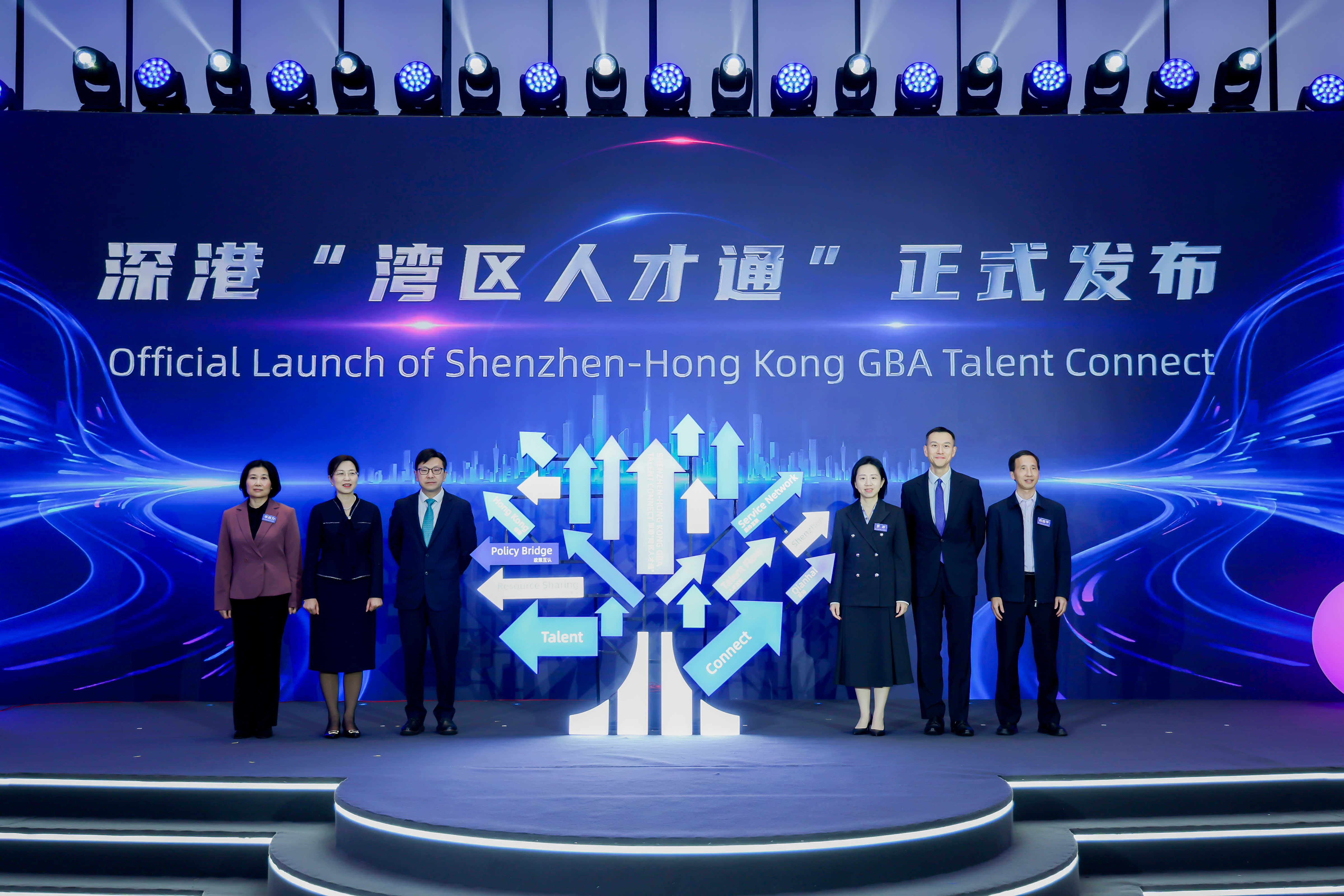
Talent collaboration between Hong Kong and Shenzhen is set to be further strengthened through the Qianhai platform, with the launch of initiatives that aim to leverage the advantages of the two talent hubs to create more development opportunities for competitive professionals.
The policy initiatives — released during the 12th Annual Conference of Shenzhen-Hong Kong Qianhai Talents Cooperation on Friday — include a cross-boundary talent connect, the establishment of an alliance to integrate human resources of both cities, and nearly 2,000 new job and internship opportunities annually for Hong Kong and Macao young people.
Officials said the Shenzhen-Hong Kong talent connect program will serve as a new platform for professionals to learn about the Guangdong-Hong Kong-Macao Greater Bay Area, providing more convenient policies to facilitate the movement of foreign talent between Shenzhen and Hong Kong.
Chris Sun Yuk-han, secretary for labor and welfare of the Hong Kong Special Administrative Region government, said that as Hong Kong intensifies its efforts to attract global talent, the city is also collaborating with Qianhai to jointly recruit talent from overseas. He added that the previous campaign in Southeast Asia achieved good result, and the hope is to expand the cooperation into talent markets in Europe and beyond.
Sun said that in the future, Hong Kong will focus more on attracting top talent and will introduce more personalized policies to address their needs regarding visas and family matters. It will also increase efforts in introducing the talents to development opportunities in Qianhai and other areas of the Greater Bay Area, providing them with a broader development scope, he added.
Also during the Friday event, the Hong Kong Institute of Human Resource Management and the Qianhai Management Authority announced the founding of the Shenzhen-Hong Kong HR Alliance.
The half-century-old Hong Kong organization has 5,000 individual members, including 500 corporate members. Benjamin Wong, co-chairperson of the institute’s China and International HRM Committee, said that the alliance’s core value is to reduce the institutional barriers for talents’ cross-boundary flow.
Leveraging Hong Kong's professional advantages along with Qianhai's policy benefits and industry foundation, the alliance will serve as a key platform to promote mutual recognition of talent qualifications, corporate compliance, and the launch of cross-boundary services.
Another key mission will be to help Hong Kong firms establish research and development centers in Qianhai, enabling them to swiftly transform innovative projects from concepts into reality, Wong said.
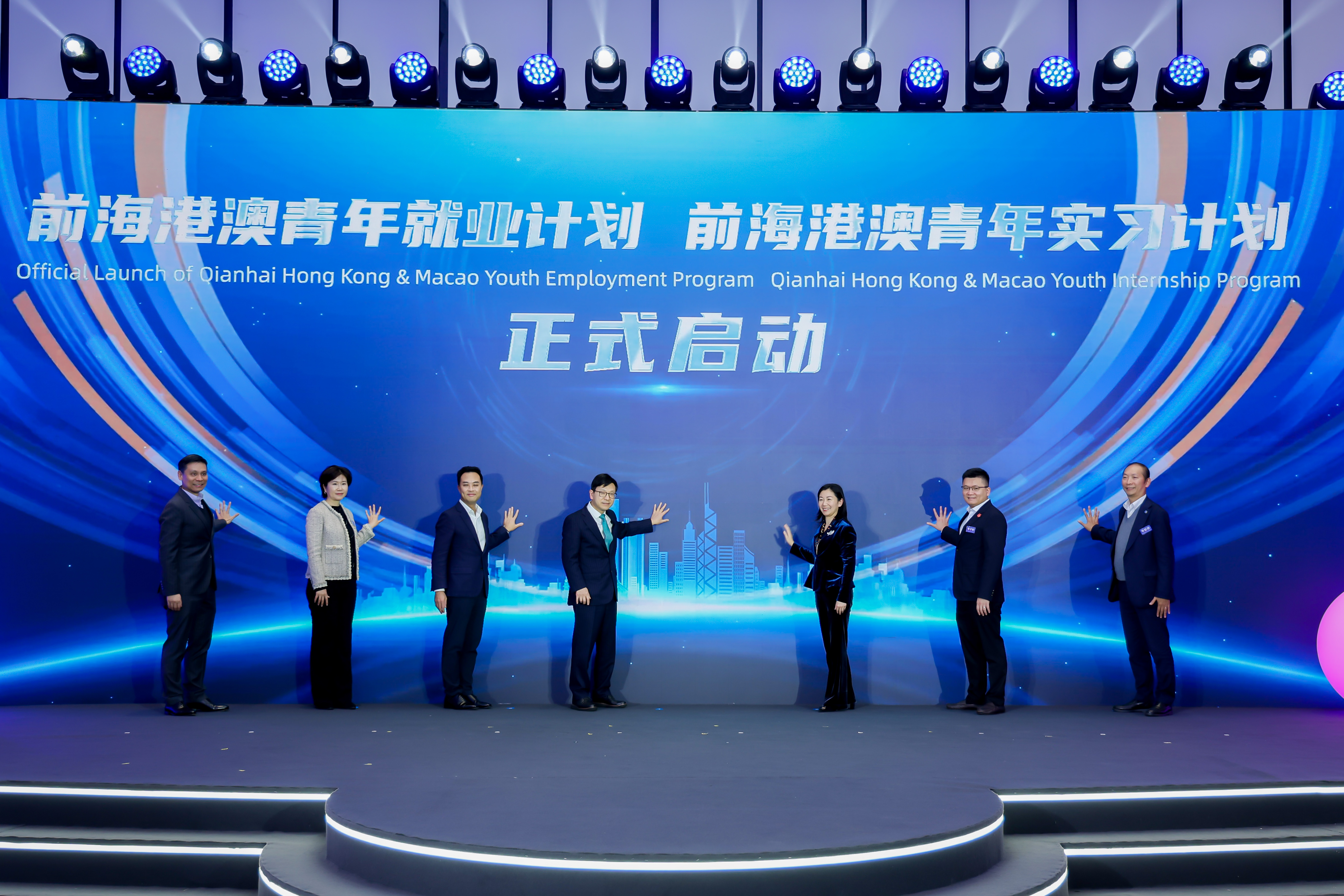
Additionally, the conference pledged to offer 1,000 high-quality jobs opportunities, 800 internship positions each year, and 500 sets of dormitories for Hong Kong and Macao young people to chase their dreams in Qianhai.
The Qianhai authority also vowed to further empower industries in the collaboration zone with capital under the “Qianhai FinNet” program.
Cao Yonggang, president of Hony Capital, a leading investment management firm with deep ties to Qianhai, said that as China's technology develops, the startup projects here are attracting increasing attention from international investors.
Companies with connections to both Hong Kong and Shenzhen are particularly favored by capital, as they combine domestic and international resources, indicating greater room for growth, and Qianhai serves as an excellent platform for entrepreneurs to leverage the advantages of both regions.
Contact the writer at bingcun@chinadailyhk.com
