

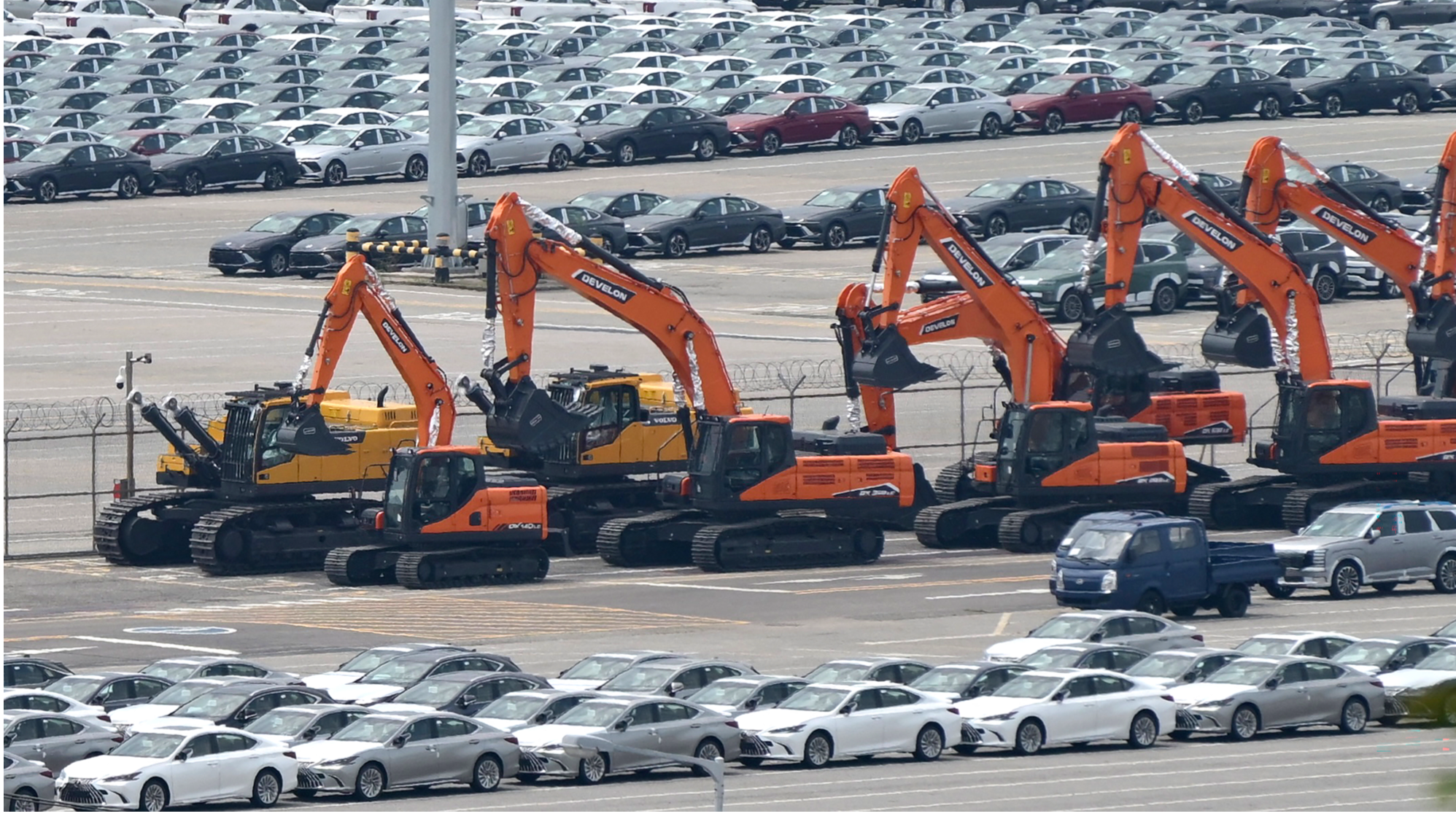
SEOUL - South Korea will implement the tariff agreement with the United States and calmly respond to US President Donald Trump's tariff hike announcement, the presidential office said Tuesday.
Presidential spokesperson Kang Yu-jung told a press briefing that a meeting on trade issues with the United States was held at the presidential office, or the Blue House, to assess the situation over Trump's tariff hike announcement and discuss countermeasures.
Trump said on his social media on Monday that he would increase South Korean tariffs on autos, lumber, pharma, and all other reciprocal tariffs from 15 percent to 25 percent, accusing South Korea's legislature of not having enacted a bilateral trade agreement with the United States.
Kang said Seoul planned to convey its commitment to implementing the South Korea-US trade agreement to the US side while taking a calm response, as the tariff increases only take effect following administrative procedures in the United States.
It indicated that South Korea would take a measured approach by closely analyzing Trump's true intentions and the background behind his remarks, as his social media posts do not immediately lead to tariff hikes.
ALSO READ: South Korea cannot pay $350b to US for tariff deal as Trump suggests, top aide says
The Blue House meeting was also attended via phone by Minister of Trade, Industry and Resources Kim Jung-kwan who is currently in Canada as part of Seoul's special mission for strategic economic cooperation.
Kim will visit the United States after his schedule in Canada to discuss the tariff issues with US Commerce Secretary Howard Lutnick, according to the presidential office.
Yonhap News Agency reported that under a joint fact sheet released after a South Korea-US summit held in Gyeongju last October, the United States agreed to lower tariffs on South Korean products, including automobiles, in exchange for South Korea making $350 billion in investments in the United States.
READ MORE: S. Korea's Lee says to face financial crisis with US investment demands
The two sides later signed a joint memorandum on Nov 14, stipulating that tariff cuts would be applied retroactively from the first day of the month in which relevant legislation was submitted to the South Korean parliament to implement the agreement.
South Korea's ruling Democratic Party submitted a special bill on US investment to the National Assembly on Nov 26, and the United States subsequently retroactively lowered tariffs on South Korean automobiles to 15 percent on Dec 4
