

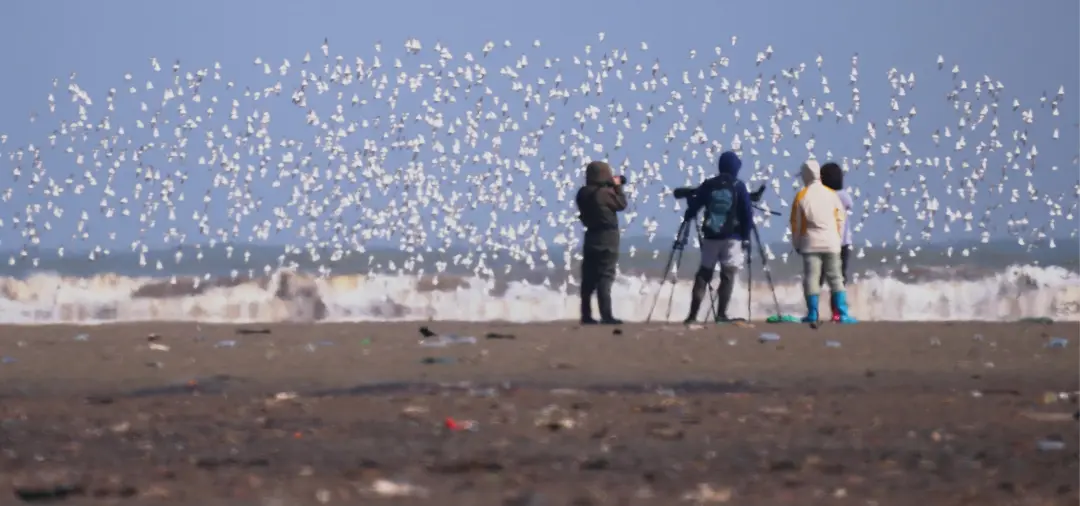
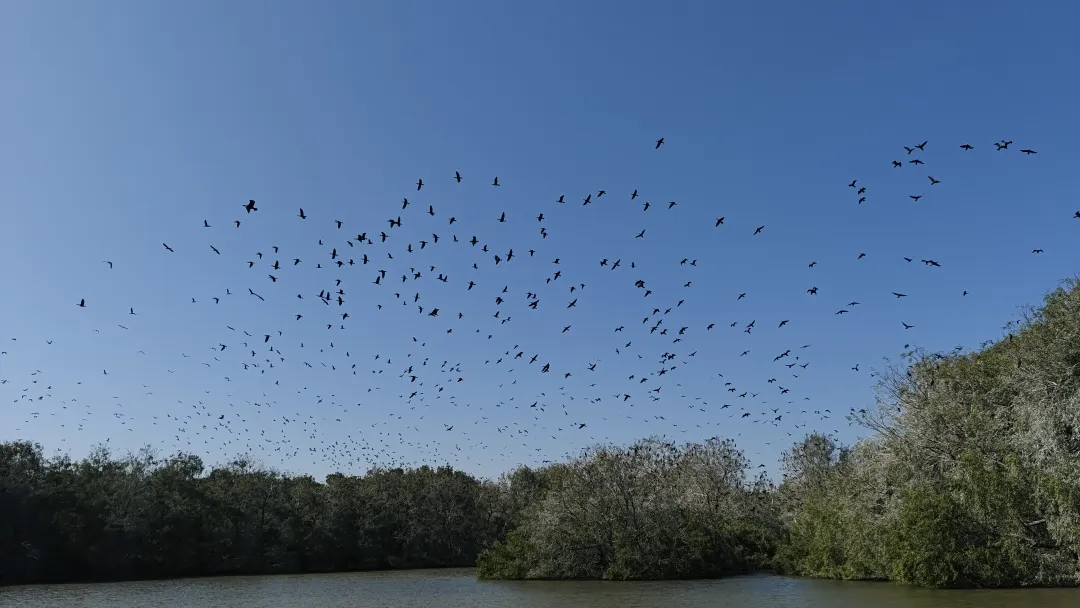
A newly concluded survey led by Guangdong's provincial forestry authorities has revealed that approximately 15.8 million waterbirds wintered in the province this year, marking a remarkable 22.5 percent year-on-year increase.
Conducted from Jan 5 to 15 as part of a national wintering bird monitoring initiative, the survey involved 105 professionals and volunteers from various government departments, research institutes, and conservation organizations, including Zhanjiang Bird-Loving Association, Guangzhou Nature Observation Society, Maoming Birdwatching and Ecological Development Center, Zhuhai Birdwatching Association, Mangrove Foundation, CBBS Bird Counting Group, and Hong Kong’s Kadoorie Conservation China Department.
Spanning 15 cities, the survey covered 49 monitoring units and 100 observation zones, delivering a comprehensive assessment of the province's wintering waterbird populations and their habitats.
Besides counting birds, volunteers collaborated with government personnel on habitat patrols, removal of illegal bird nets, and promotion of wildlife-friendly farming practices.
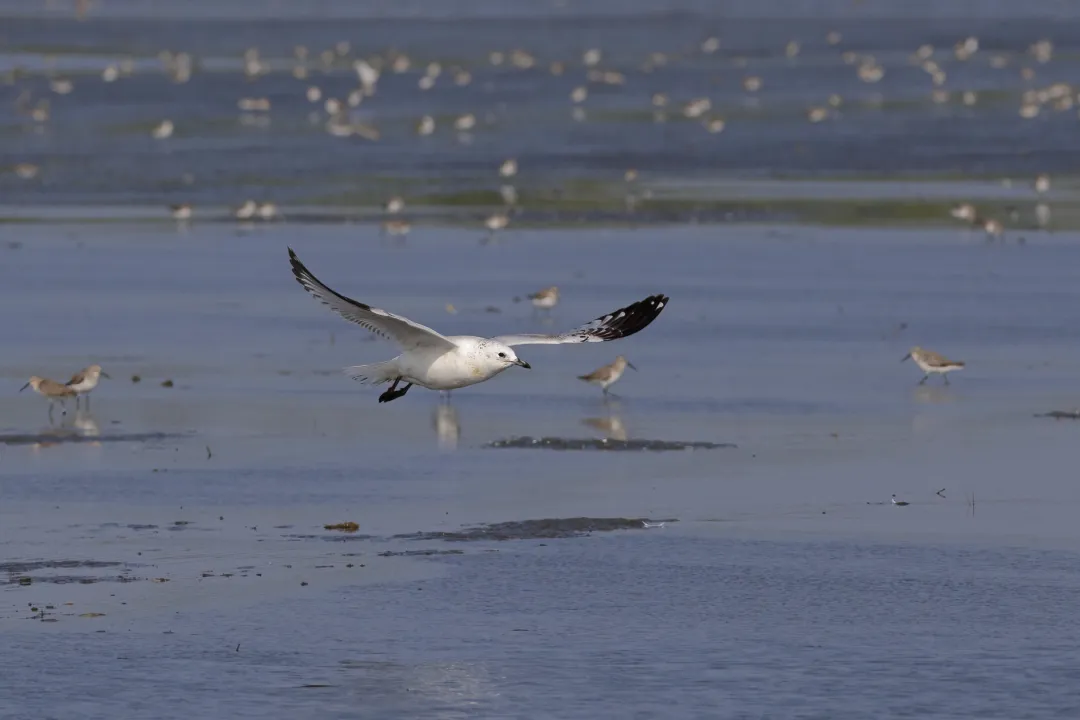
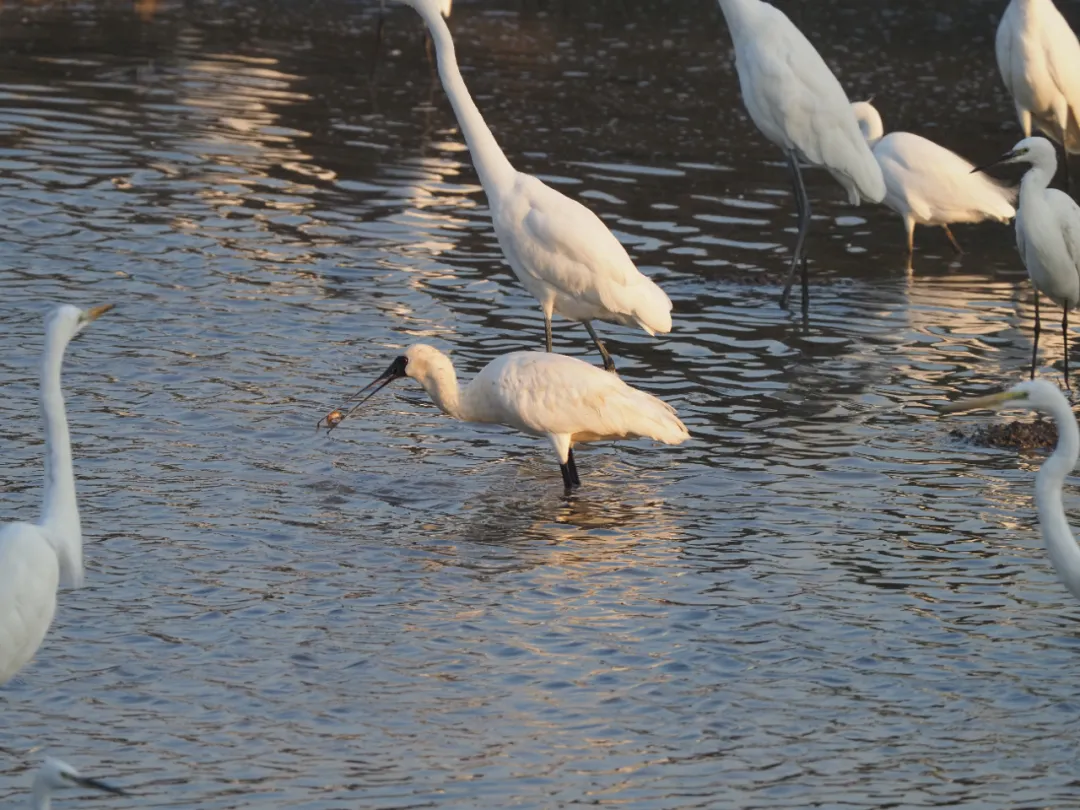
The findings highlighted a 10 percent increase in black-faced spoonbills, a 75 percent rise in Saunders's gulls, and an 86 percent surge in spoon-billed sandpipers, underscoring the critical role of Guangdong's coastal wetlands for these endangered species.
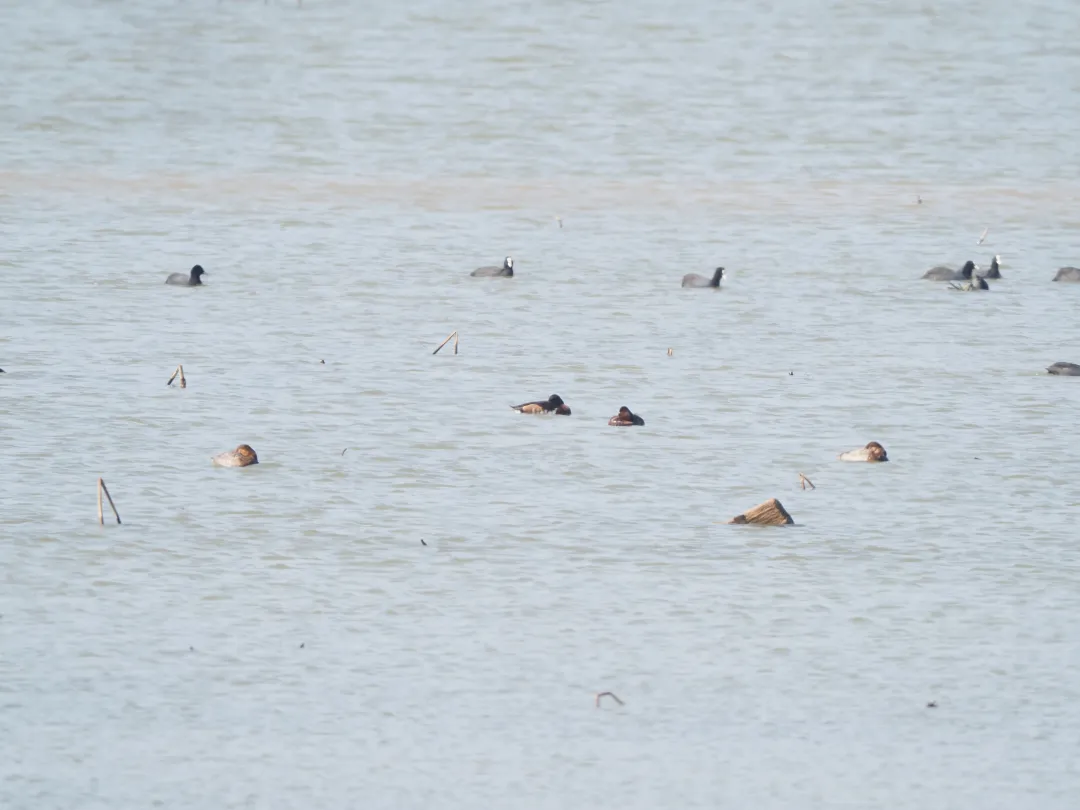
Significant increases were also recorded among common species. The number of tufted ducks surged from 90 in the previous year's survey to 9,130, while black-tailed gulls increased from 18 to 532, and Tibetan sand plovers rose from 811 to 7,546.
ALSO READ: Birder boosts protections in Beijing
Li Aiying, a senior researcher at the Guangdong Provincial Forestry Planning Institute, emphasized that the results highlight the province's vital role in the East Asian-Australasian Flyway.
The survey reflects tangible progress in habitat protection, public engagement in scientific monitoring, and collaborative conservation efforts, she added.
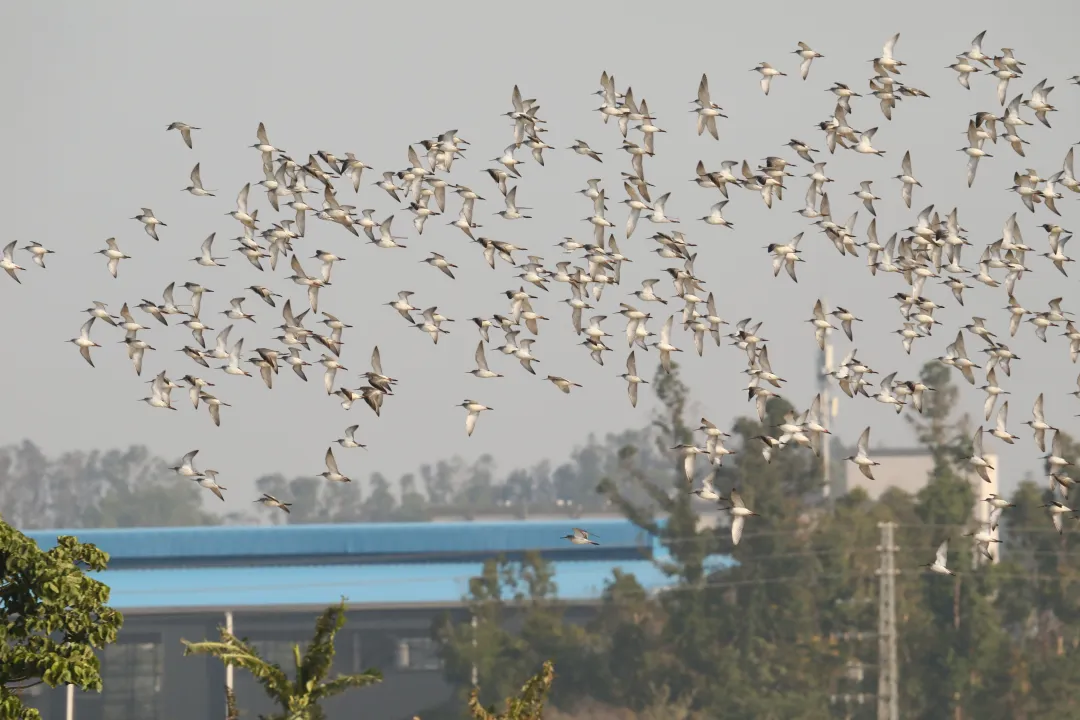
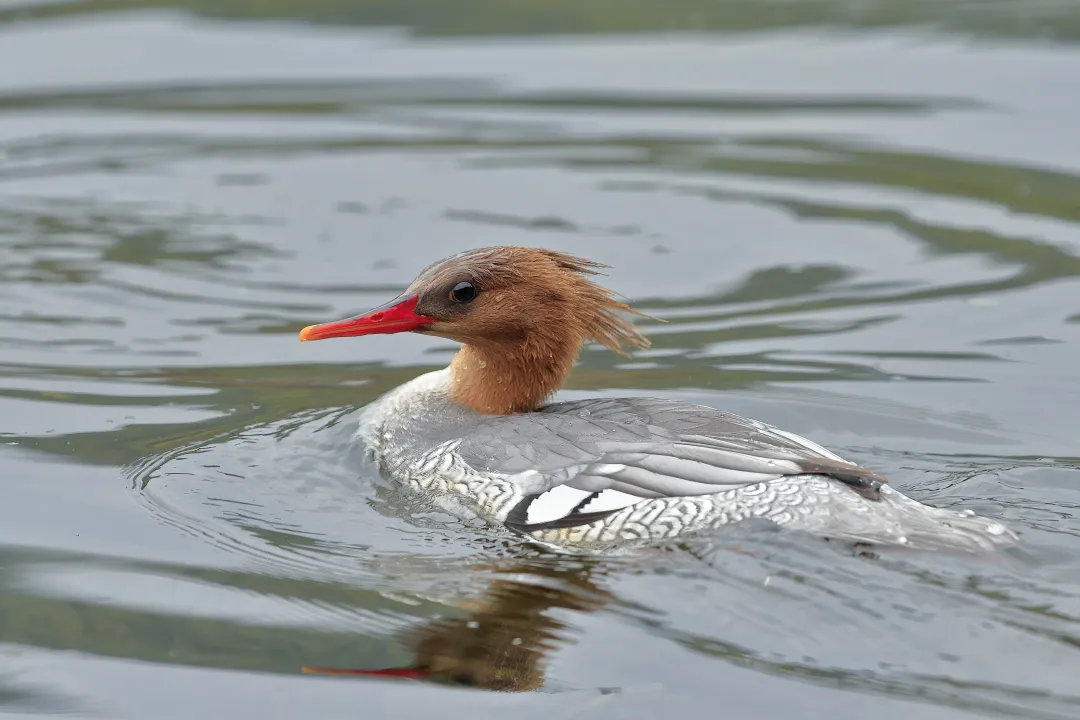
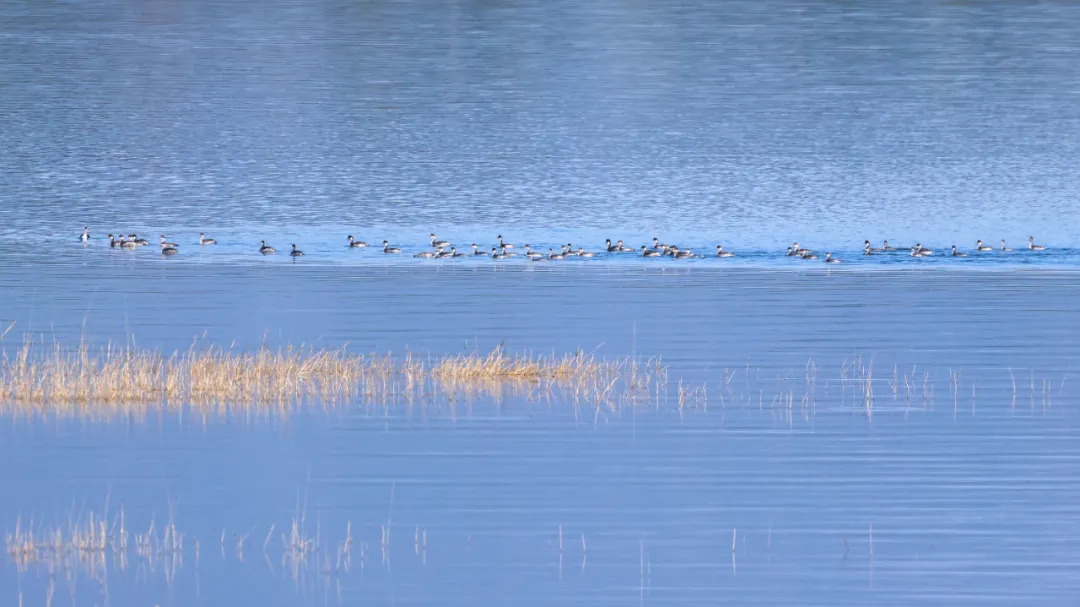
The photos of wintering waterbirds were shared on the Guangdong Linye, a WeChat public account of Guangdong Provincial Forestry Bureau.
This article is translated by China Daily from the original report in Chinese as published on Guangdong Linye, a WeChat public account of Guangdong Provincial Forestry Bureau.
