

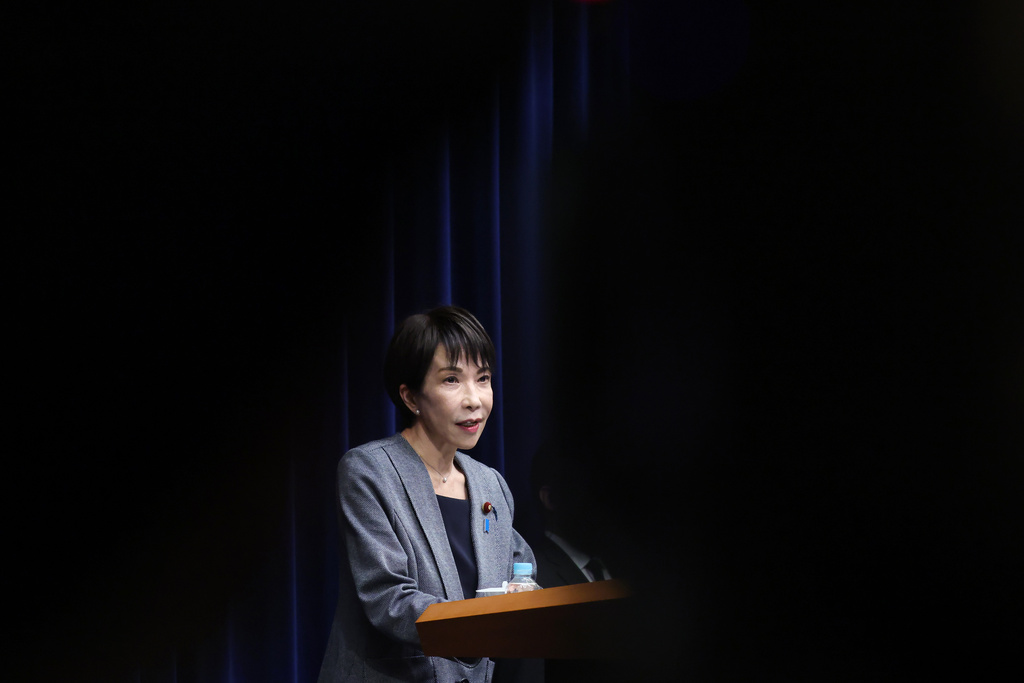
BEIJING/TOKYO - Japanese Prime Minister Sanae Takaichi came under fire in parliament on Tuesday as her evasive answers regarding Taiwan has triggered strong criticism from opposition parties and fueled disorder at the Diet meeting.
On Tuesday, lawmakers engaged in a heated debate over Takaichi's earlier erroneous remarks on Taiwan. Constitutional Democratic Party lawmaker Hajime Hirota pressed Takaichi to clarify whether Taiwan would fall under the category of "other countries with close ties to Japan" in the definition of a "survival-threatening situation“.
Takaichi said the category is "not specified in advance" and needs to be judged "on a case-by-case basis”, while avoiding any further explanations.
Hirota then asked whether Takaichi would retract her previous erroneous remarks on Taiwan. Although opposition lawmakers shouted from their seats that it was her "last chance", Takaichi reiterated that "there has been no change to the Japanese government's basic position," without clarifing what that stance actually entails.
Her responses drew strong protests from opposition parties. Japanese media reported that the session was briefly suspended for several minutes, while the live broadcast was muted for three times.
ALSO READ: Japanese opposition leaders urge PM Takaichi to retract Taiwan remarks
Takaichi had previously claimed during a Diet meeting on Nov 7 that the Chinese mainland's "use of force on Taiwan" could constitute a "survival-threatening situation" for Japan, which immediately drew strong criticism at home and abroad.
Since then, opposition lawmakers have repeatedly demanded clearer and more substantial explanations of her stance on Taiwan during parliamentary sessions, but Takaichi kept reiterating that the government's position remains unchanged while offering no concrete explanation on that position.
Japanese militarism's reviving trend
On Wednesday, China's Ministry of Foreign Affairs said the dangerous trend of reviving Japanese militarism has put regional countries and peoples on high alert.
Spokesperson for the ministry Guo Jiakun made the remarks at a regular news briefing in response to a media query. After Japanese Prime Minister's remarks on Taiwan, the Chinese Ministry of Foreign Affairs held meetings with ambassadors from Southeast Asian countries and others based in Beijing to convey criticism on Japan and ask them to support China's position.
Guo said China's Ministry of Foreign Affairs maintains normal working relations with embassies of all countries in Beijing, adding that the one-China principle is a universally recognized basic norm in international relations and a prevailing consensus of the international community including Southeast Asian countries.
He said the erroneous remarks on Taiwan made by Japanese Prime Minister Sanae Takaichi seriously violated international law and basic norms governing international relations, and blatantly challenged the outcomes of WWII victory and international justice.
Defending the postwar international order, human conscience and justice serves the common interest of all sides and is a must choice, Guo said.
He noted that recently many regional countries have once again stressed their commitment to the one-China principle, opposition to "Taiwan independence", support for China's reunification, as well as their vigilance and resistance to the possible revival of militarism.
READ MORE: China calls on peace-loving countries to guard against Japanese militarism moves
"The Japanese side needs to heed the calls, do soul-searching and correct its wrongdoings, instead of creating confusion and trouble," the spokesperson said.
