

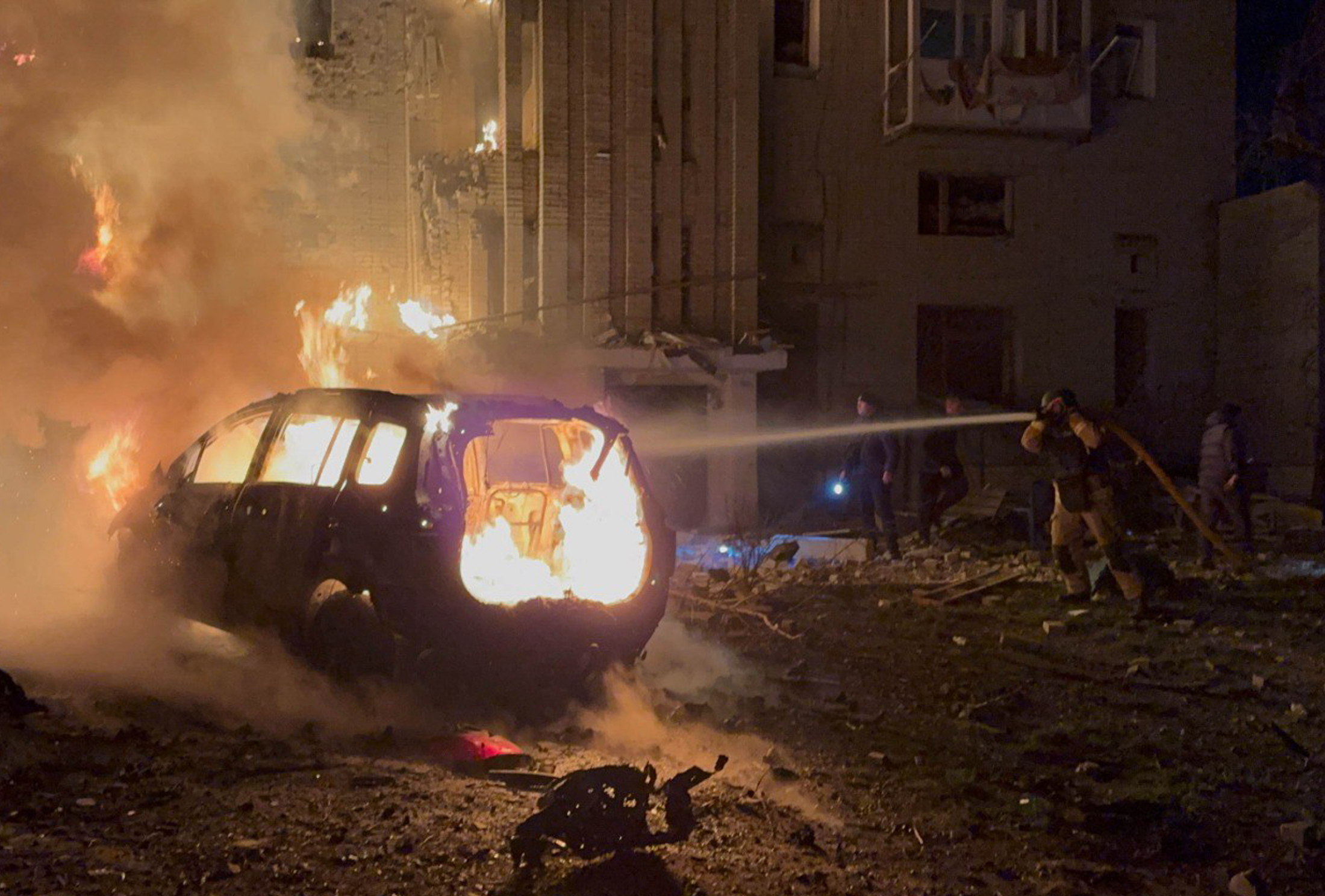
BERLIN/BRUSSELS/MOSCOW/WASHINGTON - The United States, Ukraine and Europe have reached consensus or significantly closed gaps on 90 percent of their differences on a 20-point draft peace plan, reports said on Monday, citing two senior US officials.
The comments came after US President Donald Trump's special envoy Steve Witkoff and son-in-law Jared Kushner met with senior Ukrainian and European officials in Berlin over the peace deal on Sunday and Monday.
Ukrainian President Volodymyr Zelensky said in a post on social media platform X that the Berlin talks were a "first draft," warning of "destructive" elements to be removed.
Zelensky said Ukraine has compromised by accepting strong security guarantees instead of NATO membership, though it remains unclear what type of US commitments on Ukraine's security guarantees would entail and whether the US Senate will be required to ratify any Article Five-like arrangements for a non-NATO country.
NATO's Article Five calls on allies to assist any member that comes under attack.
Meanwhile, the issue of territorial concessions remains a sticking point. Zelensky has said it would be impossible for Ukraine to give up territory, mostly in Donetsk, that Russia has not taken on the battlefield.
Trump said Monday that he believed an end to the Russia-Ukraine conflict is closer than ever, warning the talks remain "difficult."
"I think we're closer now than we have been, ever, and we'll see what we can do," Trump told reporters at an event in the White House. "Things are seemingly going well, but we've been saying that for a long time, and it's a difficult one."
Asked if there will be an Article Five-like deal without NATO membership for Ukraine in the emerging peace plan, Trump said, "In terms of security guarantees, we're working with Europe on it. Europe would be a big part of that, so the war doesn't start up again."
Negotiators are planning to meet in the United States this weekend, a US official said during a phone briefing to the media.
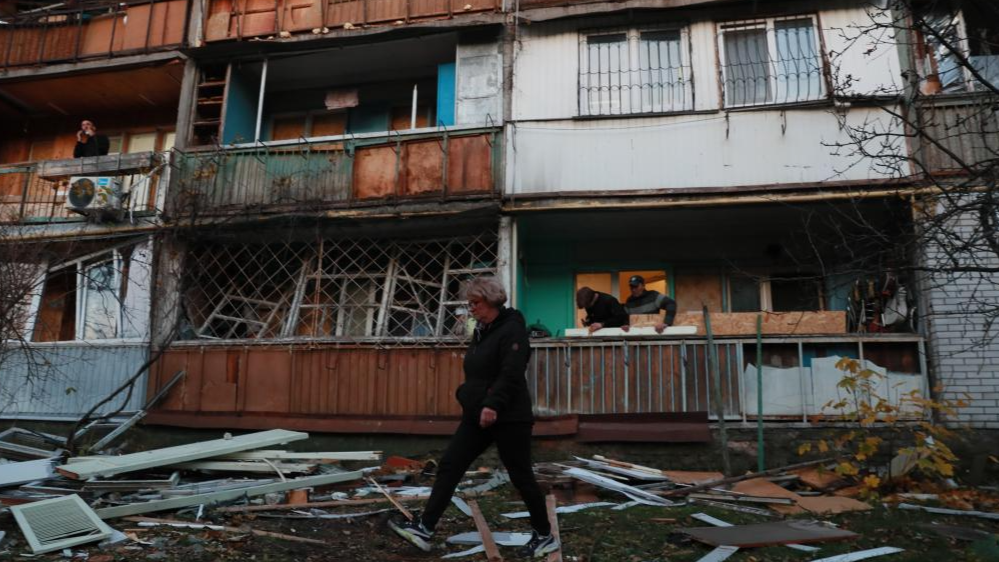
Zelensky on Monday concluded two days of talks with US representatives in Berlin, describing them as "productive," while German Chancellor Friedrich Merz said recent diplomatic momentum has made a ceasefire conceivable.
Zelensky's discussions with Witkoff and Kushner lasted several hours on Sunday and Monday.
Speaking later Monday at the 8th German-Ukrainian Business Forum in Berlin, Zelensky said the important conversations with the US side are always complex, difficult, but very productive this time. He stressed the need to preserve Ukraine's dignity and said the diplomatic efforts to end this conflict would continue.
Ukraine's top peace negotiator Rustem Umerov said on social media platform X that the talks have been constructive, with "real progress achieved."
"We hope we will reach an agreement that will bring us closer to peace by the end of the day," said Umerov, who also serves as secretary of the National Security and Defense Council of Ukraine.
Umerov added that the American team led by Witkoff and Kushner is "working extremely constructively" to help Ukraine find a path to a lasting peace agreement.
German newspaper Die Welt reported that US negotiators were pressing Ukraine to give up the Donbas region as part of the settlement.
Asked at a press conference on Monday whether the United States was demanding Ukraine's withdrawal from territory it controls, Zelensky said the US side was not making its own territorial demands. He acknowledged, however, that Ukraine and the United States still hold differing positions on territorial issues.
Before the Monday meeting, Zelensky had voiced rejection of the US-proposed plan to establish a "free economic zone" in parts of the eastern Donbas region, saying it is unfair due to a lack of clarity over governance. He stressed that Ukraine needs clear security guarantees before making decisions on the front line.
At the same press conference, Merz said that the United States had offered security guarantees, and that the recent diplomatic momentum had made a ceasefire "conceivable."
He stressed that any ceasefire must be secured by substantial legal and material security guarantees from the United States and Europe.
While the peace process is still at an early stage, the chance for progress is real, Merz added.
ALSO READ: Ukraine says ready to accept NATO-style security guarantees
European leaders' guarantees
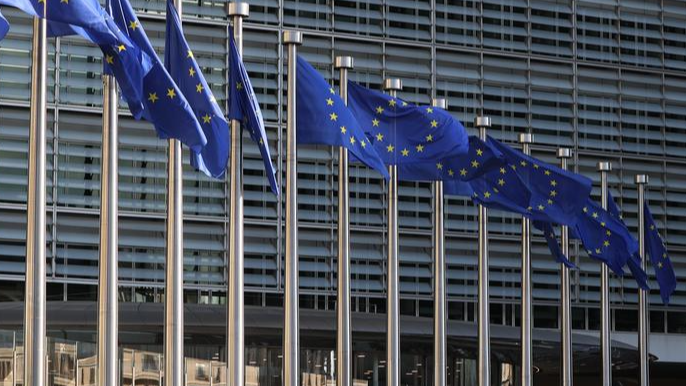
A group of European leaders, including Merz, French President Emmanuel Macron, Italian Prime Minister Giorgia Meloni, British Prime Minister Keir Starmer, and European Commission President Ursula von der Leyen, on Monday evening issued a joint statement welcoming the "significant progress."
The leaders committed to working together to provide robust security guarantees, including maintaining Ukraine's armed forces at a peacetime level of 800,000 troops.
According to the statement, the guarantees include a European-led "multinational force" operating inside Ukraine to help secure the country's skies and seas, as well as a US-led ceasefire monitoring and verification mechanism.
On the issue of territory, the leaders emphasized that decisions are "for the people of Ukraine" once security guarantees are effectively in place.
During his visit, Zelensky also met with German President Frank-Walter Steinmeier and Bundestag President Julia Kloeckner.
In a statement, Zelensky said that he and Steinmeier shared a position on the importance of ensuring Ukraine's sovereignty, territorial integrity, and the protection of its national interests. He also discussed with Kloeckner mechanisms to use frozen Russian assets for the benefit of Ukraine.
Commenting on the diplomatic talks in Berlin, Armin Laschet, chairman of the Committee on Foreign Affairs of Germany's Bundestag, said the efforts have demonstrated a will to strengthen Europe's role in diplomacy.
Given shifts in US security strategy, Europe needs greater strength and sovereignty of its own, Laschet said.
During Zelensky's visit, Germany announced a new 10-point plan to support Ukraine's defense industry, including weapon procurement and high-level consultations.
German drone manufacturer Quantum Systems said Monday it is working with Ukrainian company Frontline Robotics to establish Europe's first "fully automated, industrial-scale" foreign production line for drones for the Ukrainian armed forces.
The cooperation will supply the Ukrainian army with thousands of drones, said Frontline Robotics CEO Yevhen Tretiak.
ALSO READ: Russia criticizes NATO chief's call to prepare for large-scale war
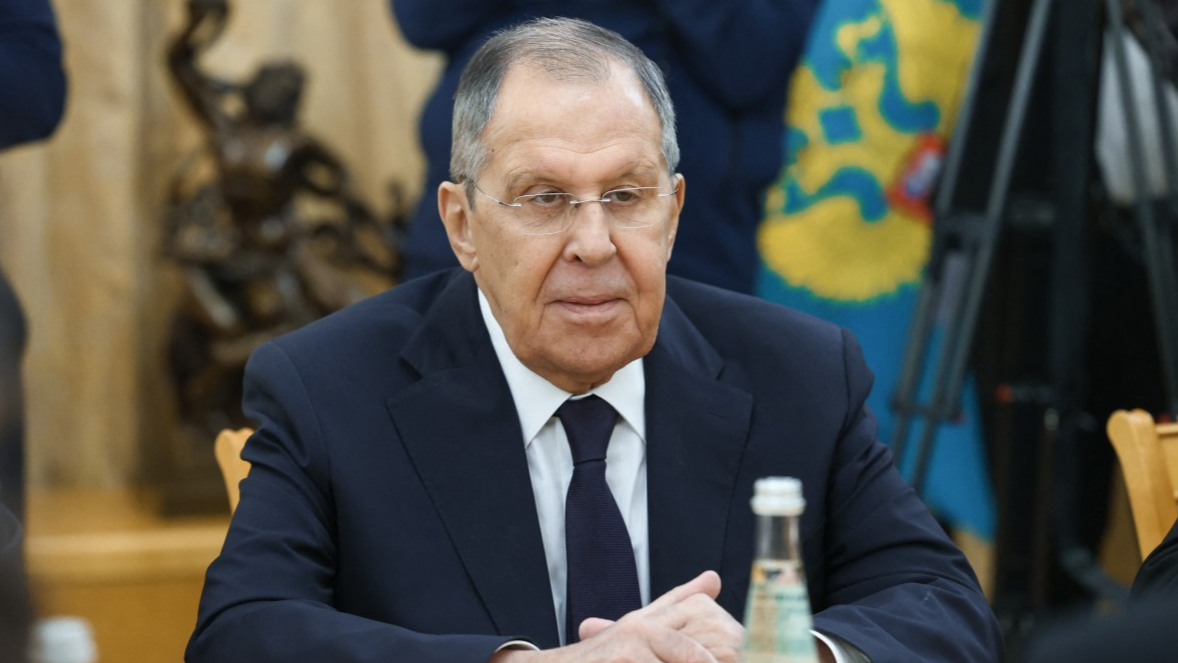
In response, Russian Foreign Minister Sergei Lavrov criticized Europe's role in the Ukraine conflict. He blamed Europe for providing Kyiv with weapons, money, and intelligence, saying Europe is "waging a war" with Russia.
Lavrov on Monday slammed Europe as a "quack doctor" for missing opportunities to help resolve the Ukraine crisis, while expressing optimism over recent engagements with the United States.
In an interview with Iranian media, Lavrov reiterated Russia's position that the root causes of the conflict must be addressed, including NATO's eastward expansion, Ukraine's potential NATO membership, territorial disputes and security guarantees.
Lavrov said that Europe has repeatedly turned a blind eye to efforts to resolve the crisis, using the situation instead to strengthen its own position and obstruct attempts by the United States and other parties to reach a fair settlement.
Meanwhile, the United States has not shared with Russia the proposals discussed with Kiev to resolve the Ukraine crisis, Kremlin spokesman Dmitry Peskov said on Monday.
The US side has yet to provide Russia with any details of the vision presented during the discussions, Peskov noted, adding that Moscow hopes to see concrete proposals for resolving the Ukraine issue once the talks are concluded.
Earlier on Sunday, Zelensky said Ukraine would be willing to abandon its bid to join NATO if it received security guarantees from the United States and European countries based on NATO's Article 5.
Peskov stressed that guarantees ensuring Ukraine's non-accession to NATO constitute one of Russia's fundamental positions, describing the issue as "one of the cornerstones" of any settlement process.

New sanctions on Russia
The EU on Monday approved new sanctions against individuals and entities it accuses of supporting Russia's so-called "shadow fleet" of oil tankers, as well as separate sanctions targeting those related to alleged Russian hybrid operations.
The Council of the EU added five individuals and four entities linked directly or indirectly to major Russian state-owned oil firms Rosneft and Lukoil, according to a statement.
The statement said those individuals control vessels transporting crude oil or petroleum products originating in, or exported from, Russia and accused them of concealing the oil's true origin.
The targeted entities are shipping companies based in the United Arab Emirates, Vietnam and Russia that own or manage tankers already hit by restrictive measures by the EU or other countries for involvement in the shadow fleet, the Council said.
Separately, the Council also added 12 individuals and two entities for sanctions, citing alleged "foreign information manipulation and interference and malicious cyber activities" against the EU, its member states and partners.
Speaking to reporters on arrival at the Foreign Affairs Council meeting in Brussels on Monday, EU High Representative for Foreign Affairs and Security Policy Kaja Kallas said the measures aim to "deprive Russia of the means to fund this war."
Under the EU's sanctions regime related to Ukraine, listings now exceed 2,600 individuals and entities. A separate framework targeting destabilizing activities covers a further 59 individuals and 17 entities.
Russian submarine
Also on Monday, the Security Service of Ukraine (SBU) said that the Ukrainian military counterintelligence and the naval forces had struck and critically damaged a Russian submarine in a joint operation at the Black Sea port of Novorossiysk, a claim which Russia later denied.
The SBU said the Project 636.3 Kilo-class submarine was hit by underwater drones "Sub Sea Baby" and suffered critical damage, adding that the submarine was carrying four Kalibr cruise missile launchers.
Russia's TASS news agency, however, said the assertion made by the Ukrainian intelligence is false, citing Alexei Rulev, head of the Black Sea Fleet's press service.
"None of the ships or submarines of the Black Sea Fleet stationed in the bay of the Novorossiysk naval base, nor their crews, were damaged as a result of the sabotage and are continuing to serve as usual," he said.
"The enemy's attempt to carry out sabotage using an unmanned underwater vehicle did not achieve its objectives," Rulev added.
Ukraine-linked sabotage
Russia's Federal Security Service (FSB) has detained 10 Russian citizens in five regions of the country on suspicion of carrying out sabotage and terrorist activities under threats from Ukrainian intelligence services.
According to a statement published Monday on its official website, the FSB foiled multiple sabotage attempts in Russia's Komi Republic, the Astrakhan, Vologda and Volgograd regions, as well as Krasnodar Krai, without specifying the timing of the arrests.
