

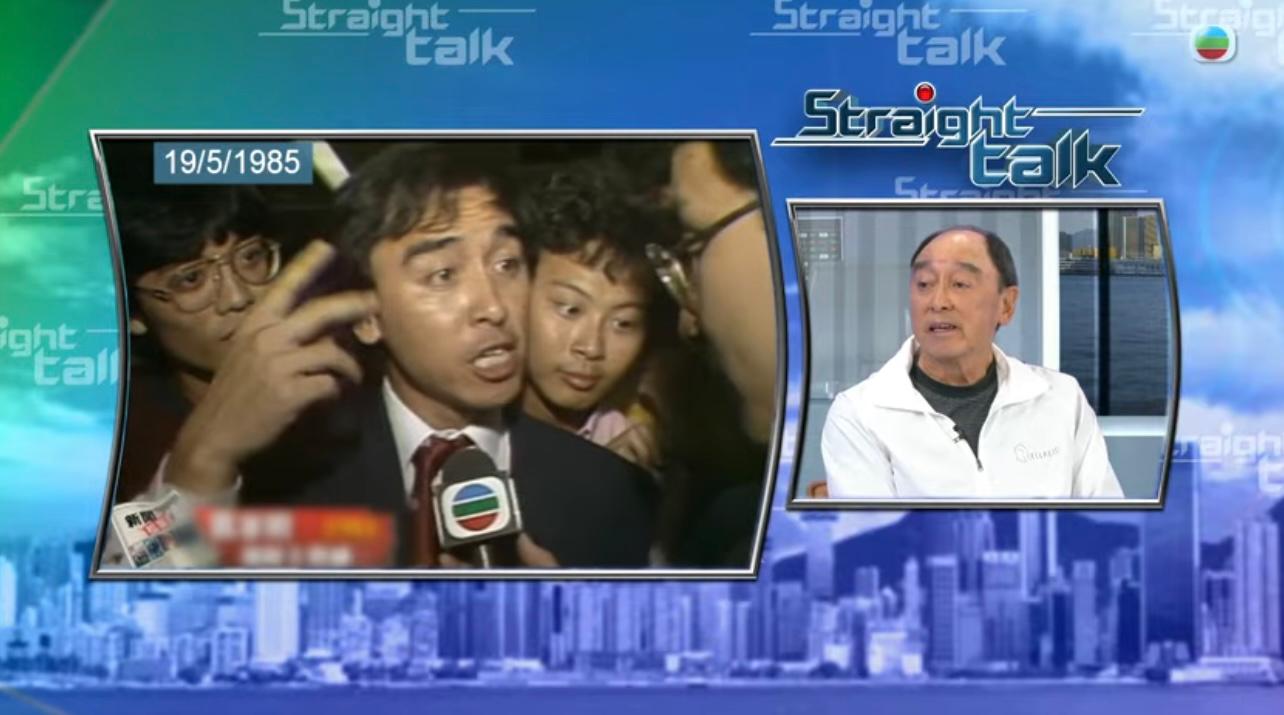
Our guest on Straight Talk this week is legendary Hong Kong footballer Kwok Ka-ming, captain of the Hong Kong team 40 times and then head coach for more than 120 matches, guiding the team to the historic victory over China in 1985. Kwok is here to talk about youth and football development in Hong Kong, and the future of the sports for Hong Kong.
Check out the full transcript of TVB’s Straight Talk host Dr Eugene Chan’s interview with Kwok Ka-ming:
Chan: Welcome to Straight Talk with Eugene Chan! With us is legendary Hong Kong footballer Kwok Ka-ming, captain of the Hong Kong team 40 times, including the famous win over Singapore in 1977, then head coach for more than 120 matches, guiding the team to the historic victory over China in 1985. As the first Hong Kong coach, formerly trained by both the England and Scottish football associations, he served as FIFA and Asia Football Confederation coaching instructor, shaping football education across Asia.
He also spearheaded youth and football development at the Hong Kong Sports Institute for nearly two decades. In recognition of all these, he became the first footballer to be appointed Justice of Peace and to receive the 10th Outstanding Young Person Award and the HKSAR’s Bronze Bauhinia Star medal. He also received an MBE from the colonial government. Welcome to our show, Ka-ming!
Kwok: Thank you.
Football history
Chan: What a great achievement you have had in the last 50 years, and there's a reason why we're having you here today. You know, Hong Kong football has always been one of the most popular sports in the city, and your name is synonymous with the rise, the pride, and the transformation of football in our city. So, you are the best person for me to ask, “How do we make Hong Kong football great again?” Maybe let's take a step down the memory lane. You started playing in 1968. What was it like in Hong Kong in the ’50s and ’60s? And how did Hong Kong become so popular?
Kwok: Hong Kong being ruled by Britain, and in Britain, football is first, football, I mean, first sports, and their most popular, and naturally. We have the army, we have navy, we have air force, and then also Chinese playing. Only a few clubs with that. And in the ’50s, and then we had really a lot of young and promising Chinese players who were able to perform within a lot of crowds. And then one of the forms of entertainment, football was one of the forms of entertainment compared with movies and things like that in the ’50s, ‘60s.
Chan: Right, Ka-ming, who are some of the big names at your times?
Kwok: Of course, you know, you talk about the King of Boys, Lee Wei-tong, right?
Chan: He's before the war, and then he was the outstanding striker in Asia, and he was a coach, and then he became the general secretary of the AFC.
Kwok: And then Yiu Cheuk-yin, the 4As, Ho Cheung-yau, Mok Chun-wah, and of course, later, in the ’60s, Cheung Chi-doy, Cheung Chi-Wai.
Chan: And I believe, when you said Lee Wai-tong, I think there was a rumor that when he struck the ball, the ball actually went through the actual football net. Is that true?
Kwok: Yes, they did. But at that time, maybe it was a coincidence that the net was rotten, right? So, I mean, it can burst, I think. So, this is one of the rumours that was, he was so powerful in being a striker.
Chan: Right. Just now you mentioned the name Cheung Chi-doy, I think he was the … I've just looked it up as well. In 1959, he became the first and the only Hong Kong player being able to play in the top flight football club in Blackpool in England. And he played five matches and scored one goal as well.
Kwok: Yes, I think he was one of the promising young players in the ’60s. And then his father was a football player. And then all his brothers were footballers. And then he's outstanding. That's why he was recommended to play in Blackpool. And then, although he was there for one season, he came back and then both brothers, Cheung Chi-doy and Cheung Chi-Wai went to Vancouver.
Chan: Oh, really?
Kwok: To the North American League starting in the ’60s.
Chan: I see. So, let's move a bit down the memory lane in the ’70s and ’80s, what we call the golden era of Hong Kong football. Who were the greatest players then?
Kwok: Of course, you know, after the ’50s, ’60s, and then Hong Kong football changed to professional …
Chan: I see.
Kwok: … only because, you know, the AFC did not recognize Hong Kong football players as amateur. So, at that time, the Olympics were amateur players.
Chan: Right.
Kwok: So, eventually, I mean, they felt that if you’re not recognised to play in the Olympics, then we change to professional. So, from 1968, Hong Kong football changed to professional. And then from then, a lot of foreign players came all over from Asia, from the rest of the world.
Chan: Right. Who are some of the big names at your time, apart from yourself?
Kwok: Of course, you know, in Asia, Korean players like Kim Jae-han and then the Malaysian players, national players, Chow Chee Keong, the goalkeeper, and then So Chun An and Mo Chun Hua. All the Asian top players came to Hong Kong and played for South China, played for Seiko and things like that. At our time, we also Wu Kwok-hung and big names as well in Hong Kong.
Chan: Yes.
Kwok: And then I was one of them.
Chan: Yes, I know.
Kwok: But I'm not as skilful or talented as Wu Kwok-hung, but anyway, we were playing at the same stages. And also, we had Willie Henderson, a Scottish national player, and, then, we also had Rene van de kerkhof from the Netherlands, whether they were running up in the Argentina World Cup. Four years later, he came to play Seiko, and then with Theo De Jong, a group of top Netherlands players played for Seiko in Hong Kong, bring out our players getting better.
Chan: Right. Ka-ming, thank you for bringing up all the names. I'm sure the viewers and myself will have all the memories of the good old times. And as I said, I remember we have to go and queue for tickets. I know that people actually climbed up the hill of the Hong Kong Government Stadium to watch football because they couldn’t get in. There were also the Dairyfarm ice cream cones, and also the fried noodles and the soy sauce, chicken leg. Also, there were times when they had a match between the China Motor Bus and South China. It was a huge match at that time. Can you share some memories?
Kwok: Yes, of course. We talked about the Kowloon Motor Bus, you know.
Chan: Kowloon Motor Bus, yes.
Kwok: It’s in the Kowloon side, and South China is in the Hong Kong side. Most of the clubs are on the Hong Kong side with pitches, and Kowloon, had few, only hard courts, several side pitches, but Kowloon Motor Bus, the boss, Lui Shui-tak, is really interesting. And he was one of the presidents of the AFC and, that time, really created a lot of momentum in terms of football. People queuing up for football tickets. And every time they played, there were full house.
Chan: Right. Ka-Ming, there is one thing that we must mention today: apart from the 1977 victory over Singapore at that time, it's the 1985 victory in Beijing for China. I think we won by 2:1, and then actually there were riots after the match. What actually happened then?
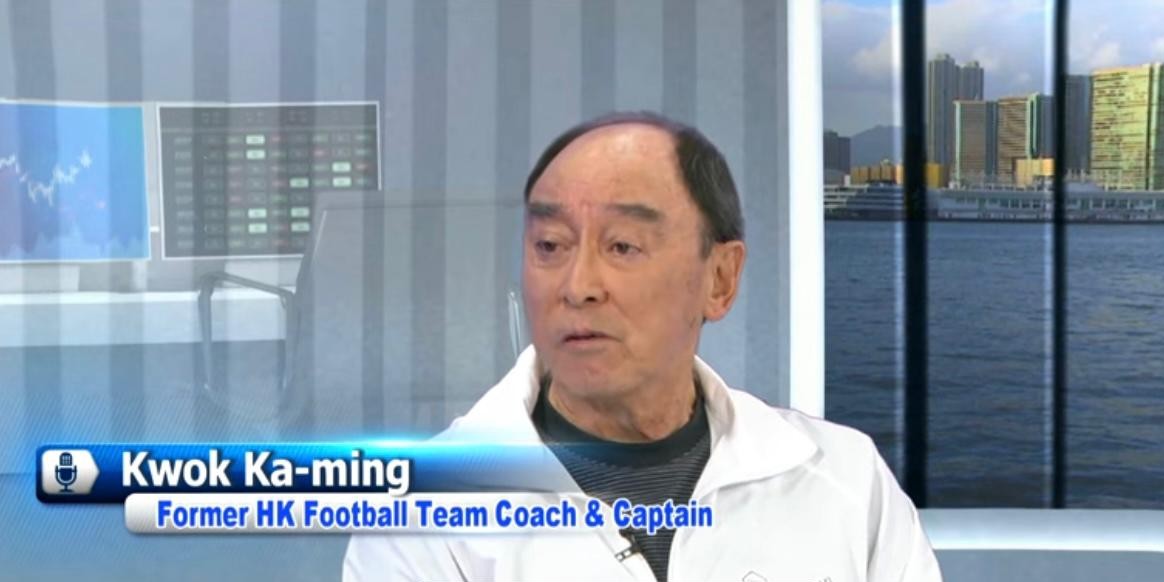
Kwok: As a player, I was playing in the ’70s and then we played in the World Cup qualifying. The World Cup qualifier is one of the main international tournaments that Hong Kong was facing. And then that time, when we played in Singapore in one of the groups and then with Malaysia, Thailand, Indonesia, and then Singapore, and then we eventually beat Singapore. That was 48 years ago. And then, we qualified for a second round and then they played Kuwait, Iran, and South Korea. And although only one team qualified, Iran went to Argentina in the 1970 World Cup. And then in the ’80s, then I retired and then I joined … So, that time the Jubilee Sports Center, now is a Sports Institute, for … you mentioned, about I've been there for over near 20 years.
Chan: Right.
Kwok: And then my main reason is to develop more young players for Hong Kong.
Chan: Right.
Kwok: So, I was the coach and then I was asked to take the team to play in the World Cup qualifier, which is their last match in Beijing in 1985 for the ’86 World Cup. And we were underdogs. And then even some of the South China Morning Post, Robin Park mentioned Mission Impossible but we made it. And then we came back, we won, 2:1, and then created that child. And that was after the Joint Declaration of our SAR.
Chan: Ka-Ming, I mean, I can have good memories of those two matches. I mean, the people who love football will be very keen to remember what we saw on TV. Let's bring it back to more recent days, last week, we didn't make it against Singapore. I know you were there and let me ask you what went wrong. I'm sure the viewers were going to ask you.
Kwok: Yes, I think we had hope and then we needed a win to qualify for the finals. And then Singapore, they had a change in the coach, right? One of the Japanese coaches resigned and then the assistant local Singapore coach. And then we are all odds, said that we are able to qualify. But we were wonderful 1-0 in the first half, and we did well in the first half. But in the second half, Singapore made changes, and then we still kept the same team, and then only for 10 minutes, we lost two goals. And then eventually, although the coach worked hard to make substitutes, we never came back.
Chan: So, really, in the Kai Tak stadium, we had close to 50,000 people, right, really a little bit sad to see that we didn't go through.
Right, before we go to the break, I want to answer the direct question. Being coaching for so many years, and you have seen it all, how would you deal with a defeat like that? How would you encourage a team or even the fans in Hong Kong to continue to support this?
Kwok: History is history, right? The game is over, so we have to look forward. We cannot try to continue moaning about the match, right? So, I think the coach really wants to do well, but unfortunately, that we did not win. So, I mean, it's up to us in the coming … how do we tackle? How do we improve? How do we retain their support, that Hong Kong, that I was envy about when I was the national coach? And then I don't have that kind of support. But now, I think hopefully, the new generation will come through.
Chan: Right, time for our quick break now, and we'll be back with more Straight Talk.
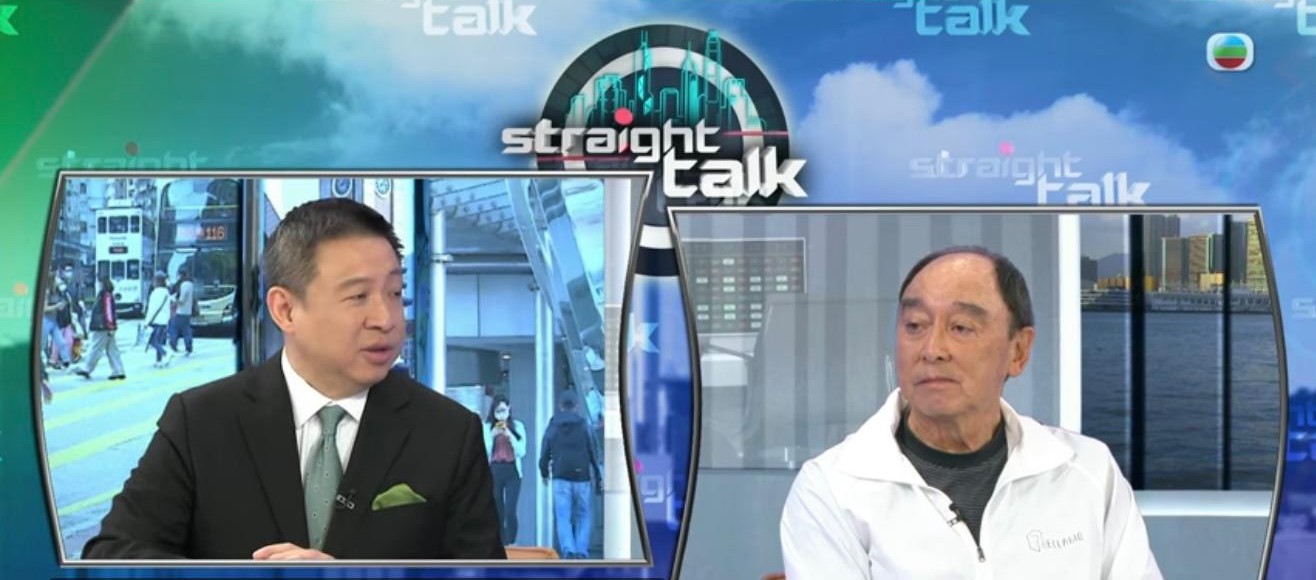
Chan: Thank you for staying with us. Legendary Hong Kong footballer Kwok Ka-ming is with us talking about how can we make Hong Kong football great again.
Challenges
Chan: So, Ka-ming, thank you for running us through the memory lane from the ’50s, ’60s where we were the king of football in Asia. And then you also mentioned about the great wins we had in 1985, even recent success, I would have to say success for the Hong Kong team although we are a little bit short of qualifying for next round. We mentioned up to the ’90s, that was when Hong Kong football started to get a decline in the last 10-20 years. What actually happened?
Kwok: As I mentioned about the football change to become professional, so a lot of investment from companies, or whatever, will be vital to developing the game. Although the government owns all the pitches and then try to release to let the Hong Kong professional games continue, but Hong Kong football has always relied on economy. And then, politically, I mean knowing that in 1997 Hong Kong is going to return to China, and then in the ’90s, so a lot of investors will not really try to put into it; we didn’t know what the future was.
Chan: Right.
Kwok: So that is one of the reasons that Hong Kong football is going down because there are no investors supporting the clubs. And also big firms are reluctant to support the clubs, like Seiko, Jardines, and then Roydon, and then even … yeah, and we are supposed to really developing for the future, but because of political and economical, so football really going down and we cannot pay the players. So, that’s one of the reasons. And also in the ’90s, the Japan, Korea professional football is growing, and then they try to get a lot of top players, and then they can pay, and even China followed up. So, with China, Korea, and Japan, it’s difficult for Hong Kong to attract more top players to play in Hong Kong because they can offer the other three big names in East Asia, getting all the top players.
Chan: Right.
Kwok: So, that is one of the reasons that our local players didn’t have a chance to play with or against the top of the world in the ’80s. That is why our local players are not as good as before.
Chan: Right. Not to mention that football sort of lost the Tier A status with the Hong Kong Sports Institute, and no longer being classified that. So, that doesn't help, does it?
Kwok: Yeah, of course. You know, the Sports Institute has been there for 19 years, and then we created a lot of young players, like Leslie Santos and all these good players that they all fulfilled for the representative team. But then the reason why, because they needed results. But for Hong Kong, at that time, it is difficult to get football, it’s not easy, compared to the other games – swimming, table tennis, or fencing, right? So, I mean it’s not easy for football to excel, to achieve the support from the Sports Institute and the government. That is why we are moving back to the Hong Kong Football Association. But within the local association, the resources are difficult. So, that is why we cannot afford to have big players, big teams, and then creating the momentum what we had in the ’60s and ’70s.
Chan: Right. Ka-ming, I mean being a football-lover myself, I understand what has happened and there is a reason why in recent years a lot of viewers may not have been watching as much football as we all used to before. But this sudden surge of fans, especially with the Kai Tak stadium opening, looking like 40,000 to 50,000 people, chanting along Hong Kong, “we are Hong Kong”, we are all very touched and we are very moved. What has happened suddenly that we have such a big energy boost to the football world? What do you think?
Kwok: I was really envious about it because when I was a representative coach and I never had that kind of support. And then only when you win, “oh, well done”, but when you lose they boo at you.
Chan: Exactly.
Kwok: And now, and then actually with a group, smaller group of supporters who sing, from a few hundred now to a few thousand. And then that is creating the momentum. And also the establishment of the Kai Tak stadium, and then the environment. They can close the roof and then they can enjoy the air-conditioning, the shading, that is so much different. And a lot of Hong Kong citizens would like to go, “I would like to join.” That is why these few matches have really had an impact that we just like watching in Europe, okay? The atmosphere never happened in Hong Kong, but now we have that kind of support. Why can't we do something more to keep them happy?
Chan: Right. When will be the next match? It will be like India next year for away match. And I know some of the fans actually flew with the Hong Kong team that has, I am sure, been unheard of before. So, how would you suggest the football world to take advantage of such sort of cohesiveness and unity amongst the Hong Kong people towards football?
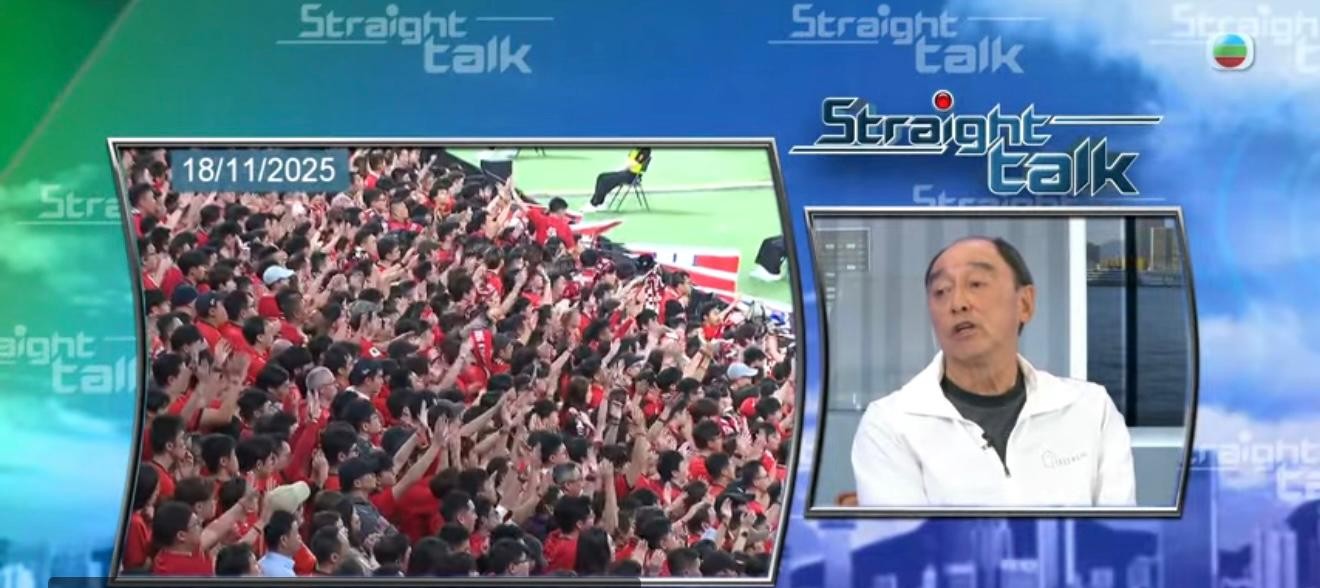
Kwok: I think with the present squad, I think a little bit aged, over-aged. And then the next round, we will, only maybe 18 months later, play for the World Cup qualifier again.
Chan: Right.
Kwok: And also maybe the Asian Games in Nagoya, okay? That is under-23 teams. So, in the meantime, I think it is better to aim for a group of younger players to develop. I am sure that the fans will support our younger players, our under-23 team players, and also under-20. And we have a lot of potential there. We hope that in the next half a year or a year, and then we create something more to let these young players come through. I am sure the fans will support them, and then hopefully that we can host some of the invitation tournaments in Hong Kong.
Chan: Right.
Kwok: So, they give them a chance because there is no international matches after that. We cannot empty for the whole 2026, and then wait for seeing the World Cup in North America. I think it is good to aim for some youth tournaments, which is nearby, or some of the Europe. And then hopefully we can create and maintain a lot of hopes for our fans that they will continue to support the national team.
Making football in Hong Kong great again
Chan: Ka-ming, with the remaining part of the show, we want to sort of look at, try to dissect what has happened in Hong Kong and how we can make Hong Kong football great again. You mentioned the young team, and for the upcoming development will be very crucial for the fans, and also for Hong Kong's development. I am sure with that, the financial backers are going to look at and coming back as well, isn't it?
Kwok: Yes. At the moment, the Football Association is creating clubs to have the youth tournament. And then we have 14 clubs, who are aiming for under 18, under 16, under 14. These are the future players for Hong Kong. However, I think the level is not strong enough. The coaches need to be developed more and then better. And you see the game now, everybody plays more or less the same, passing, passing, passing, passing, passing. Instead of creating some of the, what I mentioned about, Yiu Cheuk-yin, Cheung Chi-doy, individual good players, we have to aim for some of the top players. I mean like Cristiano Ronaldo, Messi, and then now the young player from Barcelona, Yamai, right? We need to have some individual players in the team to create what we have done in the past.
Chan: Right.
Kwok: Not the team, individual first, and then the individual first can bring the team good results.
Chan: Right. Ka-ming, another area that we must touch on today, I think, you will be the best person to tell us that with young players, they are faced with different choices, either they have to study, they have to choose maybe a singing career or fencing, that give them satisfaction and also financial stability. I read in a paper like 10 years ago, this is one thing I read, the best players will earn about under $20,000 a month. Some of the part-time players only get a few thousand, they have to work part-time. Is that still the case in Hong Kong? Can you expect a good player to have a reasonable living? I am not asking for luxurious living, but in order to support their family, is it still possible?
Kwok: Yes, at the moment, I said the economy counts a lot, and then if the players are not playing well, how can they continue a football career? Fortunately, I think at the moment, we go north and the clubs in the north are getting players from Hong Kong. So, around 10 players now are playing in China, and then the rules that one club has allowed one player as a local player, they don't count as a foreign player. That is why we are around 10 players playing in China. And then it is so close, and their level is much higher and more competitive than in Hong Kong. This is one of the opportunities if the players cannot stay in Hong Kong, but also play in China. And then when the international (match) days, they will come back. We have at the moment, a few of them are really in our first team, are in China. I think this is one of the prospects for the young players, and they play better than in Hong Kong.
Chan: Ka-ming, thank you very much for the journey of the past, present, and future. The message is that “making Hong Kong football great again” is not a dream but a choice, our choice: to invest, to believe, and to rebuild with vision and courage. Let’s rediscover our spirit, support our players, and start dreaming big again.
Thank you for joining us on Straight Talk and have a good evening!
