

The election of the eighth-term Legislative Council of the Hong Kong Special Administrative Region on Sunday marks another important moment in the SAR's steady advance toward high-quality democracy under the guiding principle of "patriots administering Hong Kong".
This is the second LegCo election since the Standing Committee of the National People's Congress amended Hong Kong's electoral system in March 2021 to ensure the full and faithful implementation of the principle of Hong Kong should be governed by Hong Kong people, with patriots as the main body.
 The improved electoral system has enabled the formation of a legislature that is broadly representative, politically inclusive and balanced in participation — characteristics that align with Hong Kong's actual circumstances and governance needs. The current LegCo consists of 90 seats, with 40 returned by the Election Committee constituency, 30 by functional constituencies, and 20 by geographical constituencies through direct elections. This structure, which has functioned smoothly since the reform was implemented, enhances both representation and efficiency, reflecting the interests of all segments of Hong Kong society and the SAR as a whole.
READ MORE: Voters cast ballots as government officials stress reform
This year's LegCo election is competitive. A total of 161 candidates — including senior academics, Olympic champions, managers of small and medium-sized enterprises, cultural workers, community organizers and rising professionals from innovation and technology sectors — are vying for the 90 seats. According to the Electoral Affairs Commission of Hong Kong, 51 nominations were received for geographical constituencies, 60 for functional constituencies, and 50 for the Election Committee constituency. That means competition is particularly strong in geographical constituencies, where 51 candidates are contesting 20 seats, ensuring that no one can "win easily" and that the LegCo election returns to its essence: selecting the virtuous and capable based on political platform, professionalism and service commitment.
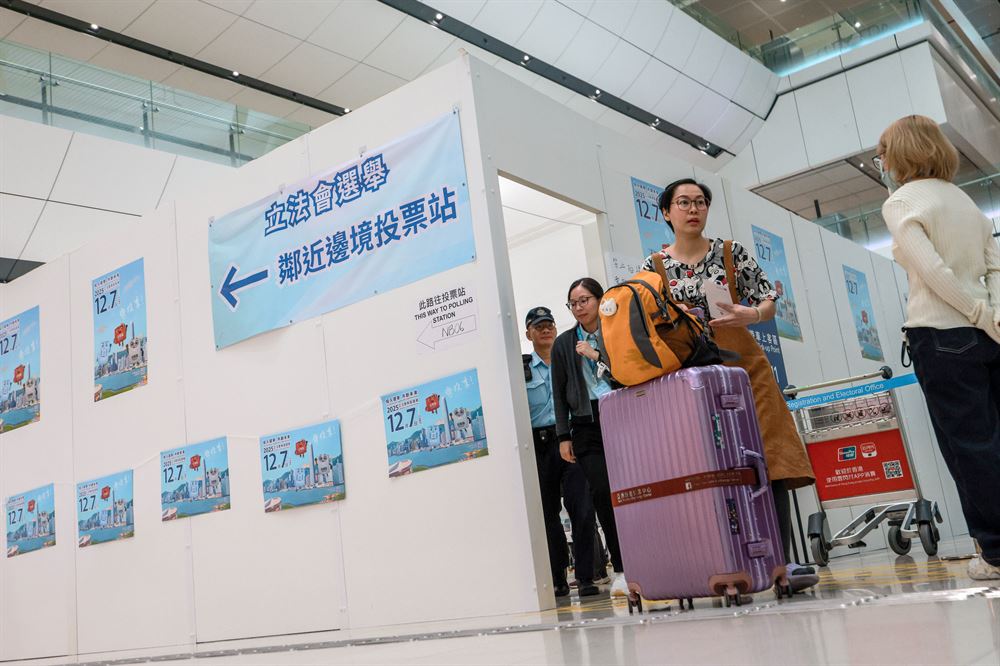
More than 600 polling stations, including newly added ones at the Hong Kong-Zhuhai-Macao Bridge checkpoint and Hong Kong International Airport, have made voting more convenient, further highlighting the people-oriented and pragmatic nature of Hong Kong's electoral arrangements.
The broad diversity of candidates and political platforms — ranging from innovation and technology, finance, medical services and housing, to youth development, labor rights, district administration and integration into national strategies — demonstrates that the new electoral system not only upholds the principle of "patriots administering Hong Kong" but also provides a wider stage for patriots of different backgrounds to contribute fresh ideas and practical solutions. As LegCo President Andrew Leung Kwan-yuen noted, the candidates' varied expertise will inject new dynamism into the legislature and bring a renewed vitality to policymaking.
The election carries special significance in light of the recent deadly fire in Tai Po. Voters in the district, including those directly affected, said that participating in the election is an active commitment to rebuilding their homes and strengthening Hong Kong's resilience.
Eric Chan Kwok-ki, chief secretary for the Hong Kong SAR government, stressed that electing capable and aspirational LegCo members is essential for post-disaster reconstruction and to maintaining the continuity and effectiveness of governance. From Chief Executive John Lee Ka-chiu's repeated calls for civil servants to set an example, to large enterprises granting time off for employees to vote, and patriotic groups on the mainland organizing members to return to Hong Kong to cast their ballots, society's strong support has created an enthusiastic election atmosphere.
ALSO READ: Lee: Vote to drive reform and help HK fire victims
The four-year term of the eighth Legislative Council will largely overlap with the implementation of the 15th Five-Year Plan (2026-30) of the country. As Hong Kong enters a new stage of transitioning from stability to prosperity, the new LegCo will shoulder heavy responsibilities: accelerating economic transformation, improving people's livelihoods, strengthening district governance, advancing integration into national development, and ensuring that "one country, two systems" is steadily practiced for the long term.
The design and improvement of Hong Kong's electoral system are purely internal affairs of China, and no foreign country has the right to interfere in them. The Office for Safeguarding National Security of the Central People's Government in the HKSAR summoned representatives of some overseas media in Hong Kong regarding recent false information and malicious smear campaigns surrounding the Tai Po fire and the LegCo election. This is a timely reminder that some external parties are still looking for opportunities to make trouble in the SAR despite the implementation of the National Security Law of Hong Kong.
A fair, honest, safe and orderly election environment is indispensable for safeguarding the dignity of the electoral system and the rights of all voters. The SAR government has made it clear that it will resolutely crack down on illegal acts aimed at disrupting the election.
