

Deadly Hong Kong fire sees mainlanders, government, and businesses offer swift support to the city

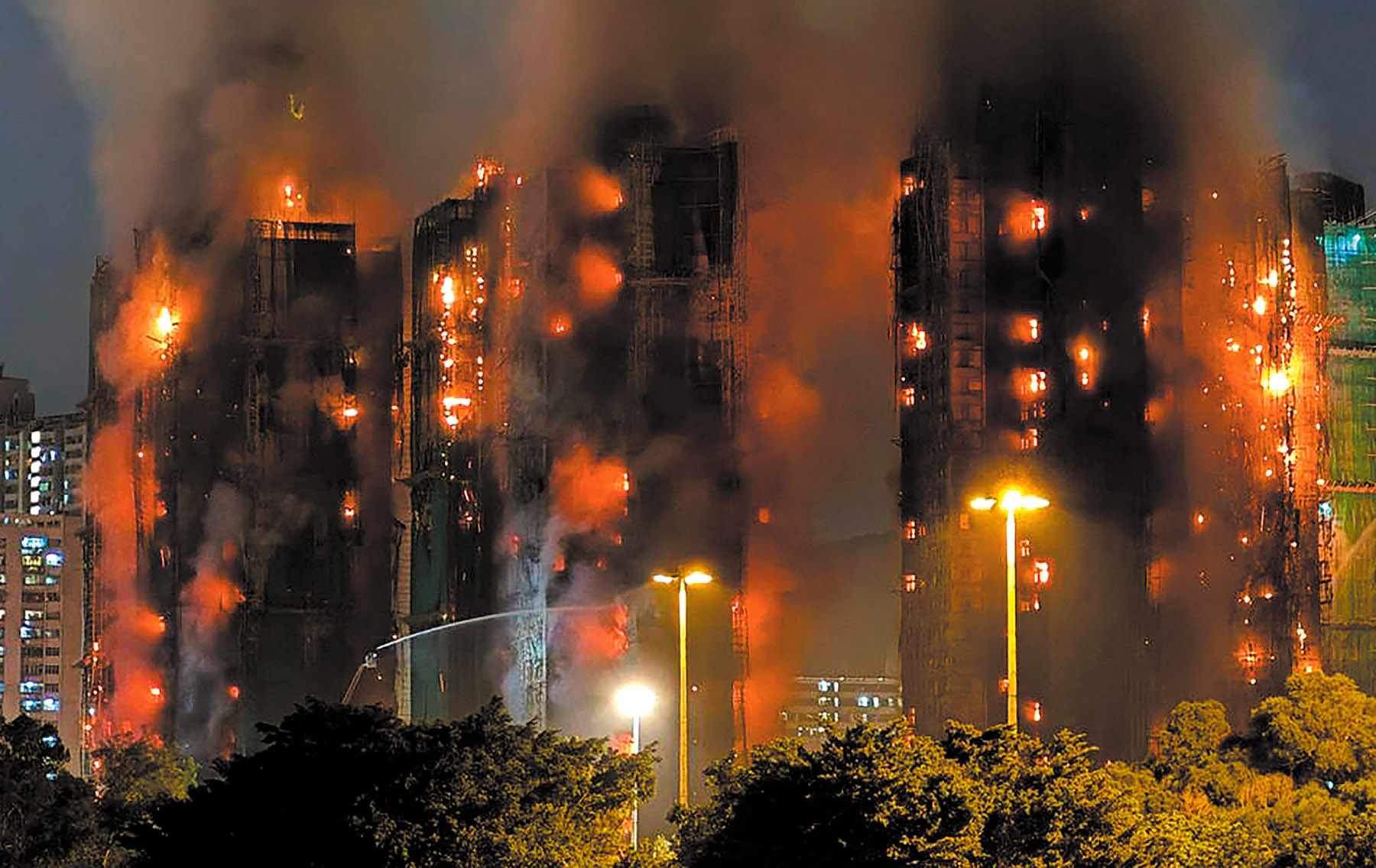
Mainlanders have joined their compatriots in Hong Kong in an outpouring of grief and support as investigations and relief efforts continue into the fatal fire that ravaged Wang Fuk Court on Nov 26.
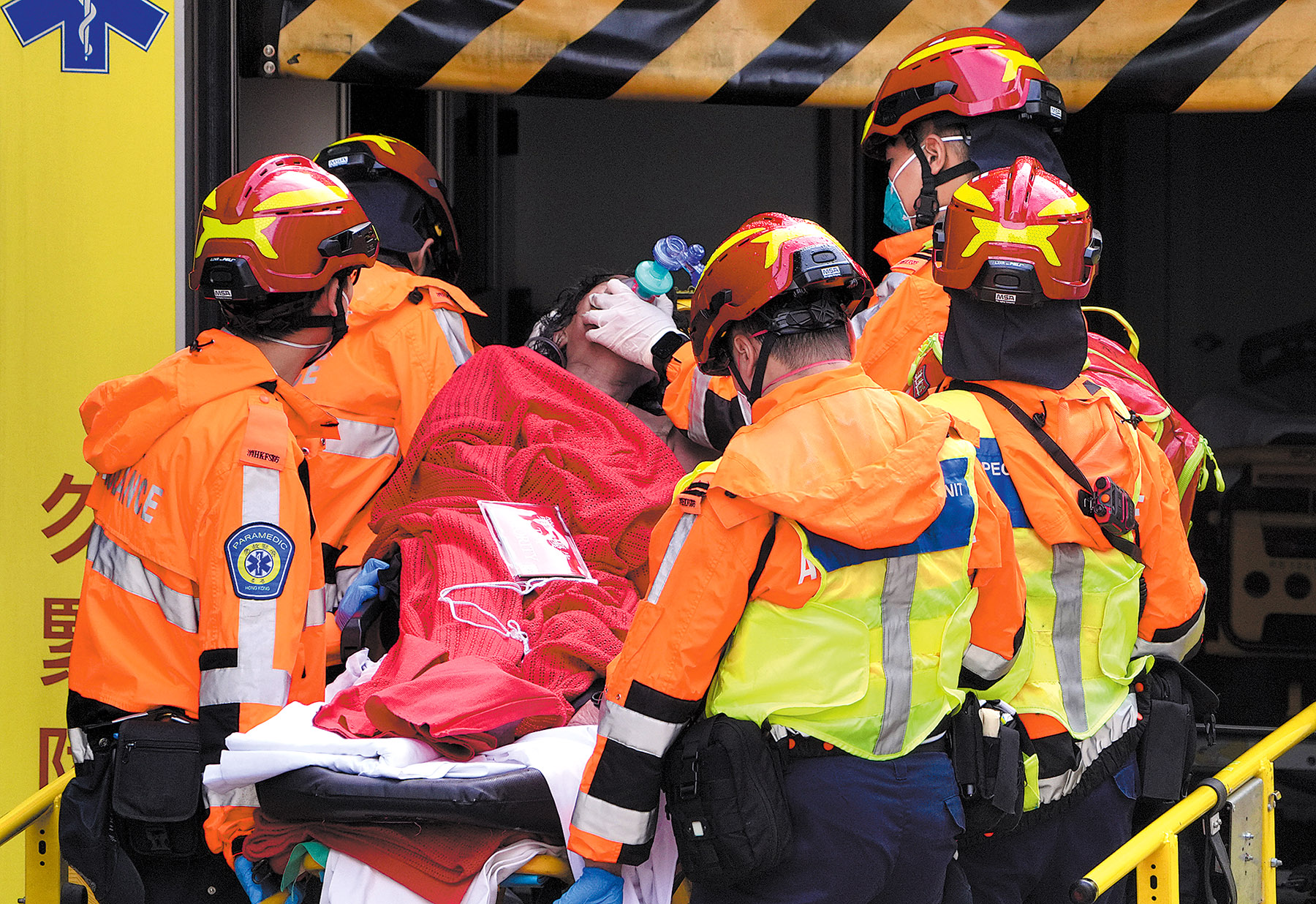
As of Dec 3, the death toll reached 159, with 140 victims identified, including 49 men and 91 women, ranging from 1 to 97 years of age.
The deceased include one firefighter who died in the line of duty, 10 foreign domestic helpers, and five on-site workers. Forty-two injured people have been discharged from hospitals, while 37 remain hospitalized — four in critical condition, nine serious, and 24 stable. Thirty-one are still missing.
By Nov 30, the government support funds for the fire reached HK$1.2 billion ($153 million), with HK$900 million coming from donations from dozens of major listed companies and charitable foundations across the country and HK$300 million from government grants, according to Cheuk Wing-hing, deputy chief secretary for administration of the Hong Kong Special Administrative Region government.
The People’s Bank of China, China’s central bank, has opened a “green lane” for RMB donations originating on the mainland to ensure they instantly reach the recipient account in Hong Kong. According to the PBOC, this arrangement aims to support search-and-rescue work, the treatment of the injured, and relief efforts.
On Nov 26, President Xi Jinping expressed condolences for the victims and for the firefighter who died in the line of duty.
Xi extended his sympathies to the families of the victims and those affected by the disaster, and called for all-out efforts to put out the blaze and minimize the casualties and losses.
Following the incident, Xi, who is also general secretary of the Communist Party of China Central Committee and chairman of the Central Military Commission, promptly learned of the information about the fire rescue efforts and the casualties.
He urged the Hong Kong and Macao Work Office of the CPC Central Committee and the Liaison Office of the Central People’s Government in the Hong Kong SAR to support the SAR government in making every effort to put out the fire, carry out search and rescue operations, treat the injured, and provide post-disaster support.
He also demanded that relevant departments and localities provide necessary assistance to the SAR government.
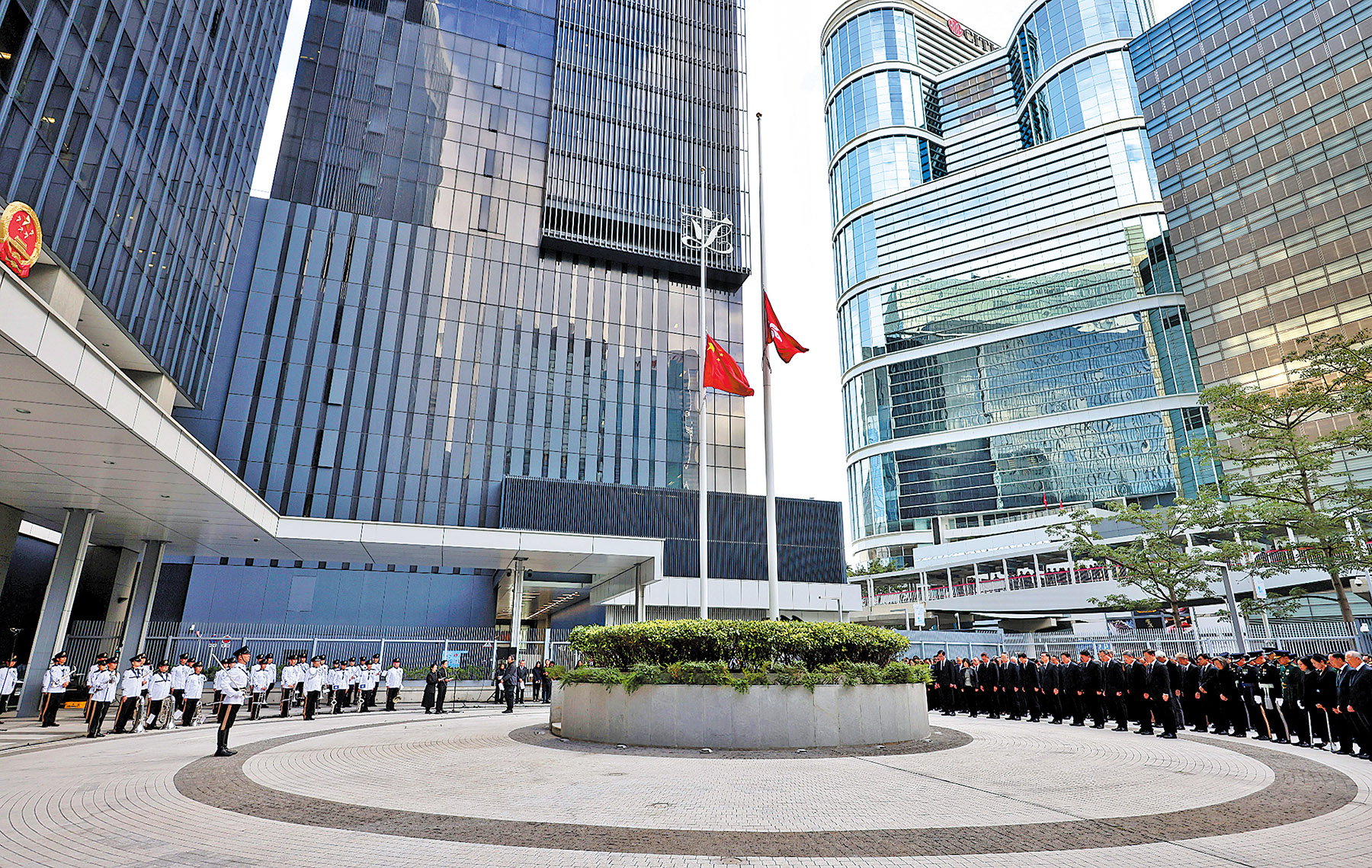
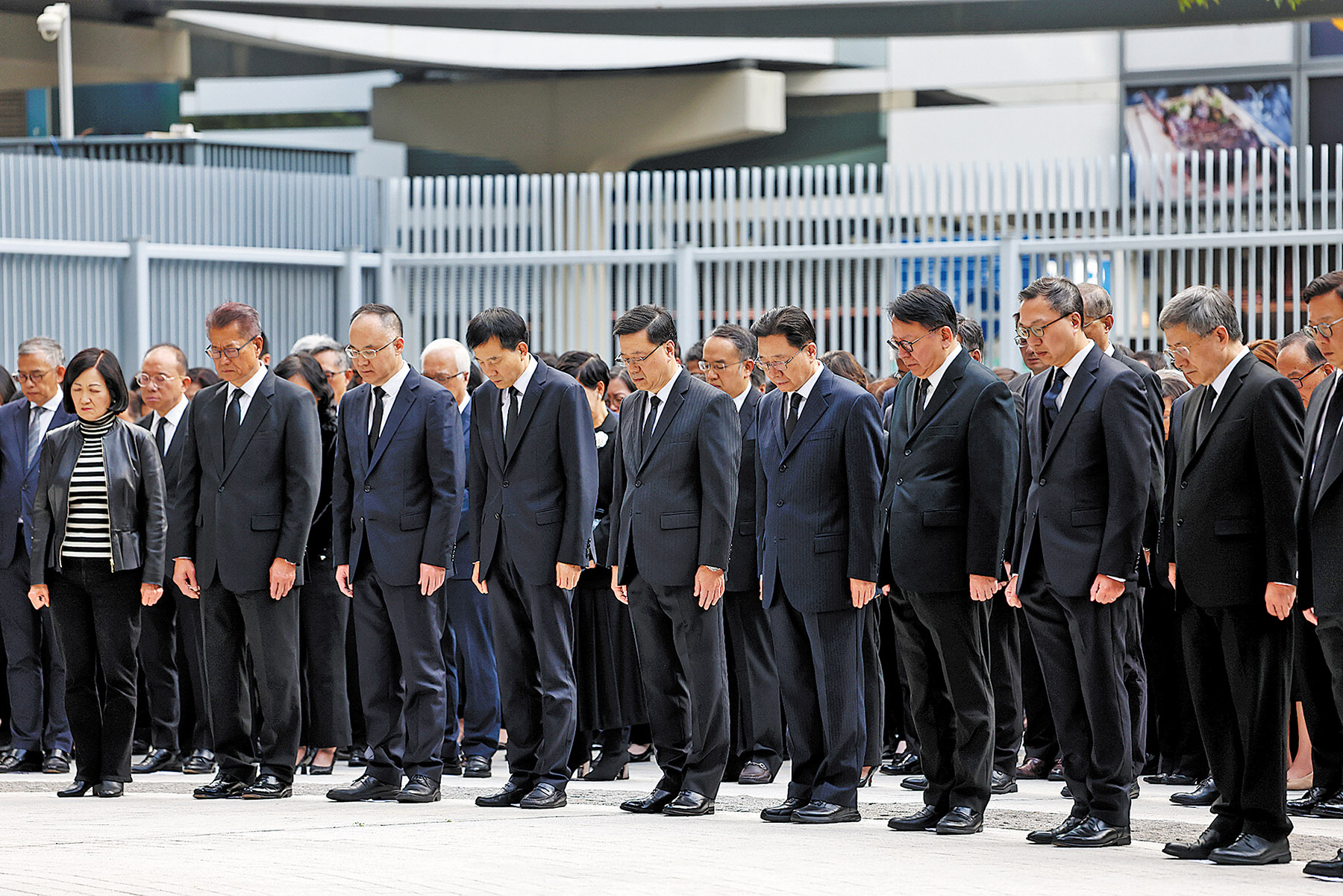
On Nov 29, John Lee Ka-chiu, the HKSAR’s chief executive, along with principal officials of the HKSAR government and civil servants, participated in a memorial service at the government headquarters.
With the national flag and the HKSAR flag hoisted at half-staff, all officials present observed a three-minute silence in mourning for the fire victims.
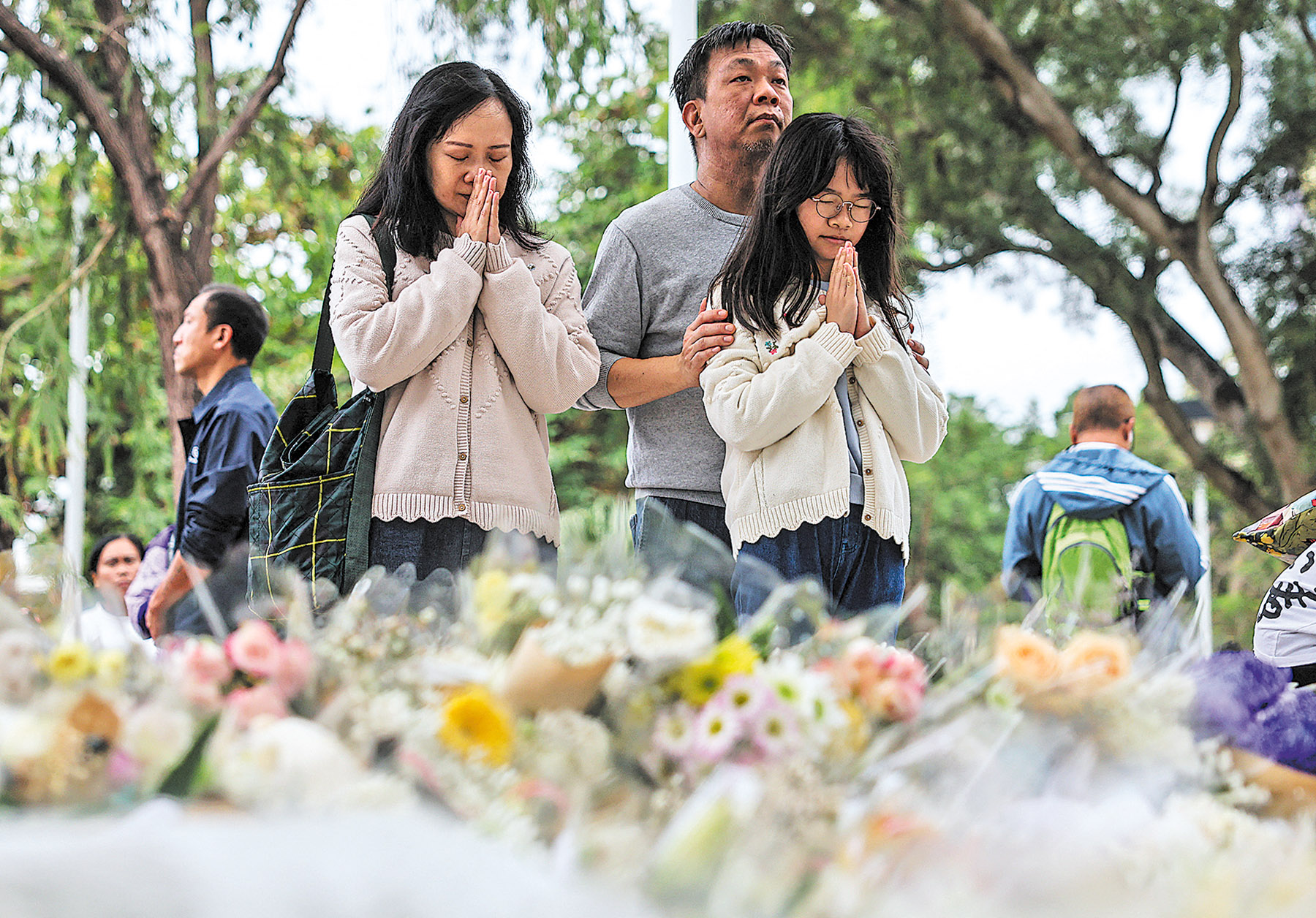
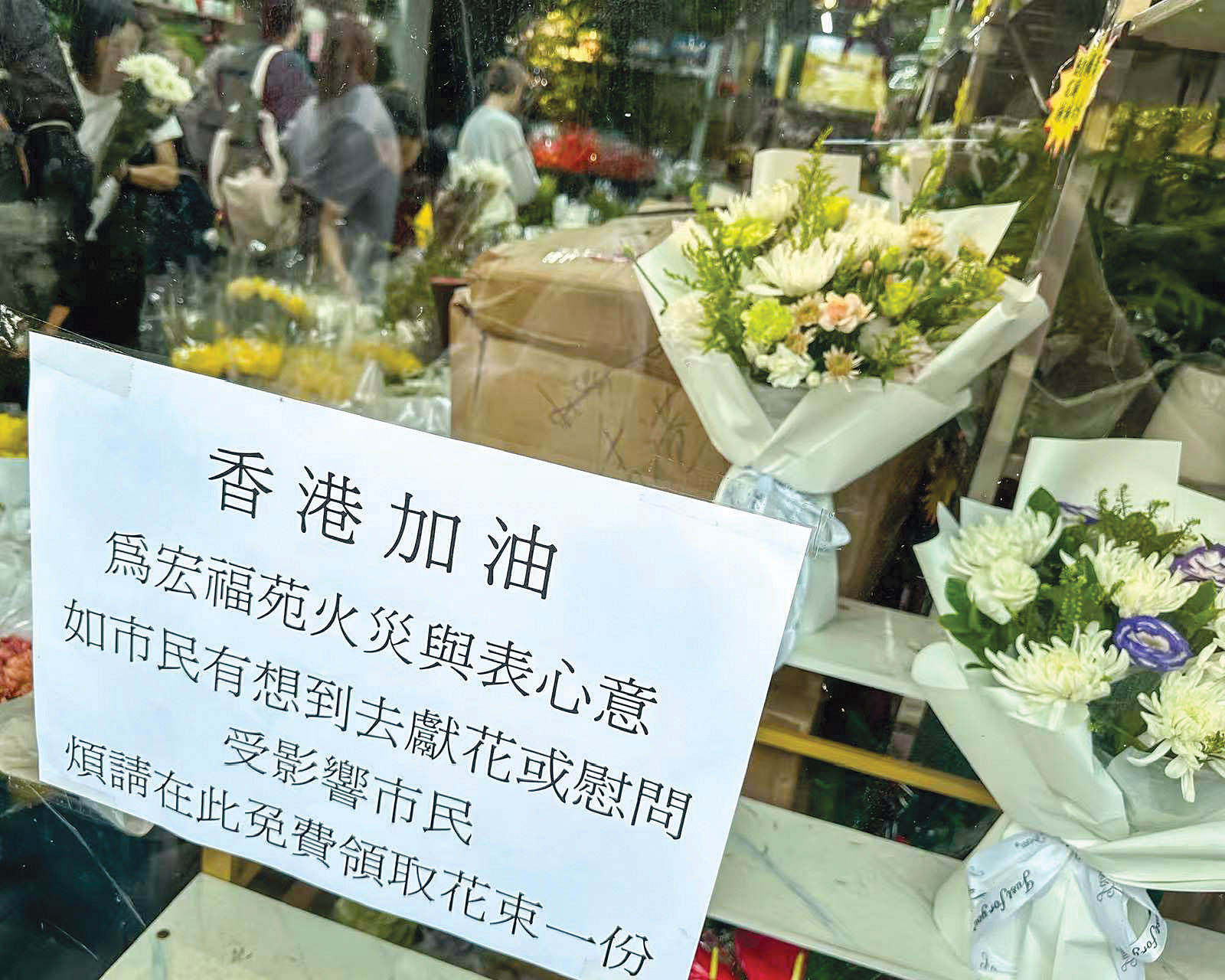
During a three-day mourning period, the HKSAR government set up condolence points in all 18 districts across the city, enabling the public to sign condolence books and mourn the victims.
A task force to investigate possible corruption in the renovation project was also launched, following the police’s arrest of three senior staff members of the renovation company, Prestige Construction and Engineering Co, for alleged manslaughter.
The Independent Commission Against Corruption, Hong Kong’s anti-graft body, and local police jointly arrested 14 individuals in connection with the fire, including an engineering consultant, a scaffolding subcontractor, and an intermediary.
Authorities also met with industry representatives to discuss the phasing out of bamboo scaffolding, commonly used in building work in the city, in favor of metal alternatives.
Meanwhile, a nationwide inspection of fire hazards in high-rise residential and public buildings has been announced.
In a notice issued on Nov 29, the Work Safety Committee of the State Council, China’s Cabinet, instructed local governments to immediately carry out checks and fix problems in occupied residential towers, office buildings, hospitals, and shopping complexes.
The campaign aims to prevent accidents linked to renovation work, aging facilities, and blocked evacuation routes, the committee said.
On Nov 27, rescue and supporting services were quick to receive support from neighboring Guangdong province. A volunteer convoy from Huizhou, Guangdong, traveled through the night to deliver emergency supplies of thousands of towels and blankets.
“Do we have enough masks now?” a volunteer cried out at a makeshift relief center in Tai Po. She was surrounded by a sea of donations, including clothes, boxes, and trolleys filled with daily essentials.
When Faye Jiang and her colleagues learned that volunteers were needed to help residents in Tai Po’s fire-hit area, they swiftly organized a relief effort.
On Nov 27, they brought necessities such as socks, disposable underwear, fruit, and drinks for the residents.
The decision to help was made without hesitation after they had arrived at their Admiralty office in Hong Kong that morning. They pooled HK$30,000 to purchase supplies and rented a van to deliver them to the site.
“It’s touching to see so many people voluntarily helping out at such a difficult time,” Jiang told China Daily. “Some of them came from Shenzhen (Guangdong) on Wednesday night (Nov 26) and have stayed here ever since.”
Ten employees from Jiang’s company — half of the office — took the trip. Like Jiang, who has lived in Hong Kong since 2011, some of them are also originally from the Chinese mainland. “It is a true embodiment of ‘blood is thicker than water’,” Jiang said.
After hearing the news of the Tai Po fire, 63-year-old Shenzhen resident Zhang Lixin departed around 6 am on Nov 27 for Hong Kong, carrying bottles of medicinal oil for joint pain and blood circulation.

Meanwhile, government agencies have helped arrange support supplies, and a multitude of mainland enterprises and foundations have made donations. Public organizations, government-invested enterprises, and private firms have pledged tens of millions of dollars to support rescue and relief efforts.
Alibaba Group and its affiliate Ant Group together committed HK$30 million to support fire relief efforts. Alibaba founder Jack Ma also pledged HK$30 million through his charitable foundation to provide emergency aid to those affected.
Sportswear maker Anta said it would donate HK$30 million in cash and equipment. Xiaomi Corp and ByteDance each pledged HK$10 million to aid the rescue efforts and support victims of the blaze. Tencent, which initially donated HK$10 million, later increased its pledge to $30 million.
More than 40 private enterprises have committed over HK$600 million in donations to the rescue effort as of Nov 26, according to estimates by The Paper, a Shanghai-based news outlet.
The fire rescue efforts have also drawn HK$10 million from China’s private equity firm HongShan Capital Group (HSG).
Separately, private equity titan Jean Eric Salata, chairperson of EQT Asia, also pledged HK$10 million through his family office, Central Cove, to fund grief and psychological support, education resources for displaced children, and financial relief for victims’ families.
The fire reportedly started around 2:50 pm in one of the court’s residential towers. The blaze quickly escalated and eventually spread to six adjacent buildings before being largely extinguished at 10:18 am on Nov 28.
The apartment complex of eight, 31-story buildings in Tai Po, near Hong Kong’s boundary with the Chinese mainland, was built in the 1980s. It had almost 2,000 apartments and more than 4,600 residents. The complex had been undergoing a HK$330 million renovation work when the fire struck.
Survivors recounted loved ones’ narrow escapes, while others told of tragedies.
“At 3:11 pm, I called my daughter and said: ‘Fire! Get out!’” a mother surnamed Ng recounted, her voice hoarse from crying.
Ng, her hands trembling, said the last text she received from her daughter was at 3:25 pm, “then her phone went dead”.
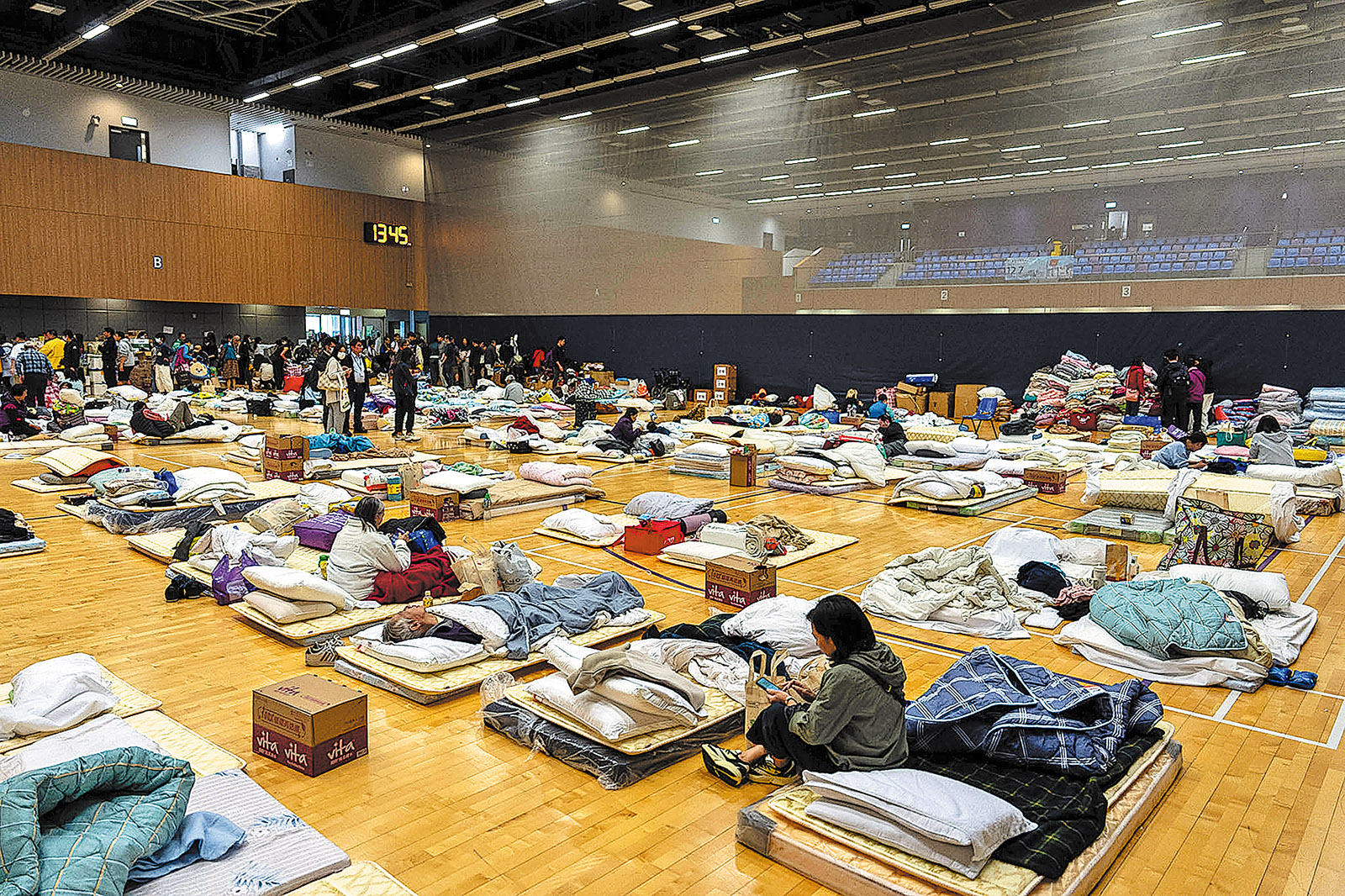
Ng was among the distraught survivors at the CCC Fung Leung Kit Memorial Secondary School on the morning of Nov 27 — one of 10 sites converted into temporary shelters citywide. The site is just over 100 meters from her charred home.
Preliminary investigations showed the fire started on a lower-level scaffolding net on one of the buildings. As the windows were covered by Styrofoam boards, it rapidly spread to the neighboring six buildings, said Hong Kong’s Secretary of Security Chris Tang Ping-keung on Nov 28, when the fire was finally extinguished after 43 hours.
Police also said they had been looking at the highly flammable foam panels. “The blaze ignited the foam panels, causing the glass to shatter and leading to a swift intensification of the fire and its spread into the interior spaces,” Tang said.
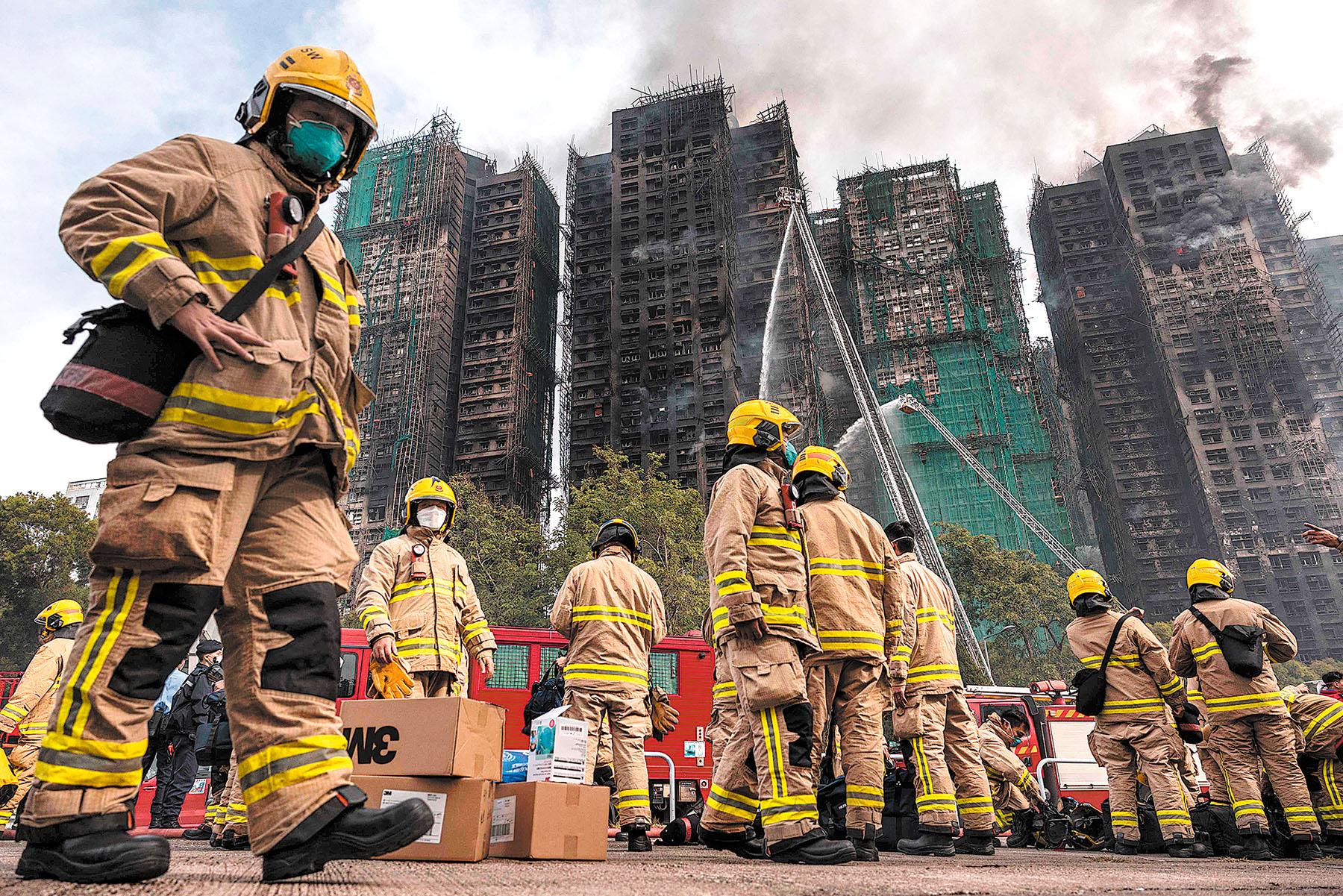
Winds helped the flames jump from building to building, and soon seven of the eight buildings were engulfed. It took until the morning of Nov 28 for more than 2,000 firefighters to finally extinguish all the flames.
Firefighters found that some fire alarms in the complex, which housed many older people, did not sound when tested, according to Andy Yeung Yan-kin, director of Hong Kong Fire Services, which is also part of the investigation.
Three men — the directors and an engineering consultant of a construction company — were arrested the day after the fire broke out on suspicion of manslaughter.
Police said company leaders were suspected of gross negligence. Those three were released on bail but then rearrested by Hong Kong’s anti-corruption authorities.
The Buildings Department has suspended 30 private building projects due to safety concerns, including 28 that were managed by the contractor at Wang Fuk Court.
The fire was the deadliest in Hong Kong in eight decades. A 1996 fire in a commercial building in Kowloon killed 41 people. A warehouse fire in 1948 killed 176 people.

Chinese mainland authorities on Nov 29 initiated a mechanism to coordinate emergency supplies for disaster response and relief following the fire, according to the Ministry of Emergency Management (MEM).
Disaster aid packages have been provided to the HKSAR government, including portable outdoor charging stations, heavy-duty conveyors, blowers, respirators, goggles, protective suits, headlamps, and waterproof boots, the ministry said. The mechanism was jointly launched by the MEM and the Office of the National Commission for Disaster Prevention, Reduction, and Relief.
The National Fire and Rescue Administration supplied more protective boots and other materials to the HKSAR government, supplementing the previously provided emergency equipment, which includes lighting drones, reconnaissance drones, and fire rescue boots, according to the ministry.
Commissioner of Police Joe Chow Yat-ming said that search operations will be conducted under the collapsed scaffolding to check for possible victims at a later stage. The remains discovered in some units at the scene will be sent to forensic examiners and government laboratories for further testing to determine whether they are human or animal, while DNA analysis will be used for identification.
Investigations into the fatal fire suggest that substandard protective mesh netting around the buildings may be among the reasons for the blaze’s rapid spread. The special administrative region government has ordered the netting around all buildings across the city undergoing major renovations to be removed immediately.
Meanwhile, residents of the sole unaffected tower at Wang Fuk Court, Wang Chi House, were allowed to return to their flats to retrieve personal belongings on Dec 3 and Dec 4.
Local relief efforts are continuing, with registration completed for 1,930 households to receive a HK$10,000 ($1,285) emergency cash grant; disbursements have been made to 1,921 households. As of Dec 2, 104 households had received a HK$50,000 living allowance.
Under Secretary for Home and Youth Affairs Clarence Leung Wang-ching said on Dec 3 that over 2,600 residents are staying in temporary to long-term free accommodation.
Cao Desheng, Stacy Shi, Yang Zekun, and Xinhua contributed to this story.
Contact the writers at wanqing@chinadailyhk.com
