

Thousand-year-old viewing tradition becomes the backdrop for an ambitious orchestral debut, Chen Nan reports.
The Qiantang River in China is renowned for its tidal bores, a remarkable natural phenomenon that occurs on the 18th day of the eighth lunar month, coinciding with the full moon. For centuries, watching the tidal bore has been a popular cultural and tourist activity in the region, attracting visitors eager to witness the powerful tides.
Nestled along the northern banks of the Qiantang River, the ancient town of Yanguan has long been a place where the rhythms of nature and the pulse of history are inseparable. Located in the northern part of Zhejiang province and part of Haining under Jiaxing city, Yanguan is about 40 kilometers east of Hangzhou, making it easily accessible by both road and rail.
For over a thousand years, Yanguan has witnessed the rise and fall of the Qiantang tides, an awe-inspiring event that has become an indelible part of the town's identity. The rhythmic ebb and flow of the tides have inspired poets, artists and musicians, creating a unique cultural landscape where music and nature exist in perfect harmony.
READ MORE: Zhejiang, the ferry of time
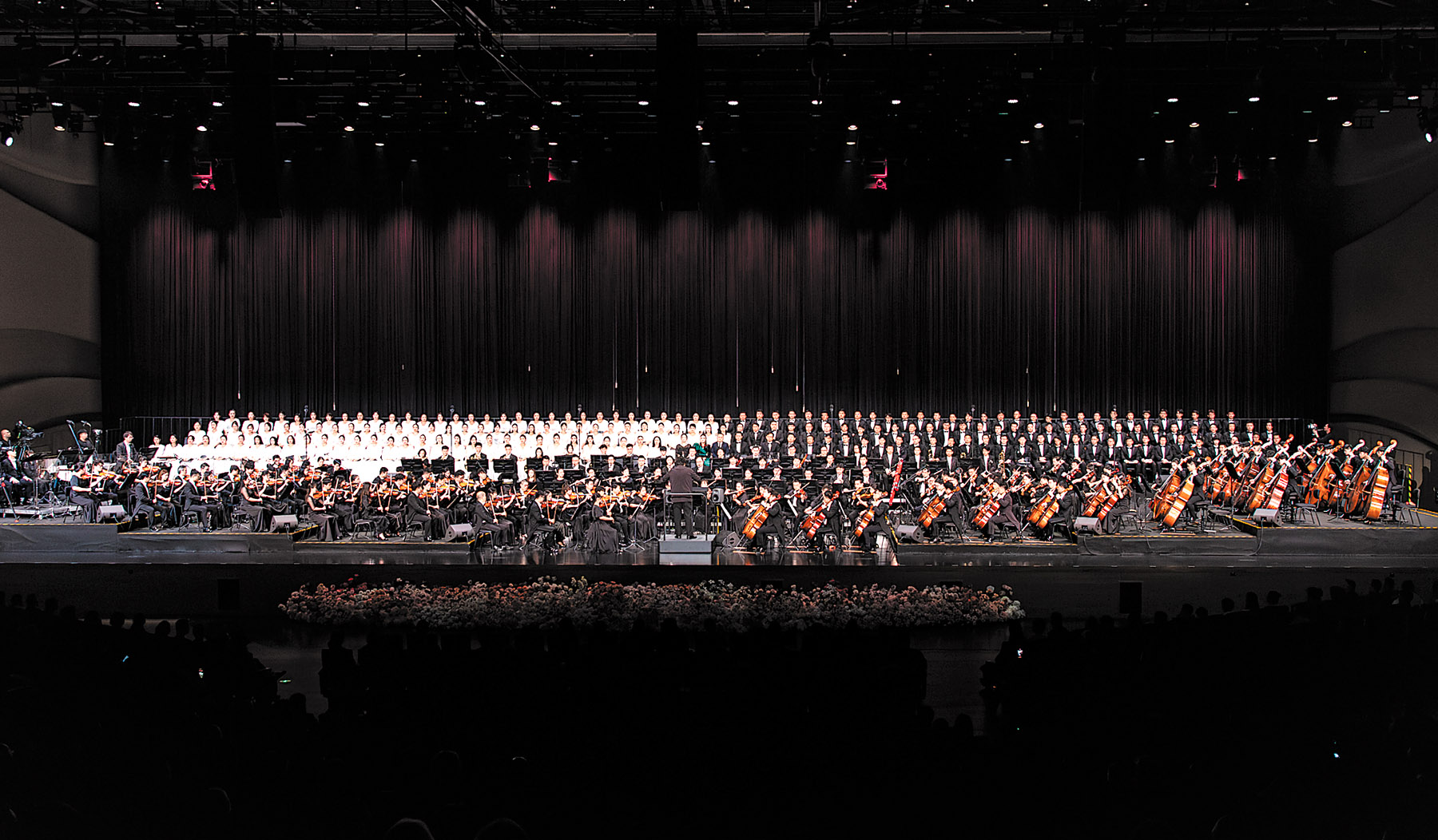
On Nov 16, a new chapter in Yanguan's storied history was unveiled as the Tide Philharmonic Orchestra held its inaugural concert at the Tides and Music Resort, a newly established scenic area located in the town's prime tidal bore viewing spot.
Set against the town's centuries-old backdrop of stone bridges, flowing rivers, and the sweet fragrance of osmanthus blossoms, about 400 musicians from across the country came together to create a vibrant and fresh cultural atmosphere in Yanguan.
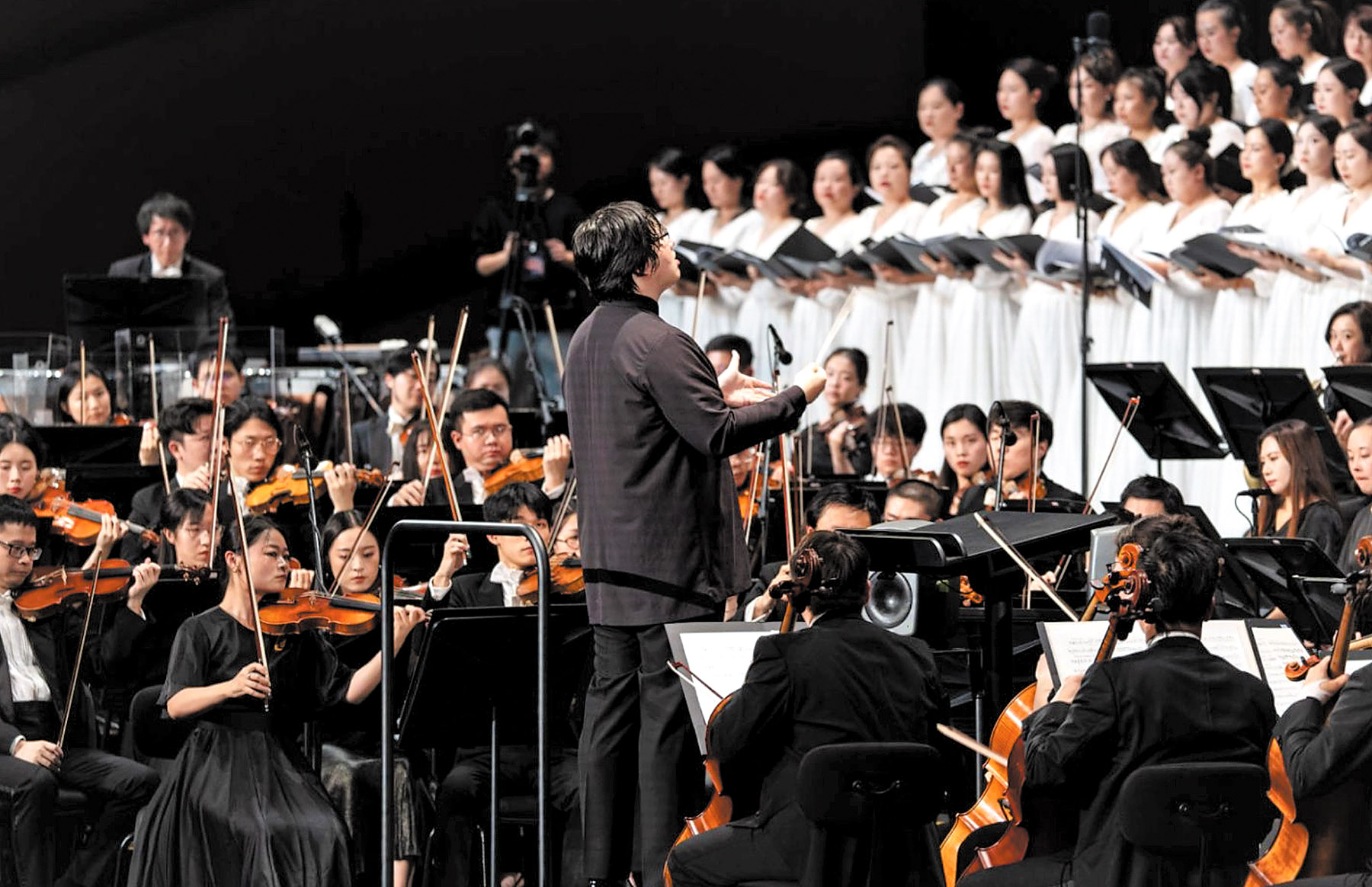
The Tide Philharmonic Orchestra, in collaboration with the Zhejiang Symphony Orchestra, Ningbo Symphony Orchestra, China National Symphony Orchestra Chorus, the Central Conservatory of Music Choir, and the Lanzhou Concert Hall Choir, presented a reimagined performance of Beethoven's Ninth Symphony. This rendition aimed to blend the town's historical and cultural heritage with a modern symphonic interpretation.
Led by Yu Lu, the orchestra's principal conductor who was born and raised in Ningbo, Zhejiang, the performance was both an artistic and spiritual journey.
"This orchestra is not just about playing great music," says Yu during the concert. "It's about being part of something bigger — something that speaks to the soul of this town. Just as the tides shape the landscape here, music shapes the lives of those who listen. We want to create music that resonates deeply and becomes part of the everyday life of the people here."
Yu, who graduated from the Central Conservatory of Music in Beijing in 2012, has had a distinguished career. In 2009, he was selected as one of five top students by renowned Japanese conductor Seiji Ozawa for his China tour. After a rigorous selection process, Yu stood out among his peers and became Ozawa's student and assistant conductor.
According to Chen Guangxian, chairman of the China Symphony Development Foundation and a consultant for the Tide Philharmonic Orchestra, recruitment for the orchestra began three years ago, with its current members being predominantly young musicians, with an average age of just 25.
"We recruited musicians from around the world," says Chen. "Many young Chinese musicians who studied and worked abroad auditioned, and we also have about 15 percent of the orchestra made up of non-Chinese musicians."
Chen, who is also the founder and director of the Suzhou Symphony Orchestra, which will celebrate its 10th birthday in 2026, emphasizes how symphonic music has reached more parts of China in recent years, with over 80 symphony orchestras now scattered across major cities and smaller towns alike.
"The creation of the Tide Philharmonic Orchestra is a testament to Yanguan's evolving relationship with music," says Chen. "The vision was clear: to establish a world-class symphony orchestra deeply rooted in Yanguan's cultural and natural heritage."
As Yu puts it, "Along with the musicians of the orchestra, we are creating something together and growing with it. What sets the Tide Philharmonic Orchestra apart is not only its musical talent but its commitment to the community."

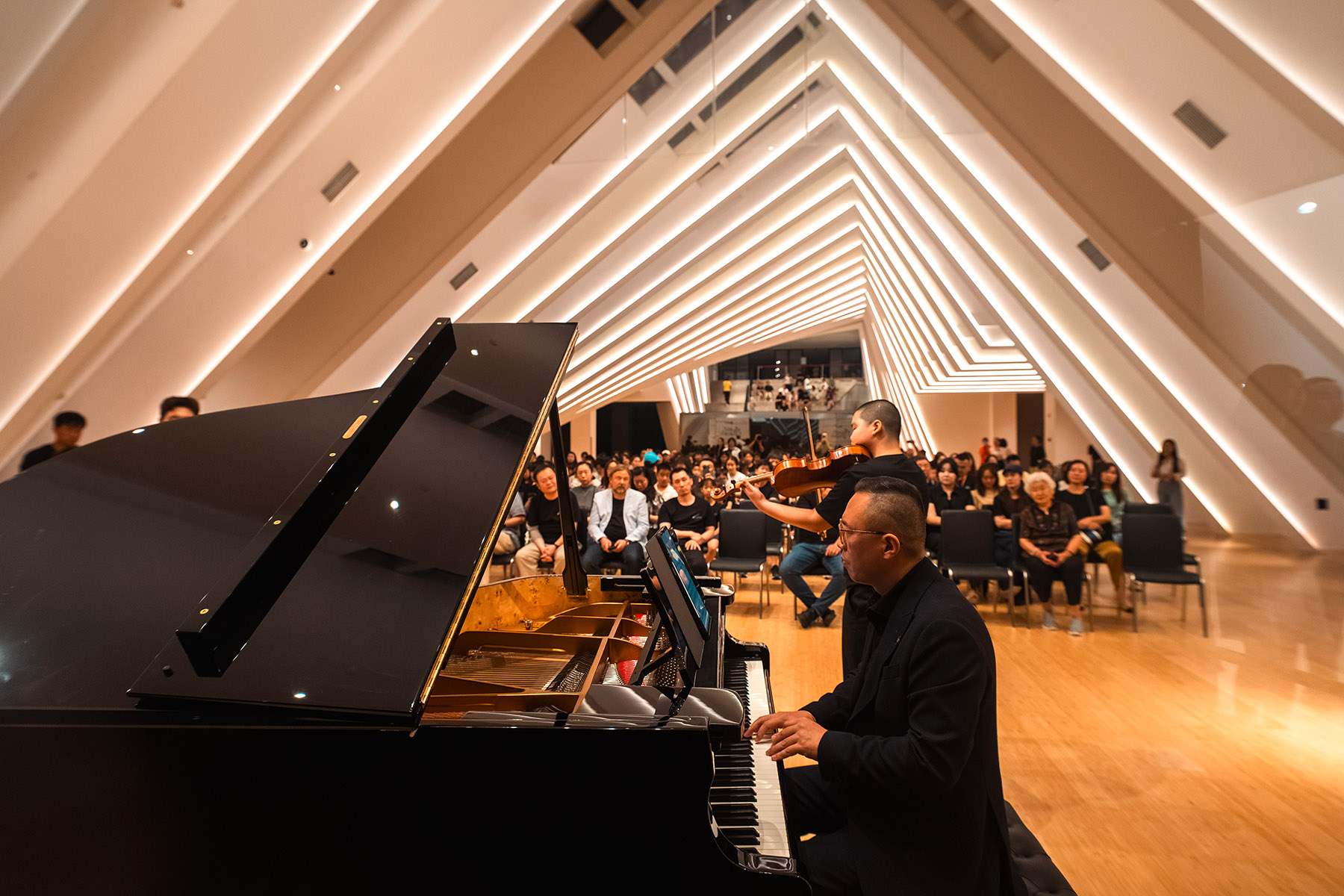
In addition to its formal concerts, the orchestra plans to launch a series of outreach programs, bringing classical music to public squares and making the art form more accessible to the wider community. These efforts aim to take symphonic music beyond the concert hall and weave it into the everyday fabric of life.
The concert premiere also featured musical adaptations inspired by the works of Jin Yong (Louis Cha), the legendary martial arts novelist born in Haining. Jin Yong's novels, particularly those set in southern China, often highlight rivers, waterways and ancient towns, linking them with the martial arts world. The Tide Philharmonic Orchestra is planning a series of concerts that will showcase music from the TV dramas and films based on his beloved stories.
According to Chen, these upcoming performances will form part of the orchestra's inaugural season, further cementing the connection between Yanguan's rich literary traditions and its evolving cultural scene.
ALSO READ: Ode to oneness
In recent years, Yanguan has heavily invested in tourism development, particularly focusing on its historical and natural landmarks. The Tides and Music Resort, launched earlier this year, aims to offer a one-of-a-kind experience, blending the town's natural tidal bore with the cultural significance of music. According to Bao Long, the resort's vice-president, the venue has already attracted more than 1 million visitors this year.
"We have more than 1 million tourists who come not only to witness the dramatic tidal bore Yanguan is famous for but also to experience the musical aspect of the resort," Bao says. "The name of the resort reflects our commitment to combining nature with music. Live music events will be held here, set against the river and surrounding landscapes, offering a truly unique experience for visitors."
Contact the writer at chennan@chinadaily.com.cn
