

Editor’s note: Hong Kong Chief Executive Carrie Lam Cheng Yuet-ngor delivered her fifth Policy Address on Wednesday. How did the people in Hong Kong respond to the new initiatives she outlined? Here are some answers China Daily has gathered.
Ronald Sum Kwan-ngai, council member of the Law Society of Hong Kong, shared his views on the city’s 10-year initiative titled “Vision 2030 for Rule of Law”, which was mentioned in the Policy Address, and his views on how the city can consolidate its status as a center for international legal- and dispute-resolution services in the Asia-Pacific region.
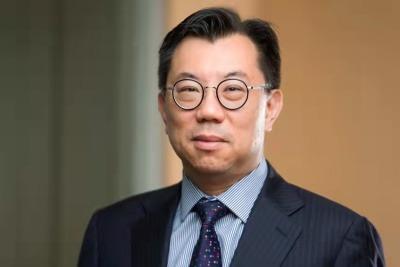 Ronald Sum Kwan-ngai, council member of the Law Society of Hong Kong
Which policy unveiled in the new Policy Address do you think the most impressive? Why?
They are all very impressive, but one stands out the most: the 10-year initiative “Vision 2030 for Rule of Law”.
What makes Hong Kong an international city? It must be the rule of law. Hong Kong must strengthen its rule of law. High respect for the rule of law enables global investors to invest in Hong Kong or use Hong Kong as a base or springboard to invest in the Chinese mainland, including other cities in the bay area, more confidently.
In the new Policy Address, the government plans to attract international legal and dispute resolution organizations to set up arbitration centers and hold decision-making meetings in Hong Kong. What is the significance of such measures? What does it mean for the local practitioners and the business community at large in the city and the Greater Bay Area?
To boost the confidence of international investors, Hong Kong must showcase its strengths in the rule of law. Hong Kong should tell the world that it highly recognizes and respects the rule of law and legal professional services, to consolidate the city’s status as a center for international legal and dispute resolution services in the Asia-Pacific region.
READ MORE: Rule of law journey: Tracing the footsteps of Hong Kong's legal system
Hong Kong must work with those international legal and dispute resolution organizations and invite these organizations to hold decision-making meetings in Hong Kong. These initiatives underscore the confidence of international investors and organizations in Hong Kong’s rule of law and legal system. It also provides a platform for effective exchange and collaboration between local legal and dispute resolution organizations and international institutions, further advancing Hong Kong’s legal professional expertise and services in different areas. Hong Kong legal practitioners and the business sector will no doubt benefit from this initiative. With the nation’s 14th Five-Year Plan (2021-25) and the Greater Bay Area and Qianhai initiatives, enterprises in the region will be able to obtain legal and dispute resolution services from professionals all over the world, thereby attracting more investments to Hong Kong and also to the whole Bay Area.
This will be a win-win situation for all.
The Department of Justice said it will continue to help Hong Kong’s legal sector meet the need for legal and dispute resolution services in the Guangdong-Hong Kong-Macao Greater Bay Area. What is your expectation?
In the 1950s, Hong Kong’s population was around 3 million with only about 2,000 lawyers. Hong Kong now has 7.5 million residents with around 12,000 lawyers. The pie has shrunk. I am always an advocate of “making the pie bigger” and business for everyone.
Currently, in Qianhai of Shenzhen, wholly owned Hong Kong enterprises set up on the Chinese mainland are allowed to choose Hong Kong laws as the applicable law when entering into civil and commercial contracts and choose Hong Kong as the seat of arbitration.
My expectation is to extend the program to the whole of Shenzhen and even the whole bay area in the future.
ALSO READ: Chief justice confident in HK's rule of law
The bay area cross-border legal professional exam is the first step, and it was held successfully. It enables more legal practitioners who are familiar with both the laws on the mainland and Hong Kong to provide legal advice and safeguards to enterprises in the bay area. Hopefully, in the future, Hong Kong law firms will be allowed to set up its branches alone in the mainland cities within the Bay Area.
The Policy Address also highlighted the exchange of talent. What kind of advice do you have on attracting legal talent from the Chinese mainland for Hong Kong’s legal and dispute resolution services?
To sustain Hong Kong's leading position in providing legal and dispute resolution services, it is essential to nurture legal talent through continuous provision of training opportunities to equip employees with necessary skills and strengthen their competitiveness. These professionals should come from Hong Kong, the mainland and the rest of the world. It is essential to have these “three-way talents and exchanges”. To this end, the Department of Justice is actively engaged in close liaison with international legal bodies with a view to offering secondment arrangements to local legal professionals, including lawyers in both the public and private sectors. These opportunities will provide valuable on-the-job training for nurturing our legal talents in diverse areas of international law.
At the same time, bringing more talent to Hong Kong is conducive to the development of the legal sector and also the city’s economic development. Legal professionals from other jurisdictions will bring along their knowledge and expertise to the city, not only benefiting the enterprises but also the legal sector through collaborations and exchanges.
Who is the best spokesperson for the rule of law of Hong Kong? The legal talents from Hong Kong!
